


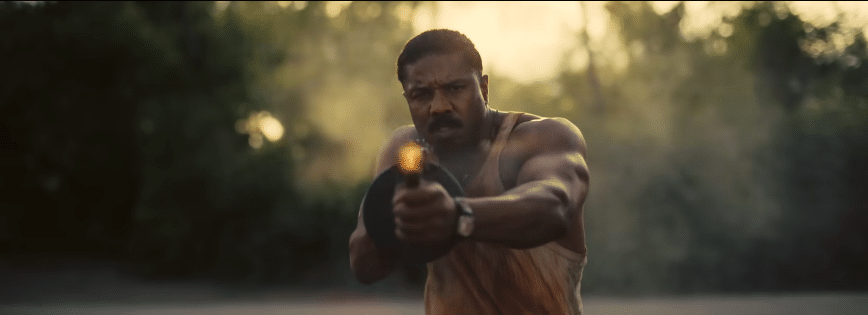
Some films entertain. Some films enlighten. And then, very rarely, a film arrives that manages to do both simultaneously — while also rewriting the record books. Ryan Coogler’s Sinners, released on April 18, 2025, accomplishes all three with an ambition that Hollywood rarely permits and an artistry that is genuinely difficult to overstate.
Set in the 1932 Mississippi Delta during the suffocating height of the Jim Crow era, Sinners tells the story of twin brothers, bootleggers, and veterans who return to their Southern hometown seeking a fresh start, only to discover that supernatural evil has been lying in wait for their arrival. What follows is simultaneously a period gangster drama, a love letter to Delta Blues music, a meditation on Black identity and cultural erasure, and, when the sun finally dips below the horizon, an electrifying vampire horror film.
Sinners received critical acclaim and commercial success, grossing over $370 million worldwide against a budget of $90–100 million. More remarkably, Sinners made history by becoming the first film to receive 16 Academy Award nominations, including Best Picture, Director, Original Screenplay, Actor, and Original Score — winning four: Best Actor for Michael B. Jordan, Best Original Screenplay for Ryan Coogler, Best Cinematography for Autumn Durald Arkapaw, and Best Original Score for Ludwig Göransson.
This review does not merely assess whether Sinners is worth watching. It unpacks why the film matters, how it achieves what it achieves, where it stumbles, and why its cultural footprint will endure long after the credits roll.
Plot Overview: Two Brothers, One Juke Joint, and an Ancient Evil
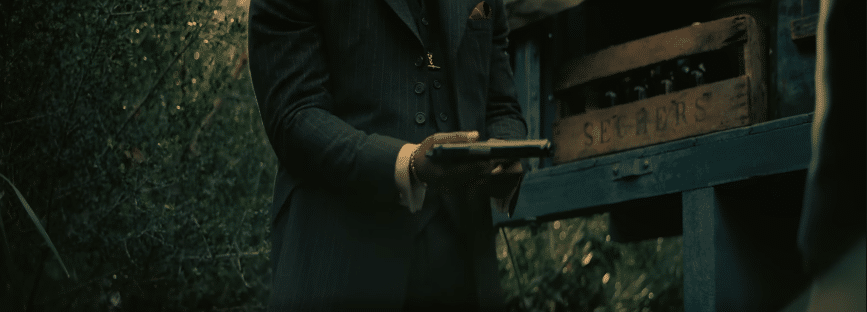
Sinners is a 2025 American film produced, written, and directed by Ryan Coogler. Set in 1932 in the Mississippi Delta, it stars Michael B. Jordan in dual roles as criminal identical twin brothers who return to their hometown in the Jim Crow South, where they are confronted by a supernatural evil.
The twins — Smoke and Stack — carry the weight of men who have survived both war and organized crime. They have worked under Al Capone in Chicago, accumulated enough money to dream of autonomy, and now intend to open a juke joint for their community: a rare, Black-owned space of freedom, music, and joy in a landscape defined by oppression and exploitation.
Their cousin Sammie, a gifted young Blues guitarist and preacher’s son, becomes the beating heart of the story. His musical ability is described as extraordinary — a talent so pure it disrupts the natural order. When a vampire named Remmick and his growing congregation arrive, drawn precisely by the transcendent power of Sammie’s gift, the juke joint transforms overnight from a sanctuary of celebration into a battleground for survival.
Sinners explores themes of family, community, and cultural expression, tying them to the cultural history of the Blues. It incorporates the vampire mythos to produce a fitting thematic antagonist who threatens the erasure of freedom, cultural history, and communal memory. It comments on the appropriation of Black art by mainstream culture and draws parallels among vampirism, organized religion, and colonialism.
This thematic architecture is what elevates Sinners well beyond the genre exercise it occasionally resembles on the surface.
Ryan Coogler’s Direction: Epic Vision, Intimate Stakes
The Filmmaker’s Intention
Coogler approaches Sinners not merely as a genre film but as a cultural artifact. He has spoken extensively about how the film functions as a musical composition in itself. Coogler stated: “I wanted the movie to feel like music and to have an aggressively dynamic range. To me, ‘Sinners’ is a song in and of itself.”
This intention manifests in the film’s structure. The first half operates at a deliberate, immersive tempo, establishing characters, geography, and the specific texture of 1930s Mississippi with extraordinary richness. Coogler uses extended one-shot sequences that follow characters through the juke joint, across a main street, and into the lived reality of their world. The pacing is not slow — it is purposeful. The director is building the stakes emotionally so that when the horror erupts in the second half, the audience is invested in every survival.
Technical Ambition on Film
Principal photography began in New Orleans on April 14, 2024, under the working title Grilled Cheese, and wrapped on July 17. It was shot by cinematographer Autumn Durald Arkapaw on 65mm film using a combination of IMAX 15-perf and Ultra Panavision 70 cameras, with scenes alternating between the 1.43:1 and 2.76:1 aspect ratios.
This is not a stylistic flourish for its own sake. The shift between aspect ratios carries narrative meaning: the towering IMAX frame contains the intimate, present-tense world of the characters, while the vast Ultra Panavision format opens up for the transcendent, time-piercing musical sequences. Coogler and Arkapaw use the physical properties of the film format to literalize the film’s central argument — that music can breach the boundaries between past, present, and future.
The production spent $67.6 million on-location in Louisiana, a commitment to authentic environment that pays dividends in every frame.
Michael B. Jordan: A Career-Best Dual Performance
Playing Two Souls in One Body
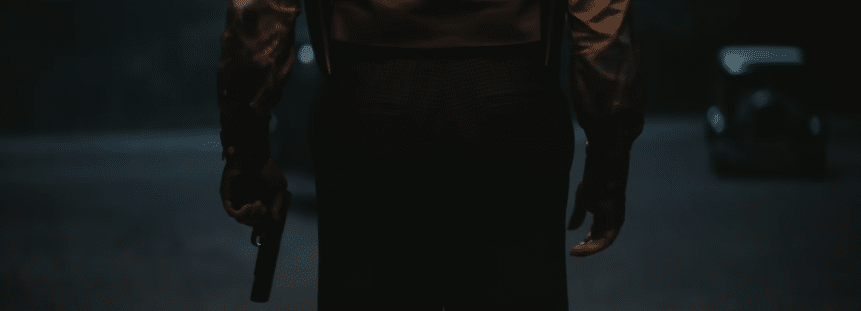
The central technical and emotional challenge of Sinners falls squarely on Michael B. Jordan, who must convincingly inhabit two distinct men — Smoke and Stack — sharing the same face but not the same interior life. Jordan rises to this challenge with the most sophisticated performance of his career.
Smoke carries his history in his body: guarded, deliberate, built on control and suppressed rage. Stack moves differently — looser, more charismatic, quicker to smile and quicker to anger. Jordan communicates the distinction not through theatrical affectation but through genuine physical and emotional specificity. In scenes where the two brothers share the frame — achieved through careful production technique — the chemistry between these two versions of one man feels entirely real.
Ryan Coogler won the Oscar for Best Original Screenplay, and Michael B. Jordan won Best Actor at the 98th Academy Awards. The acting nomination and win represent the Academy finally recognizing a performer who has been operating at this level since Fruitvale Station (2013).
A Superb Ensemble Behind Him
The film co-stars Hailee Steinfeld, Miles Caton (in his film debut), Jack O’Connell, Wunmi Mosaku, Jayme Lawson, Omar Benson Miller, and Delroy Lindo. Each performer brings something irreplaceable. Jack O’Connell’s portrayal of the vampire Remmick is particularly striking — he plays evil not as cartoonish menace but as genuine seductive conviction, a predator who believes, perhaps sincerely, that he is offering something valuable. Wunmi Mosaku, who took home the BAFTA for Best Supporting Actress, grounds the supernatural elements in an emotional reality that keeps the film anchored even at its most abstract.
The Music: The Soul of Sinners
Ludwig Göransson’s Score
No element of Sinners has received more unanimous praise than its music, and rightfully so. Composer Ludwig Göransson, a longtime Coogler collaborator, delivers his most expansive and emotionally resonant work to date.
Göransson pulled extensively from the lineage of the Mississippi Delta Blues and had a personal connection to the Blues through his father. He also drew from old records Coogler shared with him, including those of Robert Johnson and Tommy Johnson. Sinners also features several original tracks, including “I Lied to You” and “Last Time (I Seen the Sun).”
The score earned Göransson the Academy Award for Best Original Score, a recognition that feels both entirely deserved and long overdue for a composer who has consistently enriched the films he scores beyond what the visuals alone could achieve.
The Transcendent Musical Centerpiece
The film’s defining sequence — Sammie playing at the juke joint as the music tears through time itself — stands as one of the most ambitious and successful single scenes in American cinema in recent memory. Coogler spoke about the long take in this sequence: “That long take felt like the best way to show that, through film language, that sense of transcendence is rooted in what’s ordinary.”
During this sequence, the camera soars as drummers from different eras, different continents, and different traditions join Sammie in a phantasmagoria of musical diaspora. The scene argues, with spectacular cinematic conviction, that the Blues is not merely a music genre — it is a living, spiritual connective tissue between the African past, the enslaved present, and an open future.
Arkapaw is the cinematographer behind perhaps the most dazzling and most discussed shot in any 2025 movie: the several-minute-long uninterrupted Steadicam shot that serves as Sinners‘ showstopping centerpiece, knitting together past, present, and future as the performers blast the lid off the juke joint and the camera soars into the atmosphere.
Autumn Durald Arkapaw: A Historic Achievement Behind the Camera
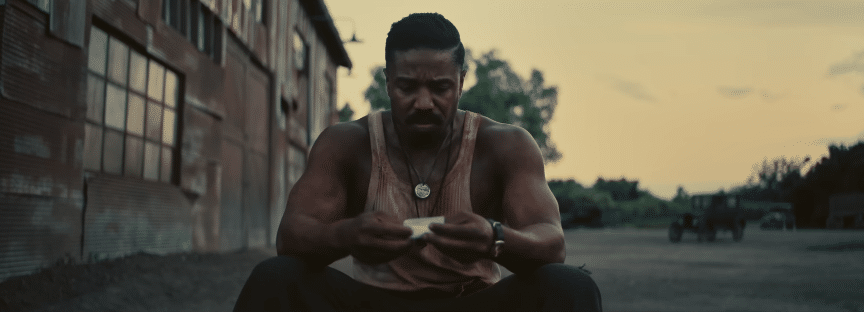
No review of Sinners is complete without extended consideration of its cinematographer, whose work is as essential to the film’s success as Coogler’s direction or Jordan’s performance.
Sinners DP Autumn Durald Arkapaw made history as the first woman to ever win the Oscar for Best Cinematography. Arkapaw, who is of Filipino and African American Creole descent, is now also the first woman of color to win.
Women made up just 7% of cinematographers on the top 250 films in 2025, according to San Diego State University’s annual Celluloid Ceiling report. Cinematography also consistently ranks among the lowest categories in terms of female representation across all of Hollywood’s behind-the-scenes roles.
Arkapaw also broke technical barriers while shooting Sinners, becoming the first female photography director to shoot on large-format IMAX 65mm film.
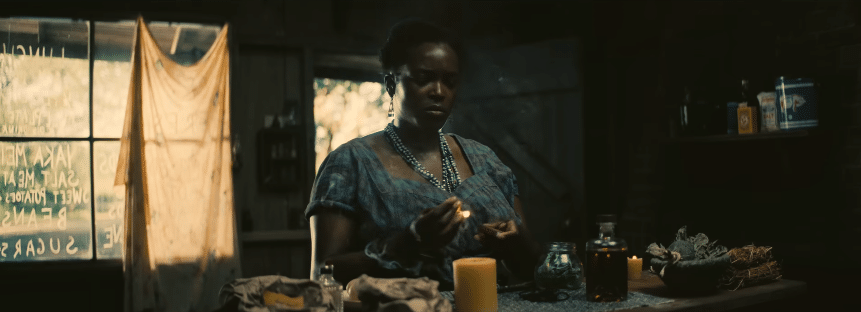
Her work on the film is spectacular on a pure craft level. The way she manages the oppressive Southern heat — visible on every surface, embedded in every shadow — creates a physical sensation of the environment that the film’s themes require. The contrast between the warm, amber glow of the juke joint and the cold blue menace of the vampires’ encroachment is not decorative. It is storytelling through light.
You can read more about Arkapaw’s historic Oscar win and its significance for women in Hollywood at NBC News and Variety.
Thematic Analysis: Vampirism as Colonialism
What Does the Monster Really Represent?
Sophisticated horror has always used its monsters as metaphors, and Sinners operates within this tradition with remarkable precision. The film adapts the blood-and-fangs conventions of the vampire genre to reflect on how Black art is often stripped of its roots and identity in mainstream culture.
Remmick and his vampires arrive not to destroy the juke joint outright but to absorb it — to consume its life force and replicate it. They are drawn not by hatred of the music but by desire for it, and that desire is itself the horror. The film asks a clarifying question: what is the difference between appreciation and appropriation? Between admiration and extraction? And what happens to a community whose culture is celebrated everywhere except within the community itself?
The film draws parallels among vampirism, organized religion, and colonialism — a thematic framework that rewards multiple viewings and academic analysis in equal measure.
The Jim Crow Context
The film does not treat the Jim Crow era as mere backdrop or set decoration. It treats it as the defining condition of every character’s existence. The cotton fields surround the juke joint. White landowners hover at the margins. The Chow siblings — a Chinese-American merchant family — navigate their own precarious position within the same hierarchy. The supernatural threat that arrives after dark is presented as continuous with, rather than separate from, the social violence that operates in broad daylight.
Box Office Performance and Critical Reception
Commercial Success
Sinners crossed $200 million domestically in its fourth weekend, becoming the first original film to do so since Coco in 2017. That benchmark places it in extraordinary company and confirms that audiences responded to Sinners not merely as spectacle but as something genuinely compelling.
On the review aggregator website Rotten Tomatoes, 97% of 429 critics’ reviews are positive, with the consensus reading: “A rip-roaring fusion of masterful visual storytelling and toe-tapping music, writer-director Ryan Coogler’s first original blockbuster reveals the full scope of his singular imagination.” Metacritic assigned the film a score of 84 out of 100, indicating universal acclaim.
Award Recognition
The accolades accumulated by Sinners are staggering in both quantity and historical significance:
Sinners was nominated for sixteen awards at the 98th Academy Awards — the most of any film in history — including four of the Big Five awards, winning Best Actor, Best Original Screenplay, Best Cinematography, and Best Original Score. It received 13 BAFTA nominations, winning three, making it the film with the most nominations and wins for a film by a Black director in BAFTA history.
The film also received a historic 18 nominations and 13 wins at the 57th NAACP Image Awards, including the NAACP Image Award for Outstanding Motion Picture. Richard Brody of The New Yorker placed Sinners at Number 1 on his list of the best films of 2025.
You can explore the complete list of nominations and wins on the official Wikipedia accolades page and at Britannica’s film entry.
Where the Film Stumbles: An Honest Assessment
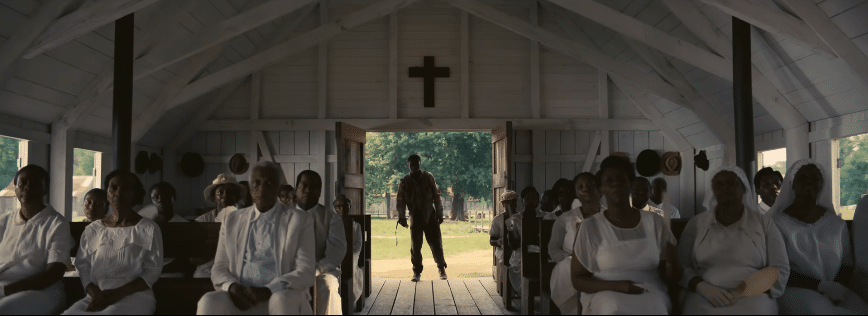
Intellectual honesty demands acknowledging that Sinners is not a flawless film. Its second half, while visually spectacular, compresses the survival horror mechanics in a manner that occasionally strains credibility. Certain character decisions during the siege sequences follow genre convention rather than organic motivation — a significant friction point given how meticulously individualized these characters are in the film’s first act.
The film’s endings — plural — also present structural challenges. Three consecutive closing sequences attempt to satisfy multiple narrative obligations simultaneously: a final heroic moment for the star, resolution for Sammie, and emotional closure for the audience. The cumulative effect is a dissipation of the tension the film has spent two hours building. Each individual sequence is well-executed; the problem is one of sequencing, not execution.
These are meaningful weaknesses in a film operating at this level of ambition. However, they do not diminish the scope of what Coogler achieves here. The flaws of Sinners are the flaws of a filmmaker reaching as far as the form will allow and occasionally grasping an inch past his reach.
Frequently Asked Questions About Sinners (2025)
Is Sinners based on a true story? No. Sinners is an entirely original screenplay by Ryan Coogler. However, it is set within the historically accurate context of the 1930s Mississippi Delta Blues scene, drawing on real musical history, cultural figures, and the documented social conditions of the Jim Crow South.
What is the runtime and rating of Sinners? Sinners runs 2 hours and 17 minutes and is rated R.
Where can I watch Sinners now? Sinners is currently available to stream on Max (HBO Max) and available to rent or purchase digitally on platforms including Amazon Prime Video and Fandango at Home. Physical Blu-ray copies are also available.
What inspired Ryan Coogler to make Sinners? Coogler has cited the passing of his Uncle James, who loved Blues music, as one of the inspirations for the story. He noted that whenever he played Blues music, it felt as though his uncle were present — a sensation he sought to translate cinematically.
What films does Sinners reference or draw from? Several critics drew comparisons between the film and Robert Rodriguez’s 1996 action-horror film From Dusk Till Dawn. Coogler cited From Dusk Till Dawn as an inspiration but compared it more to The Faculty, another Rodriguez film.
Conclusion: A Film That Earns Its Place in History
Sinners is, by any credible measure, one of the most significant American films released in the past decade. It succeeds because Ryan Coogler refuses to settle for genre entertainment alone, insisting instead on using the conventions of Southern Gothic horror as the vehicle for a profound and emotionally devastating argument about music, memory, identity, and survival.
Michael B. Jordan delivers a performance of genuine dual complexity. Autumn Durald Arkapaw captures the American South with a visual intelligence that is both technically unprecedented and narratively indispensable. Ludwig Göransson composes a score that does not merely accompany the film but argues alongside it. And at the center of all of it stands the Delta Blues — the music that, as Sinners insists with its full and considerable force, carries within it something powerful enough to pierce the veil between the living and the dead.







Leave a comment