



Every few years, a film arrives that does not merely compete for cultural relevance but actively manufactures it. Paul Thomas Anderson’s One Battle After Another, released on September 26, 2025, is precisely that kind of film. It is urgent, wildly entertaining, technically astonishing, and — in the most productive sense of the phrase — impossible to categorize. It functions simultaneously as a screwball action-comedy, a dystopian political thriller, an emotionally precise father-daughter drama, and a bracingly honest indictment of American authoritarianism. That it holds all of these registers together without collapsing under its own ambition represents one of the most impressive directorial achievements in recent American cinema.
The film entered the awards season as a critical sensation and exited it as a generational landmark. One Battle After Another received thirteen nominations at the 98th Academy Awards and won six Oscars, including Best Picture, Best Director, Best Supporting Actor for Sean Penn, and Best Casting — becoming the inaugural recipient for the latter category. It also received six wins at the 79th British Academy Film Awards, including Best Film, and four wins at the 83rd Golden Globes, including Best Motion Picture — Musical or Comedy.
For a film that, upon its opening weekend, prompted early reports of commercial disappointment, this arc — from uncertain theatrical debut to Best Picture winner — is remarkable. More importantly, it is entirely deserved.
Plot Overview: Revolutionaries, Fathers, and the Weight of the Past

One Battle After Another is set in an America that has become a fascist police state: a place where immigrants are rounded up en masse and placed in detention centers, where the police and the military have fused into an implacable authoritarian force, where a hidden cabal of Christian nationalists plan the future from a star chamber, and where a group of ragtag revolutionary guerrillas attempt to disrupt the regime through random bombings and bank robberies.
At the center of this world stands Bob Ferguson, played by Leonardo DiCaprio — a washed-up former member of the revolutionary group known as the French 75. Bob spent his younger years as an operative under the name “Ghetto Pat,” radicalized by love for Perfidia Beverly Hills (Teyana Taylor), a fearless and unapologetically dangerous radical. Now, sixteen years later, Bob has retreated to a quiet domestic life, raising Willa (Chase Infiniti) — the daughter Perfidia abandoned when she was born. When Colonel Steven J. Lockjaw (Sean Penn), Bob’s long-simmering nemesis and Perfidia’s obsessive antagonist, resurfaces and kidnaps Willa to leverage power within the shadowy Christmas Adventurers Club, Bob must reanimate the revolutionary he once was — a task complicated by the fact that he can no longer remember passwords, codes, or even his own ideological convictions.
What Anderson does with this situation is far more manic and comic, leading Bob to try and reconnect with his revolutionary past, not an easy trick since he can’t even remember passwords or the code that would correctly identify him to the remnants of French 75. Enlisting Willa’s karate teacher, Sensei (Benicio Del Toro), Bob finds a determined guide to help him navigate the maze he must traverse in order to get to Lockjaw and Willa, who is starting to discover her own spirit for the cause.
The result is a propulsive, breathlessly paced narrative that never loses sight of its emotional core — a father trying to prove, perhaps too late, that he is worth fighting for.
The Literary Source: Thomas Pynchon’s Vineland and Anderson’s Radical Departure
Understanding the creative origins of One Battle After Another deepens appreciation for everything the film accomplishes on screen. Anderson had wanted to adapt Vineland since the early 2000s but struggled, believing his love for the novel would get in the way of his ability to fairly rework it. One Battle After Another ultimately emerged as a combination of two ideas — an “action car-chase movie” and a story about a “female revolutionary” — with some elements of Vineland, particularly the father-daughter dynamic.
Anderson told Esquire in 2025: “Vineland was always going to be too hard to adapt, so I stole the parts that spoke to me and just started running like a thief.” This candid acknowledgment of creative plunder is itself quintessentially Andersonian — the director has always approached source material as raw ore to be melted down and reforged rather than preserved in amber.
Anderson’s phenomenal screenplay turns Pynchon’s ’80s-set Vineland into a deeply humanist story of rebellion that reads as 2020s political commentary despite never using terms like MAGA or Antifa. It is a timeless story of resistance, one that playfully weaves together influences as broad-reaching as the true story of Weather Underground and cinematic depictions of rebellion.
This balance — rooted in specific historical anxieties but never enslaved to topicality — is precisely what allows the film to function as both an immediate intervention and a durable work of art.
Paul Thomas Anderson’s Direction: The Auteur at His Most Liberated
A Career Breakthrough, Not a Continuation
Variety critic Owen Gleiberman, who had not fully connected with Anderson’s work since Boogie Nights (1997), wrote that One Battle After Another marks the first time in 26 years he watched a PTA film that felt like it was “inviting me into its world as passionately as the film was creating it.” He concluded: “After years of overly determined theatrics, he has gone back to being a master.”
This response is instructive. One Battle After Another represents Anderson liberating himself from the hermetically sealed interiority of films like The Master and Phantom Thread, trading precision for momentum without sacrificing depth. He deploys his technical vocabulary — the elaborate long take, the slow revelatory pan, the character-defining close-up — in service of kinetic forward propulsion rather than meditative stillness. The result feels like Anderson rediscovering cinema as a physical experience.
The VistaVision Revival: A Technical Masterstroke
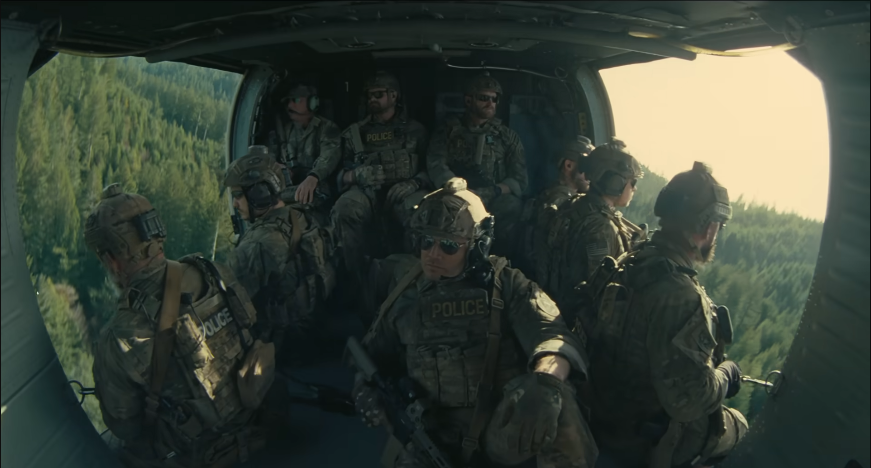
Perhaps the most discussed craft decision in One Battle After Another is Anderson and cinematographer Michael Bauman’s choice to shoot on 35mm VistaVision — a widescreen format developed in the 1950s and rarely used since.
Anderson used VistaVision, a 1950s filmmaking technology, to shoot much of One Battle After Another. The technology results in higher-resolution images and sharper quality, providing a “raw look” similar to the 1971 thriller The French Connection.
Film Threat critic Alex Saveliev opened his review by writing that the film “demands to be seen on the largest screen possible to fully absorb the 35mm VistaVision experience with every cell of your body. Everything about it is grand: its characters, its action sequences, its timely sentiments, even the quieter moments.”
Bauman and Anderson conducted an ambitious three-year location-scouting journey and worked on set without last looks or monitors — a commitment to in-the-moment filmmaking that manifests on screen as an unusual sense of spontaneity and physical presence. The camera feels as though it is responding to the characters rather than predicting them, creating a thriller aesthetic that owes more to 1970s American cinema than to contemporary digital blockbusters.
The film was projected in the VistaVision format at select venues, including the Vista Theatre in Los Angeles, Regal Union Square in New York, and Odeon Luxe Leicester Square in London, in addition to standard 70mm and digital formats. For audiences fortunate enough to see it in its intended format, the experience is genuinely unlike anything else playing in contemporary multiplexes.
Performances: A Career-Best Ensemble Firing on All Cylinders
Leonardo DiCaprio as Bob Ferguson
The long-anticipated collaboration between DiCaprio and Anderson delivers on every expectation — though perhaps not in the ways audiences predicted. DiCaprio does not play Bob Ferguson as a hero. He plays him as a man trying desperately to remember how to be one. Bob is rumpled, forgetful, occasionally ridiculous, and consistently outgunned. DiCaprio leans fully into the comedy of diminishment, and in doing so creates one of the most genuinely human performances of his career.
Variety’s Gleiberman wrote that “Anderson knows that the quality that liberates DiCaprio is comedy.” This observation cuts precisely to the heart of what makes the performance extraordinary. DiCaprio, long associated with epic dramatic weight, here discovers that vulnerability and physical comedy open dimensions in his range that more serious vehicles have obscured.
Sean Penn as Colonel Lockjaw
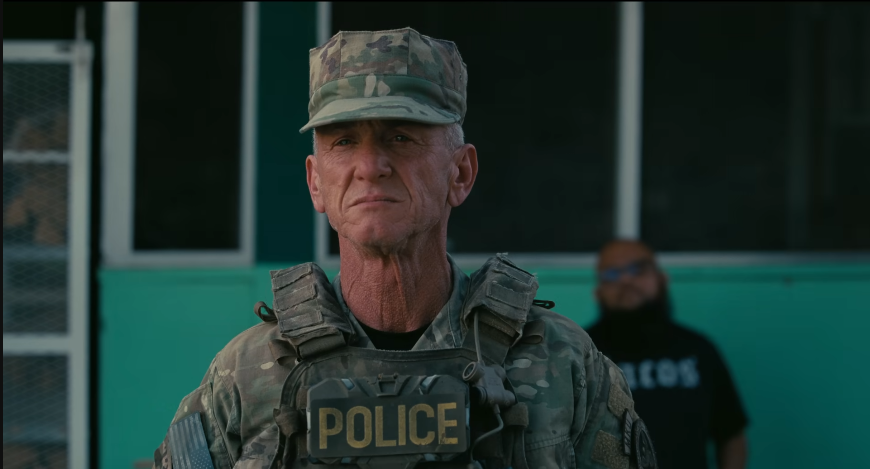
Sean Penn’s portrayal of the villainous Lockjaw is a masterclass in controlled menace. Penn plays the Colonel not as a cartoon fascist but as a man of genuine conviction — which is, of course, far more frightening. His obsessive fixation on Perfidia and his desire for acceptance within the Christmas Adventurers Club reveal a psychology that is simultaneously petty and devastating.
Penn won the Oscar for Best Supporting Actor for this performance at the 98th Academy Awards, though he opted not to attend the ceremony. The absence, characteristically provocative, did nothing to diminish the recognition of work that represents one of the finest performances of the actor’s long career.
Chase Infiniti: A Star-Making Debut
Production of the film was delayed by several years as Anderson and casting director Cassandra Kulukundis waited to find the right person to play Willa. Anderson was impressed by newcomer Chase Infiniti’s audition tape but took several months of evaluation before giving her the part. The patience proved transformative. Infiniti’s performance as Willa anchors the film’s emotional center with a specificity and intelligence that far surpasses what a debut performance has any right to be.
Willa is not merely the objective of a rescue mission. She is a fully realized young woman actively forming her own relationship to the revolutionary legacy she has inherited — a character who demands, and receives, a performance equal to that complexity.
Teyana Taylor, Benicio Del Toro, and Regina Hall
The supporting ensemble operates at the same level of precision. Taylor’s Perfidia Beverly Hills is a genuinely challenging creation — charismatic, morally opaque, and resistant to the sympathetic framing the narrative occasionally tries to impose. Del Toro’s Sensei provides the film’s warmest comedic energy while simultaneously functioning as its moral compass. And Hall’s Deandra delivers the kind of lived-in, emotionally specific supporting work that awards bodies systematically overlook and should not.
Thematic Analysis: Autocracy, Erasure, and the Cost of Forgetting
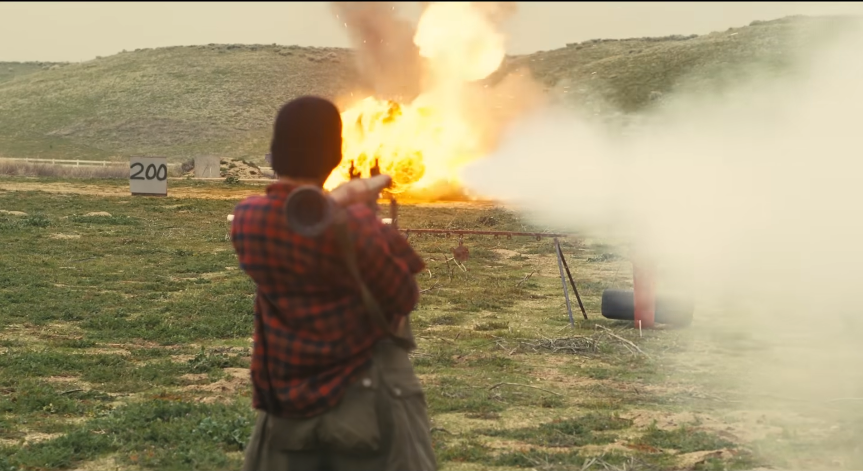
America at the Precipice
One Battle After Another operates as a political film while simultaneously refusing the limitations of political cinema. It does not lecture. It does not reduce its characters to representatives of opposing ideological camps. It implicates its audience in the very dilemmas it dramatizes.
Anderson, who built the film around elements borrowed from Thomas Pynchon’s Vineland (set during the Reagan era), completed the movie before Donald Trump took office in January 2025, but it is presented as a knowing projection of what autocracy under a contemporary administration could lead to. The film is designed to look and feel just ahead of the curve of where we are now.
The film ultimately becomes about erasure — about what we do not teach about Benjamin Franklin in history class because the powers that be do not want us to teach it. The idea that there is an underground cabal of powerful white men who fret over racial purity and turn truth into mythology feels like one of the timeliest themes, given the current attacks on what is allowed to be learned in school or exhibited in museums. And yet One Battle After Another never feels like a polemic. It is rooted in character and grounded in the filmmaking language of action directors.
Revolution’s Limits and Family’s Demands
At the same time, Anderson never allows the film’s political architecture to overshadow its human one. Besides its political angle, One Battle After Another is also about parenting and aging, race and gender and sex and sexual power. It features all of Anderson’s usual themes and tricks — its levels of violence and greed and of introspection and realism recall The Master and Boogie Nights respectively. The film stands out, however, for its timeliness and urgency. Ultimately a tender film, it pulls off a balancing act only Paul Thomas Anderson could achieve.
Bob Ferguson’s journey is, at its most fundamental level, the story of a man choosing, perhaps for the first time, to show up for someone other than himself. The revolutionary ideology that once gave Bob’s life meaning has calcified into nostalgia. Only the specific, irreducible fact of his daughter’s need re-animates him. That the film renders this transformation funny, frightening, and deeply moving simultaneously is a testament to Anderson’s mastery of tone.
Jonny Greenwood’s Score: Kinetic, Unconventional, Essential
No discussion of One Battle After Another is complete without extended consideration of Jonny Greenwood’s score — his sixth collaboration with Anderson and arguably his finest.
Greenwood’s score features 18 new compositions performed by the London Contemporary Orchestra, with conductor Hugh Tieppo-Brunt. Greenwood contributed piano, guitar, bass, percussion, and ondes Martenot.
The score is truly bonkers — it almost constructs themes for sections around sparsely played individual instruments. For a long stretch in the middle of the film, as Bob and his companions evade Lockjaw’s team, it sounds like a single piano key being struck, with the occasional flurry of what could be a cat running along the ivories.
This approach — using musical sparseness rather than orchestral swell to generate anxiety — is exactly correct for a film about a man who has forgotten the language he once spoke fluently. The score does not amplify emotion; it interrogates it, creating an unease that keeps the audience epistemologically off-balance throughout.
IndieWire notes of the Anderson-Greenwood collaborations: “Greenwood’s original scores expertly capture Anderson’s tones.” On One Battle After Another, that observation understates the case. The score does not merely capture the film’s tone — it generates it.
You can listen to and purchase the complete score through Nonesuch Records, where it is available digitally and on vinyl.
Box Office and Critical Reception: From Underdog to Dominant

A Slow-Burn Commercial Story
With a budget of $130–175 million, One Battle After Another is the most expensive film of Anderson’s career and his highest-grossing at $212.1 million worldwide. However, the path to that total was not straightforward. The film earned $22 million over its opening weekend, topping the box office and handily marking the best weekend for a film directed by Anderson, topping the $4.9 million earned by There Will Be Blood in its fifth weekend in 2008.
Despite this, Warner Bros.’ significant financial investment — a $70 million marketing campaign accompanied the theatrical release — meant that early reports framed the opening as underwhelming relative to studio expectations. The film’s subsequent durability through the awards season, however, provided a sustained platform that gradually built its audience. The trajectory from commercial question mark to Best Picture winner is, in retrospect, precisely what a film this challenging and this rewarding should experience.
Critical Consensus
On Rotten Tomatoes, 94% of 438 critics’ reviews are positive, with the consensus reading: “An epic screwball adventure teeming with awe-inspiring action set pieces, One Battle After Another is Paul Thomas Anderson’s most entertaining film yet while also one of his most thematically rich.” Metacritic assigned the film a score of 95 out of 100, indicating universal acclaim.
The film also won the Critics’ Choice Award for Best Picture, led the BAFTA nominations with fourteen overall, winning six including Best Film and Best Director, and won five awards from the National Board of Review, including Best Film, and was listed by the American Film Institute as one of the top ten films of 2025.
For the full and comprehensive list of nominations and wins, readers can explore the Wikipedia accolades page and the Britannica film entry.
The Six Oscar Wins: What Each Means
Best Picture and Best Director
One Battle After Another took home Best Picture at the 98th Oscars on Sunday night. It was a big night for Anderson, who also won Best Director and Best Adapted Screenplay. The Best Director win is particularly meaningful because it arrives for the film in which Anderson most fully integrates his artistic ambitions with popular entertainment — suggesting that the Academy has finally recognized that intellectual rigor and visceral excitement are not mutually exclusive values.
Best Supporting Actor: Sean Penn
Penn’s win represents a culmination of a career that has always been defined by commitment. His Lockjaw is a character that required Penn to inhabit genuine menace without reducing that menace to caricature — a task he accomplishes through precise physical and vocal specificity.
Best Adapted Screenplay
Anderson won Best Adapted Screenplay at the Academy Awards, an honor that recognizes both his fidelity to Pynchon’s spirit and his radical freedom in departing from the letter of Vineland. The screenplay is the engine from which everything else derives — its structure, its humor, its emotional precision — and the Academy’s recognition of this achievement acknowledges the primacy of writing in a film-culture conversation that too often privileges image over language.
Best Film Editing and Best Casting
Andy Jurgensen won Best Film Editing, and Cassandra Kulukundis won the Academy’s first-ever award for Best Casting — a historically overdue recognition of a craft that is fundamental to every film ever made. The fact that One Battle After Another claimed both confirms what the film’s extraordinary ensemble already makes evident: every casting choice here was deliberate, creative, and transformative.
Where the Film Polarizes: An Honest Assessment
No review of One Battle After Another achieves credibility without acknowledging the genuine criticisms it has attracted. Some viewers — particularly those across the political spectrum from the film’s sympathies — have found its portrayal of the authoritarian forces to be insufficiently nuanced, arguing that the absence of moral complexity on the film’s villainous side reduces a potential tragedy to a polemic.
This criticism is not entirely without foundation. The Christmas Adventurers Club, as a dramatic device, functions more as an abstract menace than a fully dramatized institution. Anderson’s focus on the revolutionary side means that the machinery of state violence operates largely as an atmospheric force rather than a character-driven conflict.
However, this structural choice is arguably the point. Anderson is not interested in providing the powerful with narrative sympathy they have not earned. He is interested in asking what it costs ordinary people to resist power — and what it means when they fail to do so. Viewed through this frame, the apparent imbalance in the moral universe is not a weakness but a deliberate provocation.
Frequently Asked Questions
Is One Battle After Another based on a true story? No, but it draws on real historical movements. The screenplay weaves together influences as broad-reaching as the true story of Weather Underground and cinematic depictions of rebellion. The film’s contemporary setting reflects actual policy environments rather than specific historical events.
What is the film’s runtime and rating? One Battle After Another runs 2 hours and 41 minutes and is rated R.
Where was the film shot? Principal photography took place in California from January to June 2024 using VistaVision, becoming one of the first films to use the format since the 1960s.
What is VistaVision? VistaVision is a widescreen process developed in the 1950s by Paramount Pictures that runs 35mm film horizontally through the camera, producing a larger negative and a significantly sharper image than standard 35mm. Notable VistaVision films include Hitchcock’s Vertigo and the original Star Wars trilogy’s visual effects sequences. Anderson and Bauman’s decision to revive the format represents one of the most striking technical choices in recent American filmmaking.
Where can I watch One Battle After Another now? The film is currently available to stream on Max (HBO Max) and is available for digital rental and purchase through Amazon Prime Video and other major platforms. Physical 4K UHD and Blu-ray editions are also available.
Conclusion: The Best Picture Winner That Earns Its Place in History
One Battle After Another is the rare Best Picture winner that rewards the honor rather than merely receiving it. Paul Thomas Anderson has made a film that is simultaneously his most accessible and his most politically engaged — one that uses the vocabulary of popular cinema to deliver arguments that popular cinema rarely has the courage to make.
The film “hums and moves in ways that movies too rarely do, embedding any timely commentary one wants to read in it in entertainment.” That formulation — timely commentary embedded in entertainment, not opposed to it — captures precisely what distinguishes One Battle After Another from lesser political cinema.
Leonardo DiCaprio gives the performance of his career. Sean Penn reminds audiences of what genuine screen menace looks like. Chase Infiniti announces a major new talent. Michael Bauman’s VistaVision cinematography renders contemporary California as a landscape simultaneously beautiful and terrifying. And Jonny Greenwood’s score places its audience in a state of productive anxiety from the first frame to the last.
While rooted in America’s past, the film is also terrified by its present and hopeful for its future. Ultimately a tender film, One Battle After Another pulls off a balancing act only Paul Thomas Anderson could achieve.










Leave a comment