



Released at a pivotal moment in early 2000s pop culture, xXx (stylized as Triple X, 2002) arrived as both a product of its time and a genuine attempt to reinvent the spy thriller genre. Directed by Rob Cohen and written by Rich Wilkes, the film stars Vin Diesel as Xander Cage — a tattooed, extreme-sports daredevil reluctantly enlisted by the NSA to go where trained operatives cannot. Two decades later, the film remains a fascinating cultural artifact: brash, self-aware, and unrelenting in its pursuit of pure adrenaline.
This comprehensive review moves well beyond the basic score you’ll find on aggregator sites. It covers production backstory, casting decisions, stunt legacy, critical debate, box office performance, and what the film ultimately means within the broader landscape of early-2000s action cinema.
What Is xXx (2002)?
xXx is a 2002 American action thriller directed by Rob Cohen, produced by Neal H. Moritz, and written by Rich Wilkes. It stars Vin Diesel as Xander Cage, a thrill-seeking extreme sports enthusiast and rebellious athlete-turned-reluctant spy for the National Security Agency, sent on a dangerous mission to infiltrate a group of potential Russian terrorists in Central Europe.
The setup is deceptively simple. After a series of trained agents fail to penetrate the dangerous Eastern European criminal network known as Anarchy 99, NSA Agent Augustus Gibbons — played with gruff authority by Samuel L. Jackson — decides that a “new breed” of operative is needed. Enter Xander Cage: famous in underground circuits for his death-defying stunts, antagonistic toward authority, and completely off-grid. He is presented with a binary choice — serve his country or go to prison.
What follows is a globe-trotting mission set primarily in Prague, Czech Republic, pitting Xander against Yorgi (Marton Csokas), a charismatic but lethal villain commanding a fleet of anarchist soldiers and a doomsday weapon. Italian actress Asia Argento appears as Yelena, Cage’s love interest and a double agent operating inside Anarchy 99.
This premise deliberately deconstructs the James Bond formula and reassembles it for an audience raised on X Games, nu-metal, and PlayStation. The filmmakers broke down the James Bond series into its inevitable components, constructed a screenplay that mirrors 007 even in small details, and placed Diesel at the center — as Xander Cage, extreme sports hero and outlaw.
The Cast: Who Brings xXx to Life?

Vin Diesel as Xander “XXX” Cage
Diesel was already a rising star following Pitch Black (2000) and The Fast and the Furious (2001), but xXx was designed to catapult him into the A-list stratosphere. In July 2001, it was announced that Vin Diesel would receive in the neighborhood of $10 million to star in the film. It is believed that before Diesel was cast, Eric Bana turned down the lead role of Xander Cage.
Diesel is a tough guy with the shaved head, the tattoos, and the throwaway one-liners. His gruff, monosyllabic style is refreshing as a counterpoint to the gung-ho action. Critics were divided on whether this minimalist performance constituted charisma or limitation — but audiences largely sided with Diesel.
Samuel L. Jackson as Agent Gibbons
Jackson delivers the film’s most consistently entertaining supporting performance. As the scheming, philosophical NSA operative who hand-selects Cage, Jackson brings a layer of sardonic wit that the script occasionally lacks. His role serves a clear narrative function — mentor, handler, and moral compass — even if the film rarely gives him enough screen time to develop it fully.
Asia Argento as Yelena
Argento’s Yelena is one of the more underwritten characters in a film not particularly known for its depth. She functions as both romantic interest and plot device, though Argento brings genuine physicality and European cool to the role. The film also stars Asia Argento, Marton Csokas, and Samuel L. Jackson.
Marton Csokas as Yorgi
New Zealand-born Csokas is a compelling villain — fleshy, world-weary, and surrounded by decadence. Csokas, as the villain, has one of those fleshy, sneering faces, surrounded by too much greasy hair, that goes with his central European accent. Oddly, he isn’t from Transylvania at all, but from New Zealand.
Danny Trejo and Tony Hawk: Notable Cameos
The film peppers in recognizable faces from action sports and underground culture. Danny Trejo appears in a memorable early scene, while professional skateboarder Tony Hawk makes a brief cameo, grounding the film’s extreme sports credibility with real-world faces audiences recognized.
Production: Behind the Stunts and Spectacle

Filming Locations
Filming took place at three locations. Most of the film is set in Prague, Czech Republic. The Corvette jump was filmed at the Foresthill Bridge in Auburn State Recreation Area, Auburn, California. The final scenes were set in Bora Bora, Tahiti, and other areas in southern West Virginia. This geographic spread gives the film a legitimately international feel, though its soul belongs entirely to Eastern Europe.
Vin Diesel’s Stunt Involvement
Rob Cohen has spoken openly about Diesel’s eagerness to perform his own stunts — and the friction this created onset. Director Rob Cohen said: “I think the thing is that Vin did more than he should have, but less than he wanted to.” Certain high-risk sequences were rightfully delegated to professionals, including a base jump from a Corvette performed by stuntman Tim Rigby wearing a Vin Diesel mask, with Diesel’s face added digitally.
The Czech Military’s Generous Contribution
One of the most remarkable production anecdotes involves military cooperation on a grand scale. The production asked the Czech Air Force for the loan of two of their jets for the film, only to be told that they could have the entire fleet. All that was required as payment was a $50,000 donation to a pilots’ hospital, and beer for all the soldiers involved. Several Czech Su-22s were used for the film. It was one of the last actions of these aircraft — the Czech Air Force decommissioned its Sukhois in 2002.
The Tragic Loss of Stunt Double Harry O’Connor
Any thorough examination of this film must acknowledge its most sobering production event. Stunt player Harry O’Connor, Diesel’s stunt double, was killed on April 4, 2002, when he hit a pillar of the Palacký Bridge in Prague while para-sailing during one of the action scenes. The accident occurred while filming the second take of the stunt; O’Connor’s first attempt was completed without incident and can be seen in the completed film, which was dedicated to him. In xXx: Return of Xander Cage (2017), Vin Diesel’s character bears a leg tattoo with the name Harry O’Connor — a quiet tribute to the stuntman’s memory.
The Soundtrack: A Time Capsule of Early-2000s Music
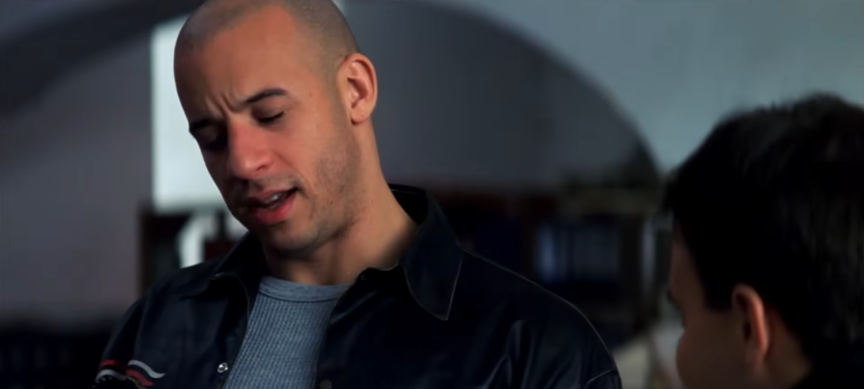
The film’s sonic identity is as recognizable as its visual aesthetic. Rammstein provided some of the music and was even featured in the film in the opening scene. The soundtrack also features Queens of the Stone Age, Drowning Pool, Hatebreed, Nelly, Lil Wayne, N.E.R.D., and Moby. It was released on August 6, 2002 through Universal Records. It peaked at #9 on the Billboard 200 and #1 on the Top Soundtracks chart.
The choice to open the film at a Rammstein concert was deeply intentional. It signals to the audience immediately that xXx does not share Bond’s taste for jazz and champagne — it prefers pyrotechnics and distorted guitars. The first few minutes of the film take place at a concert of German Neue Deutsche Härte band Rammstein in Prague, performing the song “Feuer Frei.”
Critical Reception: What the Critics Said
The Rotten Tomatoes Score and Consensus
On Rotten Tomatoes, the film holds an approval rating of 48% based on reviews from 180 critics, with an average rating of 5.59/10. The site’s consensus reads: “It has an endearing lack of seriousness, and Vin Diesel has more than enough muscle for the starring role, but ultimately, XXX is a missed opportunity to breathe new life into the spy thriller genre.”
On Metacritic, the film has a score of 48 out of 100, based on reviews from 33 critics, indicating “mixed or average reviews.” Interestingly, audiences surveyed by CinemaScore gave the film a grade of A− on a scale of A to F — a stark contrast to the critical consensus and a strong indicator of the disconnect between reviewers and general audiences.
Praise: Where Critics Found Merit
Roger Ebert — one of the film’s more generous mainstream critics — offered a notably favorable take. He wrote that “in its own punk way, XXX is as good as a good Bond movie, and that’s saying something.” Roger Ebert Ebert appreciated Diesel’s unconventional screen presence and the film’s self-aware energy, treating its excesses as features rather than bugs.
Criticism: Where the Film Falls Short
More skeptical critics identified structural weaknesses that are difficult to dismiss. The film is described by some as a “terribly made mindless action flick with awful dialogue, terrible acting, a dopey plot, and paper thin characters.” The screenplay in particular draws repeated fire for borrowing Bond tropes without improving upon them. The dialogue is often cheesy, and the motivations of the characters — particularly the villains — feel clichéd. Vin Diesel’s Xander Cage is more of a one-dimensional action hero than a fully fleshed-out protagonist.
The villain’s plot also invites legitimate mockery. Yorgi has devised an incredibly expensive steel speedboat armed with three rockets containing canisters of poison gas. This speedboat is inside a mountain cavern far below his lair — his superweapon for world domination — except that it’s located in the landlocked Czech Republic. It’s a classic example of the film prioritizing spectacle over internal logic.
The Post-9/11 Context
Several critics noted the film’s timing relative to the September 11 attacks, which occurred just eleven months before its release. The original xXx movie was a hot, action-packed thriller that excited audiences worldwide. Following the national tragedy of September 11th, the United States needed a good kick-butt spy movie to lean on. This cultural context partially explains the film’s generous reception from general audiences, even as critics remained ambivalent.
Box Office Performance: A Commercial Triumph
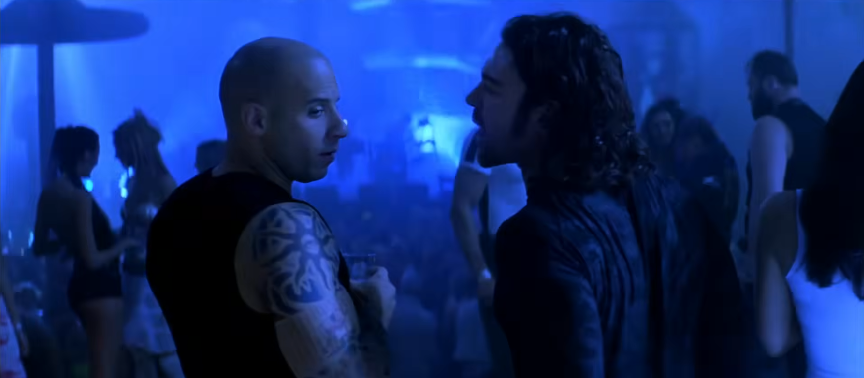
Whatever its critical limitations, xXx performed extraordinarily well commercially. The film was released by Sony Pictures Releasing on August 9, 2002, and grossed $277.4 million worldwide. Against a reported production budget, this represented a significant return on investment and immediately green-lit franchise development.
The film’s domestic gross of $141.2 million made it one of the top-performing action films of summer 2002, competing directly with Die Another Day and Mission: Impossible II for audience attention.
Legacy and the xXx Franchise
The Sequels
The xXx series consists of three full-length feature films: XXX (2002), XXX: State of the Union (2005), and XXX: Return of Xander Cage (2017), along with a short film: The Final Chapter: The Death of Xander Cage. The series has grossed $694 million worldwide.
The second installment replaced Diesel with Ice Cube as a new Triple X operative — a creative decision that divided fans and ultimately underperformed critically (holding just 17% on Rotten Tomatoes). Diesel returned for the third entry in 2017, bringing a global ensemble cast and earning a modest theatrical return.
A Fourth Film in Development Limbo
In September 2018, it was announced that a fourth film is in development as a joint-venture production with The H Collective and iQiyi, with Vin Diesel reprising his role as Xander Cage. In 2024, an article by Deadline stated that the film has stalled due to The H Collective’s financial problems and litigation over the franchise film rights. As of 2026, the fourth installment remains unproduced.
Cultural Impact: The Early-2000s Extreme Sports Zeitgeist

In the early 2000s, extreme sports and the X Games were becoming popular very rapidly, so marketers and Hollywood felt the need to stick an “X” in front of everything because then, everything could be EXTREME. xXx was the purest cinematic distillation of that moment — a film born directly from a cultural trend, embracing its own commercial origins rather than concealing them.
Viewed in 2026, the film functions as both a thrilling action spectacle and a documentary of a specific cultural moment. The baggy clothing, nu-metal soundtrack, early-digital CGI, and anti-authority posturing all feel period-specific in ways that are now charming rather than embarrassing.
Comparing xXx to Its Contemporaries
To properly situate xXx within early-2000s spy-action cinema, it’s worth placing it against its closest peers:
- Die Another Day (2002): The Bond series’ own (much-criticized) entry that same year, Die Another Day holds a 55% on Rotten Tomatoes — marginally ahead of xXx. Both films leaned into spectacle over substance, suggesting the spy genre itself was under strain at that moment.
- Mission: Impossible II (2002): With a similar critical score (58%), John Woo’s Mission film demonstrates that the “style over substance” approach was industry-wide in the early 2000s, not unique to xXx.
- The Fast and the Furious (2001): Cohen and Diesel’s prior collaboration is a useful reference point. While xXx features a more ambitious narrative scope, Fast & Furious benefits from stronger ensemble chemistry and a more coherent emotional core.
Where to Watch xXx Today
xXx is currently available to rent or purchase on Fandango at Home (formerly Vudu). It periodically surfaces on subscription streaming platforms as well. Given its PG-13 rating and 2h 4m runtime, it remains accessible and well-suited to casual viewing — particularly for audiences who appreciate early-2000s action cinema or want to contextualize Vin Diesel’s career trajectory.
Should You Watch xXx in 2026? Final Verdict

xXx is not a perfect film — and it was never trying to be. Its screenplay is formulaic, its villain’s logic collapses under scrutiny, and its dialogue prioritizes attitude over wit. However, the film succeeds on its own deliberately lowered terms. In its own punk way, it functions as a credible and energetic genre entry Roger Ebert, and Vin Diesel’s charisma — raw and unpolished as it may be — genuinely carries scenes that would otherwise collapse.
For action cinema historians, xXx is essential viewing: a film that captured a precise cultural moment, launched a durable franchise, and gave Hollywood a blueprint for what a post-Bond spy movie could look like for a generation raised on PlayStation and Red Bull. For casual viewers simply searching for Saturday-night entertainment, it delivers exactly what it promises — relentlessly.
Rating: 6/10 — Flawed, formulaic, and unashamedly loud. Also exactly as entertaining as it intends to be.













Leave a comment