


When The Super Mario Bros. Movie blasted onto screens in April 2023 and went on to gross over $1.3 billion worldwide, one question immediately followed: what comes next? Three years later, Nintendo and Illumination Entertainment answer that question with The Super Mario Galaxy Movie, a space-set sequel that expands the franchise universe far beyond the Mushroom Kingdom — both literally and cinematically.
Released theatrically in the United States on April 1, 2026, The Super Mario Galaxy Movie arrives with enormous commercial expectations, a star-studded voice cast, and visuals ambitious enough to justify an IMAX ticket. Whether it fully earns that ambition, however, is precisely where critical opinion and audience enthusiasm diverge — dramatically.
This review covers everything you need to know: the plot, the full cast, the critical reception, the box office performance, the comparison to the first film, and whether audiences of all ages will find value in this 98-minute galactic adventure.
What Is The Super Mario Galaxy Movie About?
Plot Summary
The Super Mario Galaxy Movie draws its narrative DNA from two beloved Nintendo games: Super Mario Galaxy (2007) and Super Mario Galaxy 2 (2010), both of which rank among the finest entries in the franchise’s history. The film, written by Matthew Fogel and directed once again by Aaron Horvath and Michael Jelenic, opens with a flashback revealing that Princess Rosalina (Brie Larson) and Princess Peach (Anya Taylor-Joy) are long-lost sisters who were separated as children under mysterious circumstances. Rosalina sent Peach to the Mushroom Kingdom to protect her, while she herself remained in deep space to raise a star-like species called Lumas on the Comet Observatory.
In the present day, Mario (Chris Pratt) and Luigi (Charlie Day) are celebrated heroes in the Mushroom Kingdom following the defeat of Bowser (Jack Black), who has been miniaturized and imprisoned in Peach’s castle. The trouble begins when Bowser’s ambitious and impulsive son, Bowser Jr. (Benny Safdie), kidnaps Rosalina with a scheme to drain her cosmic power and fuel a planet-destroying cannon — all in honor of his imprisoned father.
What follows is a galaxy-spanning rescue mission as Mario, Luigi, Peach, Toad (Keegan-Michael Key), and the newly introduced Yoshi (Donald Glover) venture across strange celestial worlds, forge unexpected alliances, and face enemies new and old. Along the way, they encounter Fox McCloud (Glen Powell), a Han Solo-esque space pilot drawn from Nintendo’s Star Fox franchise, as well as crime lord Wart (Luis Guzmán) and the Honey Queen (Issa Rae), ruler of the Honeyhive Galaxy.
How Faithful Is It to the Games?
Fans of the source material will recognize numerous settings, including the Gateway Galaxy, the Honeyhive Galaxy, and Fossil Falls — all lifted from the original games. The film also incorporates elements from Super Mario Bros. 2, Super Mario Sunshine, and even hints at Super Smash Bros., making it a celebration of Nintendo’s broader gaming legacy rather than a strict adaptation of any single title.
The Full Voice Cast: Every Character Explained
One of the film’s undeniable strengths is its ensemble. Here is a complete breakdown of the principal voice cast:
Chris Pratt as Mario — Pratt reprises his role as the Brooklyn-born Italian-American plumber turned galactic hero. While some critics continue to question the casting choice, Pratt grounds Mario with enough sincerity to carry the emotional throughline of the story.
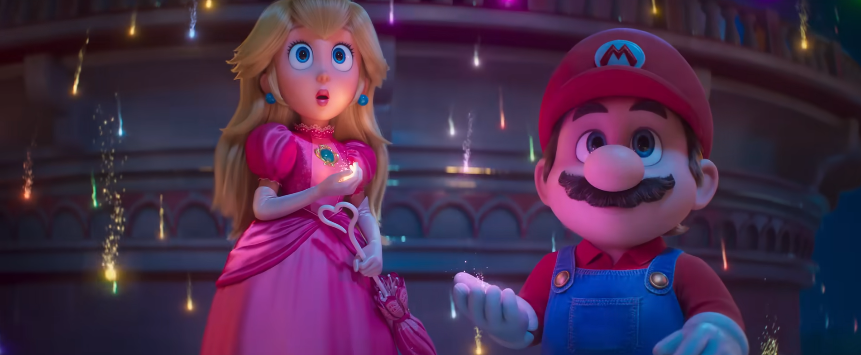
Anya Taylor-Joy as Princess Peach / Rosalina (shared origin) — Taylor-Joy returns as Peach, who takes on a more active and narratively central role in this film, including a surprisingly effective action sequence involving the parasol Mario gifts her early in the story.
Charlie Day as Luigi — Day continues to deliver some of the film’s funniest moments, keeping Luigi’s nervous energy intact without reducing him to pure comic relief.
Jack Black as Bowser — Despite being sidelined for much of the film due to his character’s miniaturization, Black brings his singular charisma to every moment he occupies the screen.
Benny Safdie as Bowser Jr. — Perhaps the film’s most pleasant casting surprise. Safdie, best known as one half of the filmmaking duo behind Uncut Gems and Good Time, delivers an exaggerated, almost theatrical performance that makes Bowser Jr. a genuinely compelling antagonist. Multiple critics have singled him out as a standout.
Donald Glover as Yoshi — Glover’s voice work as Yoshi consistently earns the film’s warmest praise. Bringing unexpected warmth and comedic timing to a character who communicates in a limited but expressive way, Glover transforms Yoshi into the film’s emotional anchor.
Glen Powell as Fox McCloud — Powell’s late-stage addition to the cast was revealed just days before release, and his portrayal of the Star Fox protagonist carries the confident, swaggering energy that audiences came to know from Top Gun: Maverick. The inclusion of Fox McCloud also confirms that the Star Fox universe is officially canon within this cinematic world.
Brie Larson as Princess Rosalina — Larson, a self-described fan of the original Super Mario Galaxy game, brings quiet gravitas to Rosalina. However, some audience members have noted that her character is underutilized relative to her significance in the plot.
Keegan-Michael Key as Toad — Key continues to bring reliable comic energy to Toad, whose transformation into a baby at the hands of Bowser Jr.’s Super Scope weapon generates one of the film’s funniest extended sequences.
Luis Guzmán as Wart — Guzmán’s turn as the frog crime lord who operates out of a casino is brief but memorable, invoking the character’s roots in Super Mario Bros. 2 while adding a distinctly cinematic flavor.
Issa Rae as the Honey Queen — Rae’s casting as the queen bee ruler of the Honeyhive Galaxy adds another layer to the film’s already packed roster of Nintendo characters.
Seth Rogen as Donkey Kong — Rogen returns in a smaller cameo capacity, maintaining continuity with the first film.
Direction and Production: What Works Visually
Horvath and Jelenic, the same duo behind the brilliantly meta Teen Titans Go to the Movies! (2018), once again demonstrate a mastery of visual spectacle. Animated by Illumination Studios Paris, The Super Mario Galaxy Movie is, frame for frame, one of the most visually ambitious animated films of 2026. The depiction of zero-gravity environments, the Comet Observatory’s floating architecture, and the bioluminescent color palette of the Honeyhive Galaxy are breathtaking in IMAX format.
Composer Brian Tyler, who scored the first film, returns with a full 70-piece orchestra. The score incorporates arrangements from the original Super Mario Galaxy game music — compositions that rank among Koji Kondo and Mahito Yokota’s finest work — and Tyler handles them with the respect they deserve. The result is a soundtrack that frequently elevates the film beyond what its screenplay achieves on its own.
Critical Reception: The Critic–Audience Divide Deepens
What Critics Say
The Super Mario Galaxy Movie currently holds a 42–44% critic score on Rotten Tomatoes based on over 110 reviews, alongside a Metacritic score of 37 out of 100, which the site classifies as “generally unfavorable.”
The dominant criticism across outlets centers on the film’s tendency to prioritize spectacle and nostalgia over narrative coherence and emotional depth. Reviewers frequently describe the screenplay as overloaded — stuffed with Nintendo Easter eggs, cameos from characters across multiple franchises, and pop culture references that, while individually recognizable, collectively dilute any sense of a focused story. The pacing is also frequently cited as a weakness, with the film’s 98-minute runtime feeling rushed rather than tight.
GamesRadar described the film as a “faithful but overstuffed sequel” that “never quite reaches Galaxy’s gravity-defying game heights.” The Hollywood Reporter, meanwhile, acknowledged that the film “hits the sweet spot in terms of what its target audience wants,” framing the critical divide as a matter of intent versus execution.
The recurring theme across negative reviews is that the film rewards encyclopedic Nintendo franchise knowledge while actively alienating audiences seeking a self-contained, emotionally resonant story — the same criticism leveled at the 2023 original, but amplified considerably.
What Audiences Say
Despite the critical response, audience reception tells an entirely different story. The Super Mario Galaxy Movie carries a 91–92% audience score on Rotten Tomatoes, with a CinemaScore grade of A− — down only slightly from the predecessor’s A grade.
The gap between critic and audience scores mirrors the split seen with the first film (59% critics, 95% audiences) and underscores a broader cultural conversation about the role of professional film criticism in the era of IP-driven blockbusters. Audiences, particularly families and longtime Nintendo fans, consistently report high levels of satisfaction, citing the character moments, the visual wonder, and the sheer density of fan service as highlights.
Box Office Performance: Galaxy Breaks Records
Despite mixed reviews, The Super Mario Galaxy Movie is already demonstrating its commercial dominance. On its opening day of April 1, 2026, the film earned $34 million domestically — the best opening day of 2026 so far, surpassing Project Hail Mary ($33.1 million) and outperforming even its own predecessor’s opening day of $31.7 million in 2023.
According to Deadline Hollywood, the film is projected to earn between $128 million and $186 million over its opening 3–5 day frame, potentially becoming only the second animated sequel (after Disney’s Frozen 2) to open above $130 million domestically.
The film was produced on a budget of approximately $110 million, slightly above the first film’s $100 million. Given these box office trajectories, a profitable theatrical run appears all but certain, and a post-credits scene in the film has already been confirmed to directly set up further sequels — including what appears to be groundwork for a Super Smash Bros. cinematic event.
Comparing the Two Films: Galaxy vs. The Super Mario Bros. Movie (2023)
| Metric | The Super Mario Bros. Movie (2023) | The Super Mario Galaxy Movie (2026) |
|---|---|---|
| Budget | ~$100 million | ~$110 million |
| Opening Day (US) | $31.7 million | $34 million |
| Critic Score (RT) | 59% | 42–44% |
| Audience Score (RT) | 95% | 91–92% |
| CinemaScore | A | A− |
| Director(s) | Horvath & Jelenic | Horvath & Jelenic |
| Worldwide Gross (final) | $1.36 billion | Projected $1B+ |
The comparison reveals a franchise that is commercially stronger than ever, even as the critical conversation grows more skeptical. The first film succeeded partly on the novelty of seeing these beloved characters rendered with such production value; the sequel must justify itself on its own creative terms, and many critics argue it does not fully succeed in doing so.
Easter Eggs and Nintendo References: A Treasure Hunt for Fans
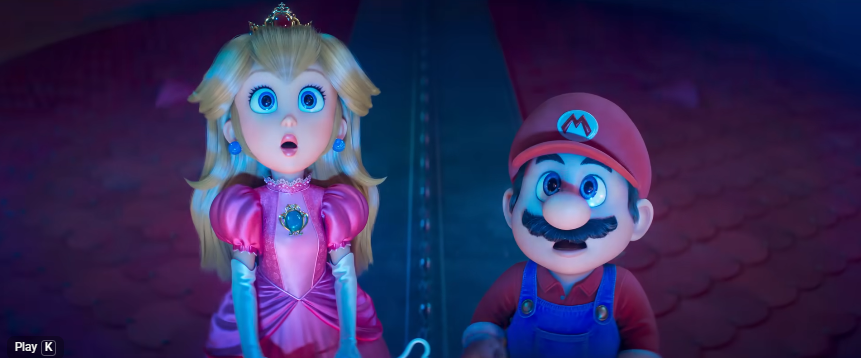
For dedicated Nintendo fans, The Super Mario Galaxy Movie functions as a feature-length celebration of the company’s four-decade history. Confirmed Easter eggs and cameos include references to Zootopia, Super Mario Odyssey, the Minions (an obligatory Illumination Entertainment signature), and the Star Fox franchise through Fox McCloud’s full integration into the plot.
Mario creator Shigeru Miyamoto has confirmed that the inclusion of Fox McCloud was his personal initiative. According to GamesRadar, Miyamoto anticipated internal resistance to the crossover but found surprising enthusiasm among Nintendo’s teams once he began advocating for it. The decision also fuels significant fan speculation about the direction of future installments — particularly the rumored Super Smash Bros. film hinted at in the post-credits sequence.
Additional Easter eggs span references to Pikmin, Metroid, Baby Mario and Luigi, Lakitu, Birdo, and Princess Daisy, who appears in a brief but crowd-pleasing post-credits cameo.
Streaming Release: When Can You Watch It at Home?
The Super Mario Galaxy Movie will follow a similar theatrical-to-streaming window as its predecessor. Based on the first film’s timeline — which moved to digital platforms approximately 41 days after theatrical release and hit Peacock roughly four months later — current estimates place the streaming schedule as follows:
- Digital rental/purchase: Approximately mid-May 2026
- Peacock (US): Estimated July 30, 2026 (based on the 120-day theatrical window)
- Netflix (US): Estimated November 30, 2026 (following the Peacock exclusivity window)
- International Netflix regions (Australia, Belgium, South Korea, and others): October–November 2026
These estimates are based on reporting from What’s on Netflix and industry precedent, and are subject to change based on theatrical performance.
The film is also available in RealD 3D and IMAX formats during its theatrical run, and the IMAX presentation is particularly recommended given the film’s visual ambition.
Is The Super Mario Galaxy Movie Worth Watching?
For Families and Young Audiences
Unequivocally yes. The film delivers relentless visual energy, age-appropriate humor, and enough genuine warmth — particularly through Glover’s Yoshi — to keep young viewers engaged from start to finish. Parents accompanying their children will find the voice cast charming and the runtime mercifully tight. The film earns its PG rating without pushing against it.
For Nintendo Fans
This is where The Super Mario Galaxy Movie most completely succeeds. The film treats the franchise’s history with genuine affection, and the density of references will reward viewers who have spent time with the games. The Honeyhive Galaxy sequences, in particular, feel lovingly drawn from the source material. If you played Super Mario Galaxy on the Wii and carry fond memories of its music, its world design, and its emotional storytelling, you will find moments here that resonate.
For General Audiences Without Mario Background
The original review at The Independent Critic raises a fair point: newcomers to the Mario universe may struggle to connect with the characters, their powers, and the film’s internal logic. The film does not pause to explain itself, which is both a strength and a limitation. Unlike the first film, which offered a more accessible origin story structure, The Super Mario Galaxy Movie assumes familiarity and builds outward from there.
For Serious Film Enthusiasts
Critics’ reservations are legitimate. The screenplay prioritizes breadth over depth, the emotional arcs are frequently interrupted by spectacle, and the film’s ambition to cram in as many Nintendo universes as possible comes at the cost of the quiet, character-driven moments that make the best animated films enduring. If you are seeking genuine storytelling ambition to match the visual ambition, you may leave the theater with a familiar sense of what could have been.
The Bigger Picture: Nintendo’s Growing Cinematic Universe
The Super Mario Galaxy Movie represents more than a single sequel. It signals the accelerating development of what observers are beginning to call the Nintendo Cinematic Universe (NCU). A live-action Legend of Zelda film directed by Wes Ball and produced in partnership with Sony Pictures Entertainment is already in development. Jack Black has hinted — though not confirmed — at a third Super Mario Bros. movie. And the post-credits sequence of Galaxy plants seeds for a Super Smash Bros. crossover that would represent the most ambitious Nintendo theatrical project yet.
The commercial logic is clear: The Super Mario Bros. Movie proved that Nintendo’s IP translates to extraordinary box office returns regardless of critical reception. The Super Mario Galaxy Movie reinforces that conclusion. The question facing Horvath, Jelenic, and Fogel — and whoever stewards future entries — is whether the franchise will eventually develop the storytelling maturity to match its commercial and visual achievement.
The raw materials are present. The voice cast is exceptional. The animation is world-class. The music is moving. What remains is the willingness to slow down, trust the characters, and let the galaxy breathe.
Frequently Asked Questions
Is The Super Mario Galaxy Movie a sequel?
Yes. It is a direct sequel to The Super Mario Bros. Movie (2023), produced by Illumination Entertainment and Nintendo and distributed by Universal Pictures.
How long is The Super Mario Galaxy Movie?
The film runs approximately 98 minutes and is rated PG.
Who voices Yoshi in The Super Mario Galaxy Movie?
Donald Glover voices Yoshi. His performance has been widely praised as one of the film’s highlights.
Is there a post-credits scene?
Yes. The film contains a post-credits sequence that sets up future installments, with strong implications pointing toward a Super Smash Bros. cinematic event.
When does The Super Mario Galaxy Movie come to Netflix?
Based on precedent, the film is estimated to arrive on Netflix in the United States around November 2026, following a Peacock exclusivity window beginning approximately July 2026.
Is The Super Mario Galaxy Movie based on the games?
The film draws primarily from Super Mario Galaxy (2007) and Super Mario Galaxy 2 (2010), with additional references to Super Mario Bros. 2, Super Mario Sunshine, Super Mario Odyssey, and the Star Fox franchise.
Review Overview
- Rating6.7








Leave a comment