


Let’s address the skin-contact wine in the room immediately.
Kristoffer Borgli makes movies for people who enjoy watching beautiful people suffer. The Norwegian director behind Sick of Myself and Dream Scenario has built a career on discomfort. His characters make terrible decisions. His cameras linger on their humiliation. And audiences leave theaters unsure whether they just watched a comedy, a horror movie, or an elaborate prank.
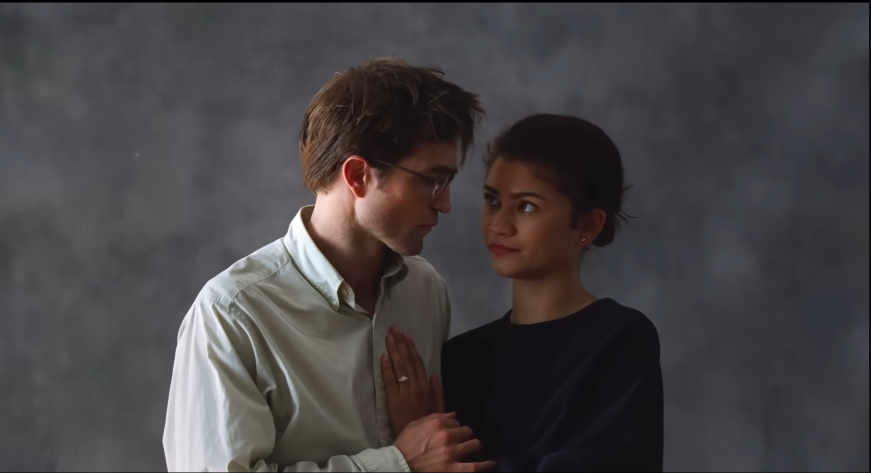
The Drama continues this tradition. It arrives in theaters on April 3, 2026, via A24, produced by Ari Aster . The film stars Zendaya and Robert Pattinson as an engaged couple whose wedding week implodes after a drunken party game. The supporting cast includes Alana Haim, Mamoudou Athie, and Zoë Winters .
Critical response? Splintered. The film holds an 83-85% “fresh” rating on Rotten Tomatoes from over 76 reviews, alongside a 65 on Metacritic . Those numbers mask a warzone of disagreement. Some critics call it “slyly brilliant” and “one of the boldest, brashest movies in some time” . Others describe it as “crushingly humorless” and “a repulsive, one-star mess” .
The only consensus? Everyone will argue about this movie.
What Is The Drama Actually About?
The setup sounds like someone fed a Nora Ephron script into a woodchipper.
Emma Harwood (Zendaya) works at a Boston bookstore. She holds an English degree from Boston University. She radiates the kind of effortless cool that makes strangers want to be her friend . Charlie Thompson (Pattinson) directs a Cambridge art museum. He speaks with a British accent. He seems like the kind of man who knows the difference between natural and skin-contact wine .
They love each other. They have booked the venue. The wedding arrives in six days.
Then comes the party game.
After too many wine samples, their friends Rachel (Haim) and Mike (Athie) propose a bonding exercise: reveal the “worst thing you’ve ever done.” Mike confesses a failure of chivalry. Rachel admits childhood cruelty. Charlie shares something relatively anodyne about the internet .
Emma’s turn arrives. She takes a breath. She tells the table something that stops conversation cold.
The trailers withhold her confession. The marketing campaign treats it like a state secret. Early reviews confirm what many suspected: Emma planned an unrealized school shooting as a teenager .
The remaining 90 minutes follow Charlie’s spiral. He looks at his fiancée. He wonders whether he knows her at all. And Borgli asks the audience a question most movies lack the courage to pose: What would you do?
The Performances: Pattinson Steals the Movie
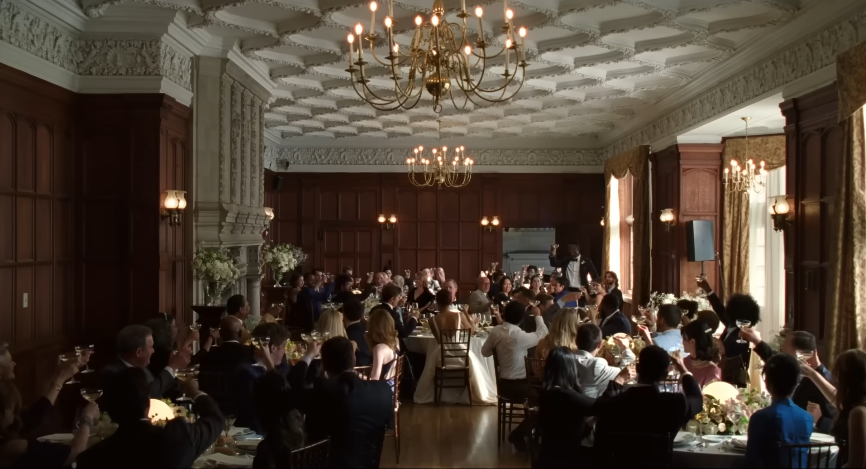
Let’s establish something immediately. The billing says Zendaya first. The movie belongs to Pattinson.
This is not a criticism of Zendaya. She delivers what USA Today calls a “quietly powerful” performance, and the San Francisco Chronicle notes “her layered performance holds back then lets go as Emma’s full complexity is gradually revealed” . She navigates the impossible task of making a character who planned a school shooting sympathetic—or at least comprehensible.
But Charlie reacts. Emma waits. And watching Pattinson process the unthinkable provides the film’s primary engine.
Deadline described his turn as a “career-best performance” . Empire Magazine awarded the film four stars and praised its “hilarious in that cruel, keen way that Borgli has proved to be a specialist” . Pattinson reportedly rebounds here after two 2025 projects that disappointed audiences—the “frankly kind of awful” Mickey 17 and the “ambitious but super flawed” Die My Love .
His Charlie vibrates with anxiety. He paces. He makes terrible decisions. He seeks counsel from people who give terrible advice. Pattinson’s physicality—the hunched shoulders, the darting eyes, the way he holds a wine glass like it might explode—communicates panic more effectively than any dialogue.
Alana Haim deserves special mention. Her Rachel functions as the film’s chaos agent. The Daily Illini describes her as “potentially one of the most annoying characters in recent memory” and notes that “any time she’s on screen, viewers can expect things to get much worse for Emma” . This is praise. Rachel drives conflict. Without her, the film would stall.
The Editing: Dream Logic Meets Wedding Planning
Borgli and editor Joshua Raymond Lee deploy an unconventional approach that divides critics sharply.
The film employs “nonlinear, fragmented editing” with “abrupt jump cuts from scene to scene” that “prepare the viewer for discomfort” . Images and sounds pop in and out, “just like they would in a dream or as you’re drifting off to sleep” .
India Block describes the effect as “cringe-inducing and gross-out in places, but artfully shot, interestingly edited and set to some of the freakiest flute toots in arthouse cinema” .
This style serves thematic purpose. Borgli wants viewers to question what is real. The dreamlike editing blurs the line between Emma’s perception and Charlie’s panic. When the film cuts abruptly from a tender moment to a confrontation, you feel the whiplash the characters experience.
Not everyone appreciates the approach. The Hollywood Reporter’s Richard Lawson argues that “the movie never really reaches the energy of a full comedy. Nor does it delve into the inherent drama of its premise. It instead hovers in the middle ground—or, maybe more accurately, gets stuck in the mud of no man’s land” .
The Controversy: Is This Topic Off-Limits?
You cannot discuss The Drama without addressing the elephant in the room. Actually, the elephant is the room.
The film uses school shooting planning as its central plot device. Borgli, a Norwegian filmmaker, applies this particularly American pathology to a relationship comedy. Some critics find this bold. Others find it exploitative.
The Associated Press warned the film “wastes two of the planet’s most gorgeous people and will surely get everyone involved in trouble for using a current American tragedy as a plot point” .
Gun-control advocates stirred backlash before the film even opened . The question hovers over every review: Does Borgli earn the right to use this material?
The Daily Illini offers the most generous reading: “Although Emma’s secret undeniably touches on a controversial topic in American politics, it isn’t given complete attention. If Borgli wanted to make a clearer political argument with this film, he certainly could’ve, but it’s obvious that wasn’t his first priority. As a result, the film’s themes feel a bit shallow, making it more of a character study than social commentary” .
Brian Truitt at USA Today gave the film four stars and defended its approach: “The Drama is a moral thought experiment conducted amid a disaster-filled deconstruction of the romantic comedy. And given the plot’s somewhat jaw-dropping twist, it’s also one of the boldest, brashest movies in some time” .
Your tolerance for this premise will determine your experience. The film does not offer easy answers. Borgli “seems to respect the audience too much for that” .
The Wedding Logistics Problem
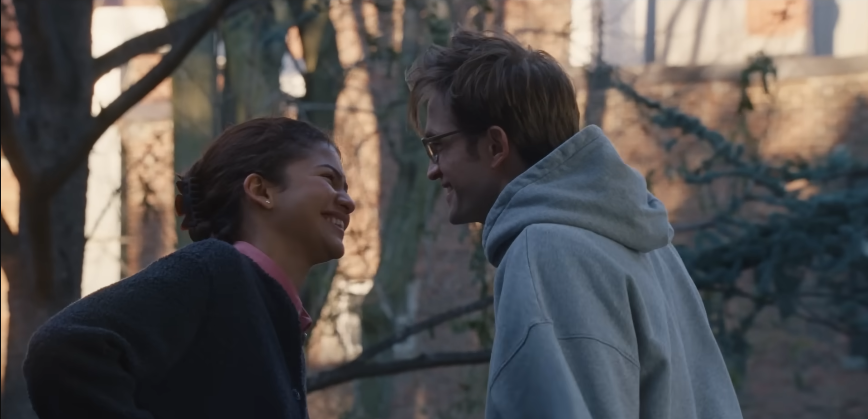
Here is a genuinely funny detail that has nothing to do with school shootings.
The Hollywood Reporter published an entire article titled “The Drama Gets Weddings All Wrong.” The complaints are specific and, frankly, delightful:
- Why does the couple choose flowers days before the ceremony?
- Why does a wedding photographer offer an impromptu, free photo shoot?
- Why does any of this happen in person rather than over harried texts?
- Where is the wedding planner?
- Why does a DJ set up equipment the day before the wedding, oblivious to theft risk?
One real-life former DJ texted the publication a single word: “Preposterous.”
This critique may seem trivial. It also reveals something important about Borgli’s approach. The Drama does not care about wedding realism. It cares about emotional realism. The flowers, the DJ, the photographer—these exist as props in a psychological experiment. If you need logistical accuracy to enjoy a film, The Drama will drive you crazy.
The Ending Problem: Abrupt or Appropriate?
The most consistent criticism involves the film’s conclusion.
The Daily Illini calls the ending “abrupt and unearned” and notes that “following Emma’s confession, Charlie spirals through a series of poor decisions. Depicting the aftermath of these choices could have been beneficial, as the final scene feels unsatisfactory” .
IMDb user reviews echo this sentiment. One viewer writes: “It peaks in the final act, but I imagine it would’ve been difficult to end a movie like this. Borgoli doesn’t really stick the landing, but at least the ending doesn’t ruin the movie. You’re just waving this high-intensity wave, and it doesn’t come crashing down quite like how it should” .
Here is the counterargument: Maybe that’s the point.
Borgli has created characters whose central problem resists tidy resolution. A satisfying ending—Charlie forgives Emma! Charlie leaves Emma!—would contradict everything the film observes about human psychology. Relationships do not resolve. They continue. The abrupt cut to black may frustrate, but it also reflects reality.
The Times (U.K.) offered the most quotable assessment: “A nuptial apocalypse has rarely been explored with such dark intelligence and mordant wit as in this often piercing and cringe-out-loud dramedy” .
The Borgli Touch: From Dream Scenario to Wedding Nightmare
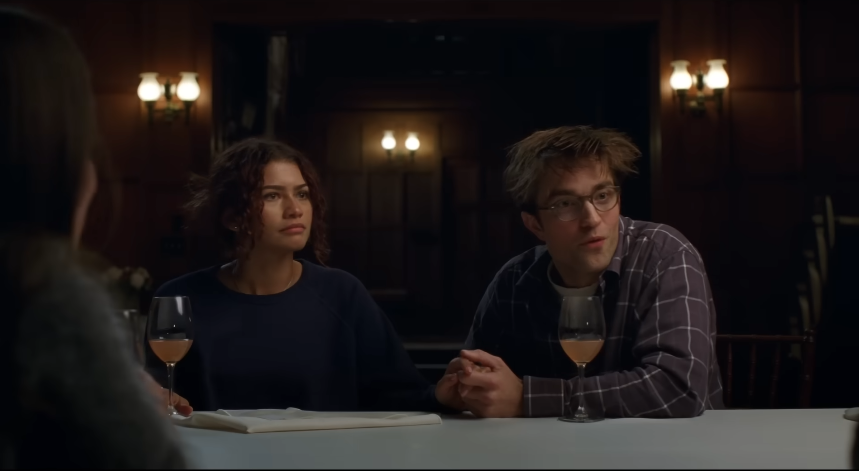
Understanding The Drama requires understanding Kristoffer Borgli.
His previous film, Dream Scenario, starred Nicolas Cage as a professor who inexplicably appears in millions of strangers’ dreams. The premise started funny and curdled into something genuinely unsettling. Borgli specializes in this pivot—from comedy to discomfort, from laughter to squirming.
David Ehrlich at IndieWire gave the film a B and noted: “The movie’s twist is both transgressive enough to be pleased with itself and also rooted in a reality that refuses to be dismissed as a bad joke” .
Borgli himself addressed the genre confusion at the film’s premiere: “It’s been a challenge to put a genre on the movie. Obviously the title has a genre, but it doesn’t feel right. It doesn’t capture the full scope. I’ve seen it labeled as comedy, drama, romcom, dark comedy, and they all apply, but they don’t capture the whole thing, I feel, the nuance” .
This resistance to categorization is precisely what makes Borgli’s work distinctive. It also explains why his films divide audiences so sharply. You cannot settle into The Drama. The film refuses to let you get comfortable.
The A24 Factor: Elevated Horror Meets Relationship Comedy
A24 distributes The Drama, and the studio’s fingerprints cover every frame.
The film looks expensive. The apartment—with its “impeccably appointed one-bedroom” and “charming corkscrew staircase and built-in bookshelves”—could host an Architectural Digest tour . The costume design feels specific and lived-in. The cinematography by Arseni Khachaturan glows with the muted warmth that has become A24’s house style.
Ari Aster (Hereditary, Midsommar) produces alongside Lars Knudsen and Tyler Campellone . Aster’s influence is palpable. The Drama treats relationship anxiety with the same escalating dread that Aster applies to pagan cults and family trauma. The stakes are lower—nobody dies—but the emotional violence feels similarly unsparing.
The film also marks a busy year for its stars. Zendaya and Pattinson reunite in Christopher Nolan’s The Odyssey (July 2026) and Denis Villeneuve’s Dune: Part Three (December 2026) . Watching them navigate Borgli’s uncomfortable universe while knowing they will share screens in two of the year’s biggest blockbusters adds a meta-textual layer. These are movie stars playing ordinary people falling apart.
What Works (And What Tests Patience)
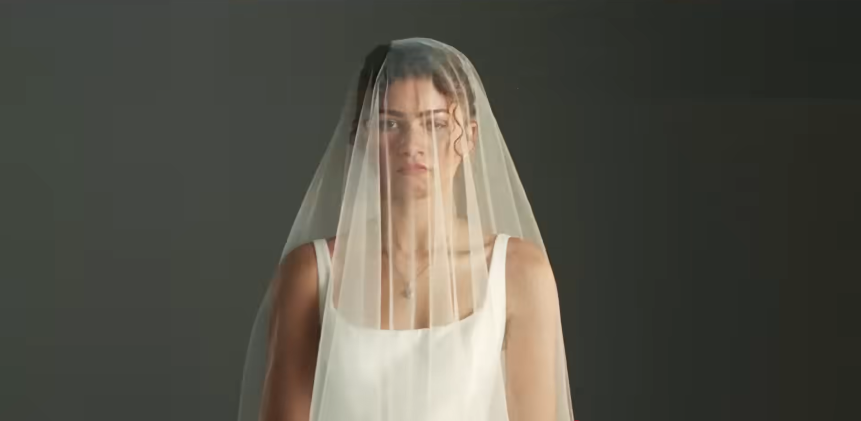
Let’s break this down honestly.
Reasons to watch:
- The performances. Pattinson delivers career-best work. Zendaya proves her range extends beyond blockbusters.
- The editing. Borgli’s dream-logic approach creates genuine unease.
- The conversation. You will argue about this film. That is a feature, not a bug.
- Alana Haim. Her Rachel is unforgettable, whether you love her or hate her.
Reasons to hesitate:
- The premise. If school shooting material crosses a line for you, skip this film.
- The ending. It lands abruptly. Some viewers will feel cheated.
- The wedding logistics. If you have planned a wedding, the inaccuracies will distract you.
- The pacing. The middle section drags as Charlie spirals.
Should You See The Drama?
Yes. With carefully calibrated expectations.
Go see it if:
- You appreciate Kristoffer Borgli’s previous work (Dream Scenario, Sick of Myself).
- You enjoy films that provoke post-movie arguments.
- You want to watch two of Hollywood’s most beautiful people play uncomfortable for 105 minutes.
- You value bold swings over safe storytelling.
Skip it if:
- School shooting material triggers you, regardless of context.
- You need tidy endings with clear moral lessons.
- Wedding planning inaccuracies will drive you crazy.
- You prefer comedies that remain funny throughout.
Verdict: The Drama is a bold, divisive, impeccably acted provocation. It earns its 83% Rotten Tomatoes score and its 65 Metacritic . Pattinson reminds everyone why he is one of our most interesting actors. Zendaya continues her evolution from Disney star to serious dramatic presence. Borgli confirms his status as cinema’s premier chronicler of contemporary anxiety.
The film runs 105 minutes and carries an R rating for “language and mature themes” . A24 distributes in theaters nationwide beginning April 3, 2026 .
Go in knowing as little as possible. Let the discomfort wash over you. And prepare to spend the drive home arguing about what you would have done.
Rating: ★★★½☆ (3.5/5)
Runtime: 105 minutes
Rating: R
Director: Kristoffer Borgli
Writer: Kristoffer Borgli
Cast: Zendaya, Robert Pattinson, Alana Haim, Mamoudou Athie, Zoë Winters, Hailey Gates
Producers: Ari Aster, Lars Knudsen, Tyler Campellone
Release Date: April 3, 2026 (US theaters)
Distributor: A24
Rotten Tomatoes: 83-85%
Metacritic: 65
The Drama
- Rating7



Leave a comment