


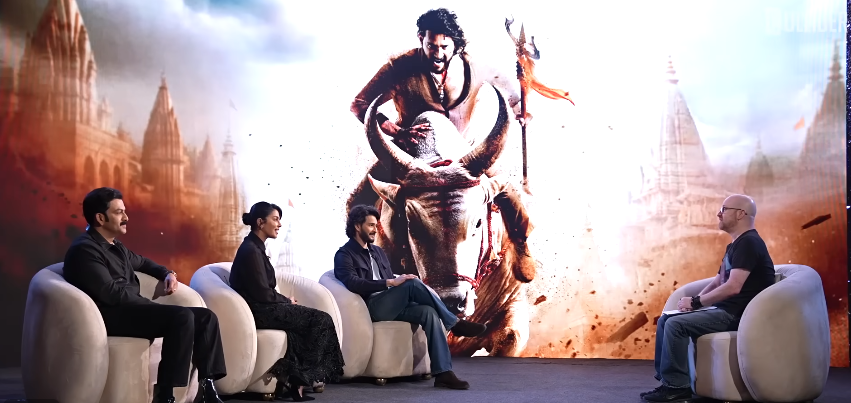
The Indian film industry is buzzing with unprecedented excitement, and for good reason. In an exclusive conversation, three powerhouse actors—Mahesh Babu, Priyanka Chopra Jonas, and Prithviraj Sukumaran—opened up about their transformative experience working with visionary director S.S. Rajamouli on what promises to be one of the most ambitious cinematic projects ever undertaken in Indian cinema. Set for release in 2027, this magnum opus is already breaking records before a single frame has been publicly released.
A Culinary Journey Through India: The Actors’ Favorite Flavors
Before diving into the intricacies of this groundbreaking film, the conversation took a delightful detour into the rich tapestry of Indian cuisine—a fitting metaphor for the diversity and richness of Indian cinema itself.
When asked about their favorite Indian dishes, each actor revealed personal connections to regional specialties. Mahesh Babu’s choice was immediate and enthusiastic: “Good old Hyderabadi chicken biryani. I love it.” This iconic dish, with its aromatic basmati rice, tender chicken, and blend of spices, represents the culinary heart of Hyderabad, the city that has become synonymous with Telugu cinema.
Priyanka Chopra Jonas, known for her adventurous palate, had a different answer: “I’m a big fan of chaat.” The beloved Indian street food, with its explosion of sweet, tangy, and spicy flavors, reflects her appreciation for authentic, unpretentious cuisine. Her co-stars playfully noted her ability to eat anything, a trait that has served her well as she navigates different film cultures across the globe.
Prithviraj Sukumaran brought the conversation home to his roots: “I come from a seaside town in Kerala. I’ve grown up with a lot of seafood. I love rice and fish curry from back home.” This comfort food connection highlights how deeply regional identity influences personal preferences, much like how regional cinema shapes artistic expression.
Career-Defining Moments: The Films That Changed Everything
Each of these accomplished actors has navigated a unique journey through cinema, with specific projects serving as pivotal turning points in their careers.
Mahesh Babu’s Pokiri Phenomenon
For Mahesh Babu, the conversation naturally turned to 2006’s “Pokiri,” the film that catapulted him to superstardom. “That film made me a star,” he reflected candidly. “Obviously, that changed me.” But with stardom came unexpected challenges. “I literally got confused after that. I didn’t know what to do.”
This honesty reveals a rarely discussed aspect of sudden fame: the overwhelming weight of audience expectations. “You go to a phase where the expectations of the audiences are so high that you literally go into a space that you don’t know what to do next,” he explained. This vulnerability humanizes the superstar and illustrates the psychological impact of massive success in Indian cinema.
Priyanka Chopra’s Multiple Pivots
Priyanka Chopra Jonas’s journey represents one of the most remarkable career transformations in contemporary cinema. Coming from an academic family—both parents were doctors—she never initially envisioned acting as a profession. “I loved watching movies, but I never thought in my head that that was an actual profession that a person could do at that time,” she revealed.
Her entry into films came through an unconventional route: winning a beauty pageant. “My film school was a film set,” she explained, emphasizing her hands-on learning approach. “Everything that I’ve learned, I’ve learned from filmmakers that I’ve worked with, co-actors that I’ve worked with, and I still consider myself a student.”
Several films marked critical turning points:
- Fashion: An early film that fundamentally changed her perspective
- Barfi!: A challenging character that pushed her boundaries
- Her Western pivot: Navigating the completely different culture of filmmaking in Hollywood
- Return to Telugu cinema: Taking on a project in a language she doesn’t speak
“I don’t speak the language. I don’t understand the language,” she admitted about working in Telugu cinema. “I had to phonetically memorize and understand each word to be able to banter in the movie. Improvisation’s really tough.” This dedication to authenticity, despite the immense challenge, demonstrates her commitment to her craft.
Prithviraj Sukumaran’s Transformative Journey
For Prithviraj, the film that stands out is “The Goat Life” (Aadujeevitham), now streaming on Netflix. “It really pushed me as an actor for multiple reasons,” he explained. The film tells the harrowing true story of someone stranded in modern-day slavery in the Saudi Arabian desert for three years.
The production itself became a trial by fire. “The shoot got stuck in the middle of the pandemic, and the entire crew, myself included, we were in the deserts of Jordan for three months, not shooting, just stuck there.” The team eventually had to evacuate on a repatriation flight back to India, only to return a year and a half later to complete filming in Jordan and Algeria.
“The process plus the character—there were a lot of lessons there,” he reflected, emphasizing how the film demanded complete physical and emotional transformation.
He also highlighted an earlier project: a 2014 film where he played an Atlanta police officer, an Indian boy adopted by an American couple. “That was the first time I was trying to root a character in things that I did not know at all,” he said. “I had none of those crutches.” This experience of truly swimming without knowing which way to head proved invaluable.
The Rajamouli Vision: Why This Film Is Different
What makes SS Rajamouli’s upcoming film so extraordinary? The answer lies in both scale and storytelling ambition.
The Unprecedented Trailer Event
The actors recently experienced something unprecedented: a trailer screening before 50,000 fans. “We knew exactly what he wanted to show you,” Mahesh Babu explained. “We started work on the teaser a year ago, and this three-minute video footage took 12 months for the team to do.”
Rather than a traditional press conference, Rajamouli chose to tell the film’s story through this meticulously crafted three-minute teaser. “It blew our minds away when I first heard the presentation of what he was going to do,” Priyanka recalled. “Finally, when the whole VFX was done and when I saw it, I was blown away.”
The emotional impact of watching it with thousands of fans was overwhelming. “I still have goosebumps,” she admitted.
A Journey Across Millennia
What sets this film apart is its ambitious temporal scope. “The trailer shows you where the movie travels—every part of the travel of the movie,” Priyanka explained. “The journey of our movie from 2000 BC to 2027 was just amazing.”
This epic timespan means the film isn’t just telling a story; it’s traversing millennia of human history, culture, and evolution. The teaser is filled with Easter eggs that fans have already begun decoding with impressive accuracy. “Some of them have a lot of it right, which is terrifying,” Priyanka laughed. “I was like, ‘How did they figure that out?’ But they’re zooming in, and you know…”
The Villain Philosophy
One of Rajamouli’s signature strengths is his creation of memorable antagonists. “SSR comes up with very good antagonists, and he loves his antagonists,” Mahesh Babu revealed, sharing an illuminating anecdote.
Fifteen years ago, during early meetings before they had settled on a script, Rajamouli came to Mahesh’s home for lunch. After discussing what kind of film he wanted to make, Rajamouli asked Mahesh what kind of film he wanted to do. Mahesh messaged him afterward: “I’m really happy doing this film with you, and I love the way you present your heroes. You really love your heroes.”
Rajamouli’s response was telling: “Thank you, but I love my villains more.”
This philosophy echoes the classic James Bond formula: the scarier the villain, the bigger the hero becomes. “The bigger villain, the bigger…” Mahesh trailed off with a knowing smile.
The Wheelchair Character: Danger Beyond Physical Limitations
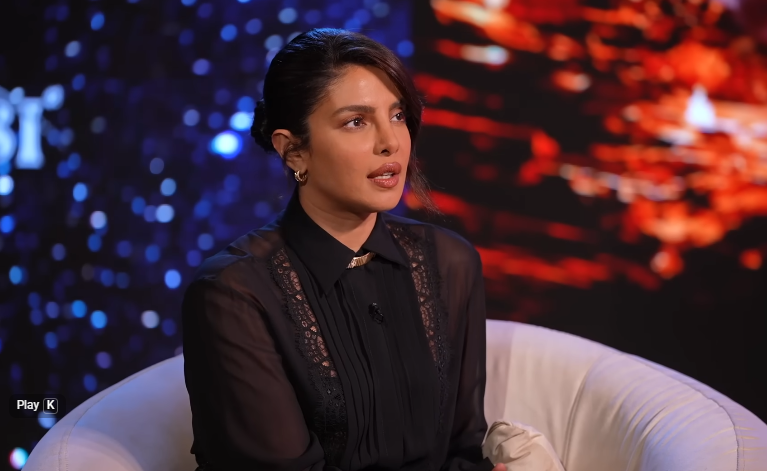
Priyanka Chopra Jonas’s character presents one of the film’s most intriguing elements: a dangerous individual confined to a wheelchair. But this isn’t just a prop—it’s an extension of the character’s very being.
“There’s a lot more to it than what you would think from that one picture you saw,” she teased. “Because of who he is and because of the mind that this character is, the wheelchair in a way is an extension of his personality. The wheelchair is an extension of how his mind works.”
She painted a chilling picture: “He’s a dangerous man—a very dangerous man who’s just physically incapacitated. His mind works in very, very unpredictable, dangerous ways.” The wheelchair is set up to connect directly to his thoughts, making it far more than a mobility device.
The Physical Challenge
The role came with unexpected physical challenges. To ensure she didn’t involuntarily move during takes, her limbs were locked in place by a mechanism. “In case a fly comes, if you want to itch your nose, you need somebody else to do it,” she explained.
She recounted one particularly memorable incident: “There was this one day of shoot on the beach. He couldn’t move, the poor guy, and he had a very long monologue happening. There were these flies sitting on him, and literally, the poor guy couldn’t do anything about it. He was actually praying to the flies, ‘For this one shot, please don’t come near me.'”
Miraculously, she said, “I think they heard his prayers. They didn’t come near him for that shot. He just prayed, and bingo—the flies were gone.”
The commitment to authenticity also led to some humorous moments. “The first day, I got my dialogue wrong, and I lifted my hand up and said, ‘Sorry,'” she laughed. The director’s response was immediate: “That’s not my leg!”
The IMAX Experience: Bringing Indian Cinema to the World’s Biggest Screens
The decision to film in IMAX represents a significant milestone for Indian cinema. “It is catching up now for sure,” Mahesh Babu confirmed. “The experience of watching it on a big screen is something else. If the right film comes for IMAX, the experience is going to be unbelievable.”
By the time the film releases in 2027, Priyanka added, “There are going to be more screens, and it’s going to be big.”
For Priyanka, who has worked extensively in both Indian and Western cinema, the IMAX format represents the perfect vehicle for Rajamouli’s vision. “I love IMAX. It’s my favorite format,” she said enthusiastically.
The Marathon Production: Commitment on an Unprecedented Scale
Perhaps the most staggering aspect of this production is its duration. While American films might shoot for 25 days (small) to 100 days (blockbuster), Rajamouli’s film is shooting for a year and a half—or longer.
“You need to be committed,” Mahesh Babu stated matter-of-factly. “It’s two years. You need to be mentally prepared for that. Once you’re mentally prepared, I think it’s quite easy.”
Priyanka playfully interjected, “For you, it’s been like five years. You haven’t done anything because you had prep for this movie for a year, and you’re going to be filming…”
Mahesh laughed: “Make it five? Is it five now?”
But the reality is more nuanced than simply being on set every day for two years. “Production schedules are different in Indian films than they are in America,” Priyanka explained. “We shoot a lot here with every set or every location. You’ll shoot for 25, 30, 60 days for one part, then take a break while the other one gets set up.”
The Frenetic Pace
Despite the extended timeline, the actual shooting pace is anything but leisurely. “With Rajamouli, even when you say one year or one and a half years, that does not mean we are shooting every day,” Prithviraj clarified. “But all through, as actors, we are constantly engaged—in rehearsals, test shoots, or testing.”
He emphasized the intensity: “If you ever have an opportunity to see how he shoots, you realize that the pace is frenetic on set. If you come to a Rajamouli shoot, it’s not like anybody is sitting around. Some days, we hardly get like five minutes to catch a bite in between, and then for lunch, and then you’re back on set shooting.”
The shoot pace is frenetic because of what Rajamouli is trying to achieve—the sheer ambition and scale of his vision. “Some days, from morning 7:30 to 6:30, we might be trying to get that one shot. At 6:30, we could be at take 94, and we’ll be like, ‘Okay, that’s a wrap. We’re going to try this again tomorrow.'”
Classical Filmmaking at Its Core
Despite the massive scale, Prithviraj observed a crucial aspect of Rajamouli’s approach: “For all the grand visuals and the sheer scale and imagination that his films carry, I’ve realized that as far as possible, he sticks to the most simple basics for his filmmaking.”
“I’ve seldom seen him setting up a gimmicky shot. In fact, never. I’ve never seen him attempt a gimmick with the camera or an unnecessarily complicated track movement. Nothing. For him, it’s about the basics. It’s about classical filmmaking done right.”
This approach might seem easier, but it’s actually more demanding. “When you’re sticking to that language of making a film, you really can’t have an escape mechanism for a shot that you’re not able to capture or a moment that you’re not able to get. You will have to just keep at it till you get it. And that—he does that. He will go on till he gets what he wants.”
Priyanka agreed: “It’s Kubrick-esque.”
The Director-Actor Trust
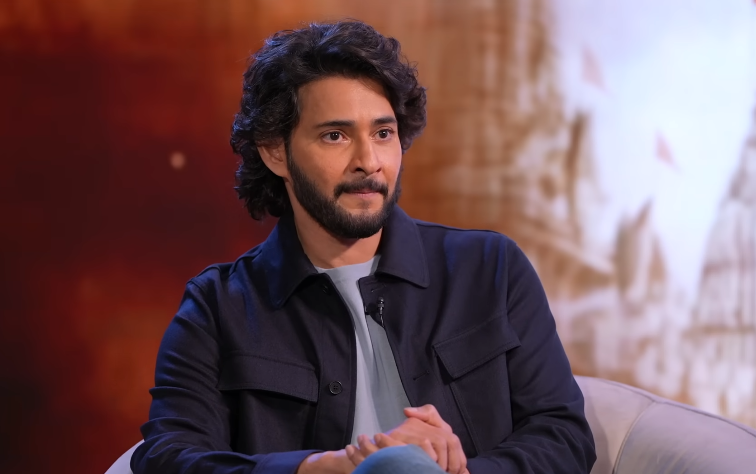
One of the most revealing aspects of working with Rajamouli is his communication style. “The beauty about him is he does not explain the technical aspect to the actors,” Mahesh Babu explained. “He does not say, ‘This is a slow motion shot.'”
“We’re not supposed to know that,” Priyanka added.
“He’s supposed to know that, and he handles it,” Mahesh continued. “Most of the times, we’ll hear if he says ’48 frames,’ but most of the times, it’s like, ‘I want the expression like this. I want you to do this.’ He just explains what he wants, and then you do it.”
The feedback system is simple but effective: “You hear ‘nice,’ and then you hear ‘very nice.’ If you hear ‘very nice,’ that means you can pump your fist. You’ve given a brilliant shot.”
This approach protects the actors’ creative space. “It’s not our job to know how. Our jobs are to know our characters and not more than that. He really protects his actors and our minds and our sensibility when we’re working.”
One common quality all three actors share: none of them check the monitor. “Once the shot is done, we are done,” Priyanka said. “We have no idea what it really looks like.”
This trust is absolute. “We are very secure that way because we know that if he said ‘okay, next shot,’ that ‘okay’ is okay,” Mahesh explained.
Priyanka admitted she was initially confused: “I was like, ‘Okay, is it nice? Is it okay?’ I’m assuming it’s nice because then she would hear ‘nice,’ and then she would get excited.”
The actors have even developed a playful system: “We count who gets more ‘nices,’ who gets more ‘very nices,’ and who gets like an ‘okay,'” Mahesh revealed with a laugh. Though Priyanka quickly defended herself: “Just because you shot a little bit more than me, that’s why you have more—not because you did a better job!”
The Cultural Phenomenon: Indian Cinema’s Global Moment
The recent trailer screening event, with its 50,000 attendees, underscores a unique aspect of Indian cinema culture. “India loves its movies, and Indian fans are very, very loyal,” Priyanka observed. “They are not afraid to show their love, wherever in the world you might go.”
Mahesh added important context: “Especially for Telugu cinema, these kinds of events are not uncommon. It happens often, but never so early. It usually happens when the movie is releasing, but to do it so early—a year or something out before it even comes out—was spectacular.”
The venue itself was record-breaking. “That screen we had—it’s the biggest screen in the world,” Priyanka marveled. “To be able to show the trailer, or the three minutes of each chapter of the movie, was incredible.”
Looking Ahead: 2027 and Beyond
As the conversation drew to a close, one thing was abundantly clear: this film represents more than just another project for these actors. It’s a commitment of time, energy, and artistic vision unlike anything they’ve undertaken before.
For the actors, the journey has been transformative. As Prithviraj noted, “Every film changes your mindset, but nothing like what I’m experiencing right now with this film. I mean, it’s something else.”
Priyanka echoed this sentiment: “As an actor, you realize that every film, there is something you learn, unlearn, discover. Sometimes you learn what not to do; sometimes you learn what to do. Every film is a lesson.”
For fans of Indian cinema, of epic storytelling, and of visionary filmmaking, 2027 can’t come soon enough. This film promises to be not just a movie but a cultural event—a testament to the boundless ambition of Indian cinema and its ability to tell stories that span millennia while resonating with contemporary audiences.
As Mahesh Babu, Priyanka Chopra Jonas, and Prithviraj Sukumaran continue their work on this unprecedented project, one thing is certain: SS Rajamouli is crafting something that will redefine what Indian cinema can achieve on the global stage. The journey from 2000 BC to 2027 isn’t just happening on screen—it’s happening in the very fabric of Indian filmmaking itself.
The film releases in 2027 in IMAX theaters worldwide. Stay tuned for more updates on this groundbreaking cinematic achievement.
Anticipated Epic Review Overview
- Pre-Release Rating5











Leave a comment