



Let me start with a fact. Ridley Scott’s Napoleon arrived in theaters on November 22, 2023 . The film had a $130–200 million budget and a 157-minute runtime .
Now in 2026, the conversation has changed. Why? Because Scott released his 4-hour director’s cut on Apple TV+ in August 2024. The new version adds 48 minutes of never-before-seen footage .
So does the extended cut fix the original’s problems? Or does it just give us more of what divided critics in the first place?
Here is everything you need to know about Napoleon in 2026. The plot. The cast. The historical accuracy fight. And where to stream the director’s cut.
Quick Facts: What You Need to Know
| Detail | Information |
|---|---|
| Director | Ridley Scott |
| Writer | David Scarpa |
| Theatrical Release | November 22, 2023 |
| Director’s Cut Release | August 29, 2024 (Apple TV+) |
| Theatrical Runtime | 157 minutes |
| Director’s Cut Runtime | 205 minutes (4 hours, 10 minutes) |
| Budget | $130–200 million |
| Box Office | $221.4 million worldwide |
| Rotten Tomatoes | 58% (critics) |
| Oscar Nominations | 3 (Production Design, Costume Design, Visual Effects) |
The Plot: Napoleon’s Rise and Fall Through His Relationship with Josephine
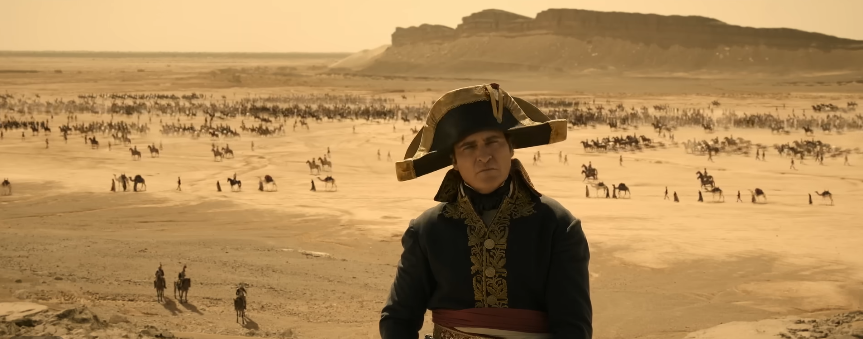
The film covers Napoleon Bonaparte’s journey from a young artillery officer to Emperor of France. But the story focuses heavily on his relationship with his wife, Josephine .
Here is the timeline the film covers:
- 1793: Napoleon witnesses Marie Antoinette’s execution
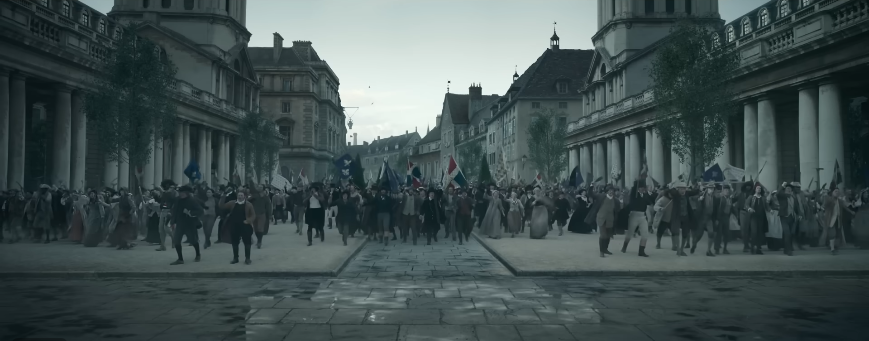
- 1795: He suppresses a royalist insurrection in Paris
- 1796: Napoleon marries Josephine de Beauharnais
- 1798: He wins the Battle of the Pyramids in Egypt
- 1804: Napoleon crowns himself Emperor of the French
- 1805: He defeats the Austrians and Russians at Austerlitz
- 1812: Napoleon invades Russia, suffers massive losses
- 1815: Napoleon loses at Waterloo, exiled again
- 1821: Napoleon dies in exile on Saint Helena
The screenplay by David Scarpa focuses on Napoleon’s “addictive, volatile relationship” with Josephine as the emotional core . This choice became the film’s biggest point of contention among critics and audiences.
The Catholic Herald notes that covering so much ground in 157 minutes makes the film feel “episodic.” The screenplay “glosses over” the highly convoluted plots of revolutionary politics “with agonising brevity” .
The Cast: Who Plays Who
| Actor | Role |
|---|---|
| Joaquin Phoenix | Napoleon Bonaparte |
| Vanessa Kirby | Empress Josephine |
| Tahar Rahim | Paul Barras |
| Rupert Everett | Duke of Wellington |
| Mark Bonnar | Jean-Andoche Junot |
| Ben Miles | Caulaincourt |
| Paul Rhys | Talleyrand |
Sources: IMDb, Catholic Herald
Joaquin Phoenix as Napoleon
Phoenix brings a specific energy to the role. The Catholic Herald describes his Napoleon as “breathy and petulant in diplomatic settings” but “resolute and calm only in battle.” The film makes Napoleon look “rather ridiculous” at times .
Hong Kong Film Critics Society reviewer Ji Tao notes that Scott deliberately “puts Joaquin Phoenix’s Joker persona into Napoleon’s character.” The result is a Napoleon who is “a lion on the battlefield but a frustrated monkey at home” .
Vanessa Kirby as Josephine
Kirby gives a “powerful and seductive impression of French aristocracy,” according to the Catholic Herald. As Napoleon’s conquests take him overseas, the love story unfolds through their correspondence. Much of it is one-sided, as Napoleon begs for affection while hearing tales of her infidelity .
Hong Kong critic Chen Guanglong notes that the film focuses heavily on Josephine’s infidelity and infertility but avoids showing Napoleon’s own affairs. This makes the portrayal “biased” .
The Director’s Cut: What’s New in 2026
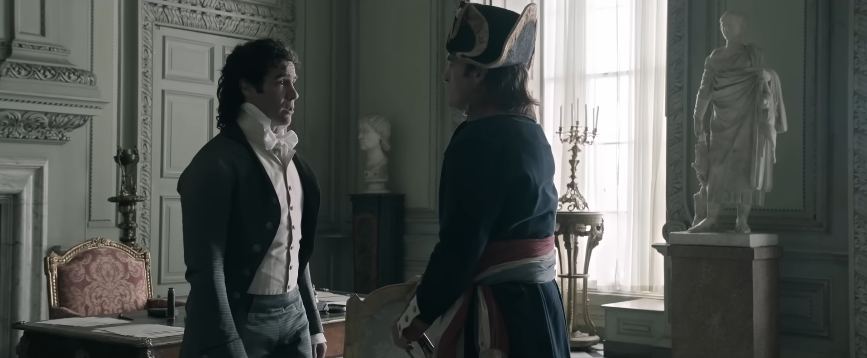
The 4-hour director’s cut landed on Apple TV+ on August 29, 2024 . Here is what the extended version adds:
48 minutes of new footage, including:
- Josephine’s origin story with more context
- More extravagant costumes and larger sets
- The previously unreleased Battle of Marengo scene
- Deeper exploration of Napoleon’s military ascent
Scott told Total Film magazine in October 2023 that the director’s cut was “four hours and 10 minutes this morning.” He confirmed the extended cut would follow the theatrical release on streaming .
The big question: does the longer runtime fix the pacing issues? Hong Kong critic Chen Guanglong argues that the core problem remains. The film “lacks logical transitions” between major battles and bedroom scenes. It “does not show Napoleon’s governing philosophy or reform ideas” .
Critical Reception: What Reviewers Said (2023 vs 2026)
Rotten Tomatoes and Metacritic
The theatrical cut holds a 58% critic score on Rotten Tomatoes . This places it in “rotten” territory. The audience score is slightly higher, but the critical reception remains mixed.
Hong Kong Film Critics Society (March 2026)
Hong Kong critics reviewed the film in March 2026. Their assessment focuses on the film’s fragmented structure.
Chen Guanglong writes: “Scott wants to shape different aspects of Napoleon, but he only captures major battles and bedroom scenes. Each section lacks logical transition. The story rises and falls like a seasick boat” .
Ji Tao offers a different view: “Scott uses British humor to treat Napoleon as a dramatic role rather than history. French audiences will definitely not like it. But non-French viewers can feel the sharp, venomous taste” .
Qing Xin praises the film’s anti-war message: “Scott uses the Napoleon legend to talk about anti-war. From a human perspective, he reduces a strongman, hero, and emperor to a man lacking confidence in front of the woman he loves. This artistic vision is unprecedented” .
French Critics (November-December 2023)
French critics reacted strongly to the film. Historian Patrice Gueniffey told Le Point magazine that Scott “clearly doesn’t like Napoleon.” He called the portrayal a “caricature of an ambitious Corsican ogre, a sullen boor who is also disgusting with his wife” .
Le Figaro wrote that the film “makes Napoleon into a gloomy and mediocre character. Such sabotage is part of a logic that demeans and ridicules” .
Liberation added: “Clumsy and deliberately unworthy of its poorly crafted subject, the biopic offers no point of view, neither on the man, nor on the myth” .
Le Monde was more nuanced. The newspaper noted that the film is also a portrait of Napoleon’s complex relationship with Josephine. Scott superimposes “the emperor’s love life onto his feats on the battlefield, leaving aside the political question” .
Box Office in France
Despite the harsh reviews, the film performed well in France. It sold 764,000 tickets in its first week of release. One in three French cinema-goers that week saw Napoleon. It topped the French box office ahead of The Hunger Games .
The Historical Accuracy Debate: What Did Scott Get Wrong?

Scott faced significant criticism for historical inaccuracies. Here are the major points raised by historians and critics.
Napoleon Did Not Shoot at the Pyramids
The film shows Napoleon’s army firing cannons at the Great Pyramids of Giza. Emilie Robbe, a Bonaparte expert at France’s Army Museum, confirmed this never happened .
Napoleon Was Not at Marie Antoinette’s Execution
The film opens with Napoleon witnessing the queen’s execution. British historian Dan Snow pointed out that Napoleon was not present at this event .
The Casualty Numbers Are “Fanciful”
The film ends with text stating Napoleon was responsible for three million deaths. Historian Patrice Gueniffey called these statistics “fanciful” .
Scott’s Response
Scott responded bluntly to the fact-checking. He told the New Yorker: “Get a life” .
Other Criticisms
The Catholic Herald notes that Phoenix uses his native American accent while most co-stars are British. This reinforces Napoleon’s “outsider status” but creates an odd effect. Hearing “Vive la France!” shouted in British tones feels “absurd” .
The same review points out that Josephine was famously an “older woman” in history. Yet Vanessa Kirby (born 1988) looks significantly younger than Phoenix (born 1974). This changes the dynamic of their early courtship, making it feel “decidedly creepy” .
What Works: The Film’s Strengths
The Battle Scenes Are Spectacular
Multiple reviews praise the battle sequences. The Catholic Herald calls them “visually visceral” and “uncomfortably physical.” The sound design brings “the rolling blast of cannon fire, the crack of musket and mortar, and the screams of the injured” with violent clarity .
Hong Kong critic Ji Tao notes that the film has a “macro view of war.” It shows that even in weak positions, moving forward makes you a pathbreaker .
Martin Phipps’ Score
The Catholic Herald praises Martin Phipps’ musical score. It “seamlessly adapts to the character and place of each scene.” As Napoleon advances eastward, “sonorous Slavic chants and Kyries foreshadow the funereal results of the march on Moscow” .
Vanessa Kirby’s Performance
Critics consistently praise Kirby’s Josephine. She is “the one constant through this racing narrative.” The Catholic Herald notes she gives “a powerful and seductive impression of French aristocracy, at once superior to and nervous of her parvenu lover” .
What Doesn’t Work: The Film’s Weaknesses
The Pacing Feels Rushed
The Catholic Herald argues the film tries to do too much. Covering 25 years in 157 minutes offers “too simple a rendering of the history.” The film becomes “window-dressing for two grand narratives that could really be two separate films: a torrid rom-dram about Josephine and a biopic of the ambitious tyrant himself” .
Hong Kong critic Chen Guanglong agrees: “The epic scatters into fragments. The plot rises and falls like a seasick ship. You feel the rough waves but cannot see the chaos clearly” .
The Supporting Cast Is Two-Dimensional
The Catholic Herald notes that Rupert Everett’s Duke of Wellington has about “ten minutes on screen.” He barely has time to “scrunch his nose and curl his lip into a sarcastic scowl” .
The Love Story Overpowers the History
Le Monde noted that Scott superimposes “the emperor’s love life onto his feats on the battlefield, leaving aside the political question” .
The Catholic Herald adds: “Napoleon is made to look a right fool when, confronted by the British ambassador, he shouts: ‘You think you’re so great because you have boats’” .
Where to Watch Napoleon in 2026
| Platform | Availability | Version |
|---|---|---|
| Apple TV+ | Streaming (subscription) | Director’s Cut (4 hours) |
| Prime Video | Rental/Purchase | Theatrical Cut |
| VOD Platforms | Rental/Purchase | Theatrical Cut |
The director’s cut is exclusive to Apple TV+. The theatrical cut is available for rental or purchase on platforms like Prime Video and Apple iTunes.
Awards and Nominations
Napoleon received three Academy Award nominations at the 2024 Oscars:
- Best Production Design
- Best Costume Design
- Best Visual Effects
It did not win in any category. The film also received BAFTA nominations for costume design and production design.
Final Verdict: Should You Watch Napoleon in 2026?
Watch the director’s cut (Apple TV+) if:
- You love Ridley Scott’s visual style (Gladiator, Kingdom of Heaven)
- You want to see spectacular, practical battle scenes
- You are interested in the Josephine-Napoleon dynamic
- You have 4 hours to dedicate to a historical epic
Skip it if:
- Historical accuracy matters deeply to you
- You expect a traditional, respectful biopic
- You dislike fragmented storytelling with rushed pacing
- You find Joaquin Phoenix’s “petulant” Napoleon off-putting
The director’s cut improves on the theatrical version. The extra 48 minutes add context, especially for Josephine’s character. But it does not fix the core problem. The film tries to cover too much ground. It wants to be both a sweeping war epic and an intimate relationship drama. In trying to be both, it fully satisfies neither.
Still, the battle scenes alone make it worth watching. You will not see practical warfare on this scale anywhere else in modern cinema.
Napoleon Movie Rating
- Rating6.5









Leave a comment