


Let’s address the sequin-covered elephant in the room immediately: this movie cost $155 million to make, and you can see every dollar on the screen. You can also see exactly where they spent another $15 million to erase an entire storyline two months before release .
Watching Michael in 2026 feels less like a standard trip to the cinema and more like watching a high-wire act performed over a pit of legal documents. The miracle is not that the film exists. The miracle is that it exists, makes sense, and actually delivers a performance that will make you forget to breathe for about 90 seconds.
Directed by Antoine Fuqua (Training Day), this is the definitive “glass half full” biopic. It celebrates the art while politely excusing itself to use the restroom whenever the complicated conversations about the artist’s life start brewing.
Here is the clean, honest, and occasionally sarcastic review of the most chaotic production to hit screens this year.
Jaafar Jackson: A Performance That Shouldn’t Be This Good
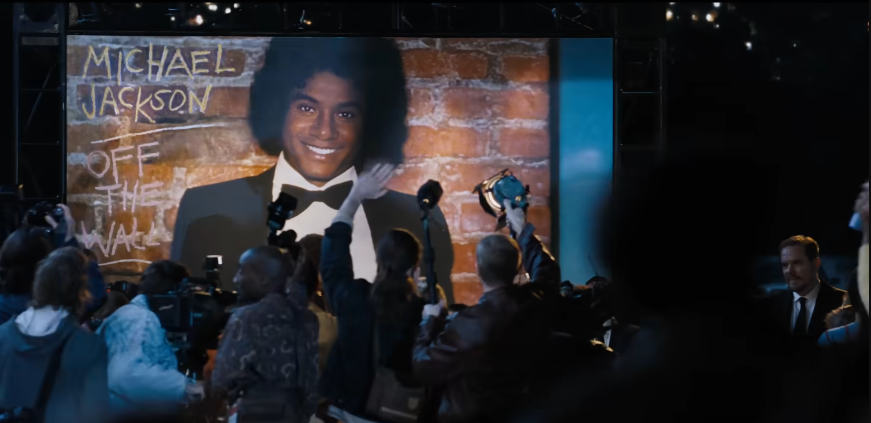
Let’s start with the only reason this film doesn’t collapse under the weight of its own budget.
Casting a family member to play an icon usually ends in a Lifetime movie-level disaster. You expect a loving impersonation at best. You expect a karaoke performance at worst. Instead, Jaafar Jackson delivers something that borders on the supernatural.
The voice hits first. It is not just an impression. It captures the specific breathy, soft-spoken cadence Michael used when he wasn’t performing . Then the movement takes over. Director Antoine Fuqua reportedly watched hundreds of tapes and professional impersonators, but when Jaafar started dancing on day one of filming, the room went silent. The kid had the exact weight shift, the precise angle of the chin, and the impossible fluidity that you cannot teach in a dance studio .
Jaafar trained to the point of physical breakdown. Reports from the set mention him dancing until his feet bled, stopping only to ask himself the question that likely powered this entire production: “What would Michael do?”
The result is the best performance in a music biopic since Rami Malek played Freddie Mercury. That is not hyperbole. That is the cold, hard truth of watching genetics and obsession combine into something special.
The Music: This Is Why You Buy the Ticket
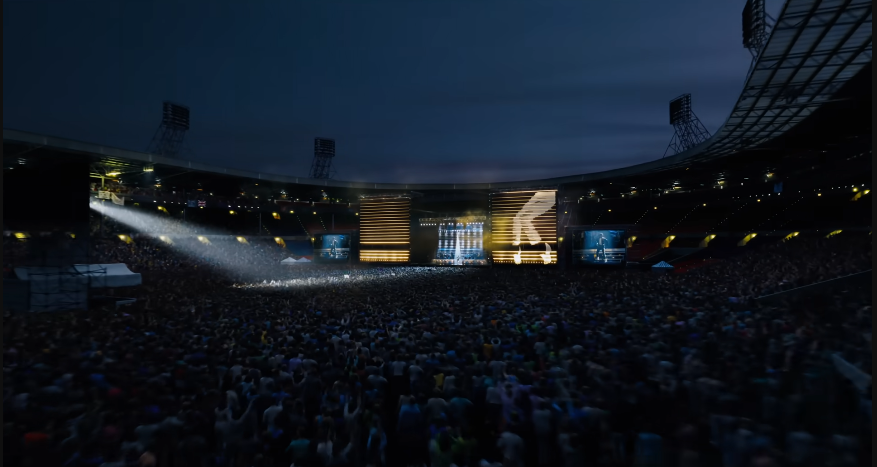
You do not watch a Michael Jackson movie for quiet dialogue scenes in a lawyer’s office. You watch it for the stages. And my goodness, the stages deliver.
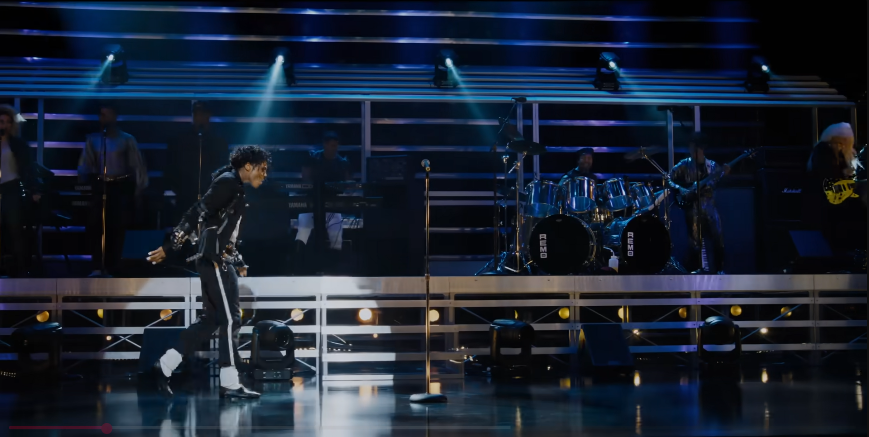
Fuqua stages the musical sequences like he is directing a war movie where the only weapons are bass lines and pelvic thrusts. The recreation of the Motown 25 performance, where Michael unveiled the moonwalk to a stunned world, plays out with the tension of a heist scene. You know exactly what is coming. You have seen the footage a hundred times on YouTube. Yet your heart still pounds when the bassline for “Billie Jean” drops.
The sound mix (Dolby Atmos) deserves specific praise. You feel Quincy Jones’ production in your chest cavity. The film treats these songs not as background noise but as narrative weapons.
Critics and tracking data suggest the concert recreations will drive repeat viewings, much like Bohemian Rhapsody and Elvis before it . Premium large-format screens will make up a significant chunk of the opening weekend box office, which Boxoffice Pro projects to land between $80 million and $90 million domestically .
Watching Jaafar glide across a soundstage recreating the “Thriller” shoot is worth the price of admission. It is pure, uncut joy. It is also, unfortunately, where the “biopic” part of this music biopic starts to wobble.
The Elephant in the Room: What Happened to the Third Act?
You cannot review Michael without explaining why the ending feels like someone ripped out the last ten pages of a book and glued in a “To Be Continued…” title card.
Here is the absurd, true story: The film was finished. Antoine Fuqua had delivered a cut that included a dramatic portrayal of the 1993 allegations and the investigation at Neverland Ranch. Then a lawyer at the Jackson Estate read the fine print of the Jordan Chandler settlement.
Oops.
Turns out, a legally binding agreement from 1993 explicitly prohibits the dramatization of that specific case . The production could not “fudge it” or “get creative.” They could not show it. Period.
This forced Lionsgate to greenlight 22 days of emergency reshoots costing an additional $10 million to $15 million . The entire third act went into the vault. The film now ends abruptly at the height of the Bad era, with Michael on top of the world and the darker clouds only vaguely hinted at on the horizon.
As a viewer, this creates a strange, disjointed sensation. The movie builds to a crescendo, then simply stops. It is the cinematic equivalent of eating a delicious meal and having the waiter snatch your dessert plate away because the chef forgot to sign a waiver for the chocolate cake.
If you came to this film hoping for an unflinching, Walk the Line-style examination of a complicated man, you will leave frustrated. This is an estate-endorsed project. Paris Jackson, Michael’s daughter, publicly criticized an early script as “sugar-coated” and full of inaccuracies . While she reportedly later engaged positively with Colman Domingo, her initial critique echoes the final product: this is a tribute, not an autopsy .
The Supporting Cast: Colman Domingo Steals the Show
If Jaafar is the heart, Colman Domingo is the clenched fist.
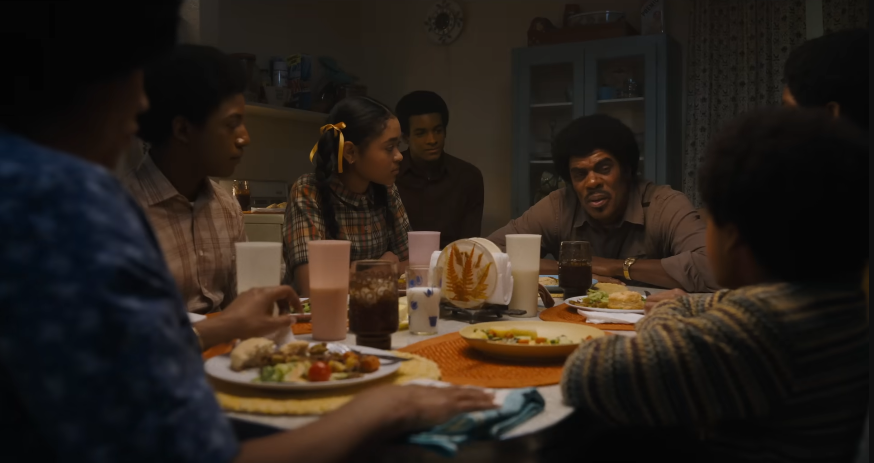
Playing Joe Jackson, the notoriously demanding family patriarch, Domingo refuses to play a cartoon villain. He finds the twisted logic in the abuse. In one particularly chilling sequence shown in the trailers, a young adult Michael asks for “time to think” about his career direction. Joe’s response lands like a slap: “I told you what to think.”
Domingo’s Joe believes he is building an empire to escape the steel mills of Gary, Indiana. He just doesn’t care how many childhoods he has to burn as fuel.
Miles Teller does solid, unshowy work as attorney John Branca. Nia Long brings a necessary softness as Katherine Jackson, acting as the emotional counterweight to Joe’s iron rule . The cast is stacked with talent that could easily carry a more complex narrative if the script allowed them to.
The Verdict: Spectacular, Sanitized, and Still Worth Seeing
So, should you see Michael?
Yes. But calibrate your expectations.
Reasons to go:
- Jaafar Jackson’s performance. It is award-worthy. Full stop.
- The musical sequences. You will feel like you are in the front row of history.
- Colman Domingo’s Joe Jackson. A masterclass in restrained menace.
Reasons to hesitate:
- The ending. It is structurally broken. You will feel the missing footage like a phantom limb.
- The sanitization. This film will not change your mind about Michael Jackson if you already have strong opinions about his personal life.
- The length (130 minutes). It moves fast, but you feel the patches where the edit got aggressive .
On a scale of Bohemian Rhapsody (crowd-pleasing fluff) to Rocketman (honest and trippy), Michael lands squarely in Bohemian Rhapsody territory. It is a celebration of the artistry, funded and approved by the people who own the rights to the artistry.
The film carries a 6.6/10 rating from early aggregators, and that feels about right . It is a “B” movie with “A+” moments. It will likely cross $911 million globally if it wants to dethrone Bohemian Rhapsody as the highest-grossing musician biopic of all time .
Come for Jaafar’s ghost-like possession of his uncle’s spirit. Stay for the music. Just don’t expect a deep dive into the man behind the mirror. That movie is apparently stuck in a lawyer’s safe until the sequel gets greenlit.

Michael Rating
- Pre-Release Rating6.6








Leave a comment