



When was the last time a Hindi film trusted its audience to sit with ambiguity — to accept that the most honest marriages are also the messiest, and that love, in its most enduring form, does not resolve so much as it persists? Jab Khuli Kitaab, which translates literally to When the Book Opened, dares to ask exactly that. And, for the most part, it earns the question.
Directed and written by seasoned actor-filmmaker Saurabh Shukla — himself an adaptation of his own acclaimed stage play of the same name — Jab Khuli Kitaab premiered exclusively on ZEE5 on March 6, 2026. Set against the pine-laced hills of Ranikhet in Uttarakhand, the film stars Pankaj Kapur and Dimple Kapadia as an elderly couple whose five decades of love suddenly fracture when a long-buried truth surfaces. The result is a film that stumbles in places but ultimately lingers, thanks to two of Indian cinema’s finest working at the height of their powers.
Plot Synopsis: When Silence Finally Breaks
Gopal Chandra Nautiyal (Pankaj Kapur), a man in his seventies, has spent the last two years devotedly tending to his wife Anusuya (Dimple Kapadia), who has been in a coma. He reads her the newspaper each morning. He adjusts her pillow, jokes about the neighbours, and fills the silence with the kind of tenderness that only decades of shared life can produce. It is a profoundly moving opening — a one-sided conversation that tells us everything about who these two people are to each other.
Then Anusuya wakes up. Against all medical expectation, she regains consciousness. And almost immediately, in a moment of raw moral clarity, she confesses to Gopal a secret she has carried for nearly fifty years: early in their marriage, she had a brief extramarital affair. Their eldest son, Param (Samir Soni), is not Gopal’s biological child.
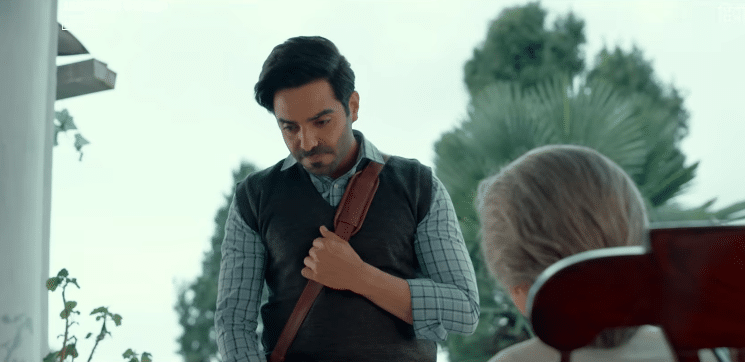
The revelation detonates Gopal’s world. Stunned, humiliated, and unable to process the enormity of what he has heard, he makes an impulsive decision: he will file for divorce. Thus begins a darkly comic, emotionally charged legal and familial drama as Gopal consults his lawyer, R.K. Negi (Aparshakti Khurana), while the extended family — blissfully unaware of the real reason for their parents’ sudden estrangement — struggles to hold the household together.
“This film is quietly radical: a mature romance where the protagonists are elderly, the secret is deeply personal, and the humour never undercuts the emotion.”— Indian Community Review
Direction and Source Material: Stage to Screen

Saurabh Shukla is primarily known to mainstream audiences as a character actor — the silky antagonist of Satya, the comedic foil of Jolly LLB. What this film confirms is that he is also a director of considerable quiet intelligence. He adapts his own stage material with a filmmaker’s eye, finding visual equivalents for what on stage was communicated through dialogue and gesture alone.
That said, the transition from stage to screen is not entirely seamless. The film’s theatrical origins occasionally betray it. Certain scenes feel overtly stagy — the kind of closed-room emotional confrontations that work beautifully in a theatre’s intimate space but feel slightly airless on a widescreen canvas. The film’s pacing, too, can feel deliberate to the point of languor, particularly in its second act, where the domestic drama occasionally spins its wheels.
However, Shukla compensates through several genuinely cinematic touches. The Ranikhet setting is used with purpose — the still mountains and narrow mountain roads serving as a physical counterpoint to the churning interiority of the characters. His screenplay, meanwhile, is salted with sharp, minimalist dialogue that lands with precision. One reviewer from South Asian Herald described the dialogues as “masterful and minimalist,” and the observation holds: Shukla does not over-explain his characters’ emotions, trusting the actors to carry the weight instead.
What the Film Gets Right About Long Marriages
One of Jab Khuli Kitaab‘s most perceptive qualities is its unflinching honesty about the transactional nature of many long marriages. The film gestures toward what one critic aptly called the “Great Indian Marriage Syndrome” — the unspoken pact by which unhappy or complicated couples remain together not purely out of love, but out of shared inertia, social pressure, and the pragmatic fear of dying alone. Gopal and Anusuya are not that couple, but the film acknowledges that they exist in a world where such couples do, and that their crisis is partly a crisis of social expectation as much as personal betrayal.
Furthermore, the film bravely acknowledges that time — not catharsis, not confession, not any singular dramatic moment — is often the only thing that heals a wound this deep. This refusal to offer a tidy resolution is both the film’s greatest strength and its most likely point of audience frustration.
Performances: The Twin Pillars of the Film
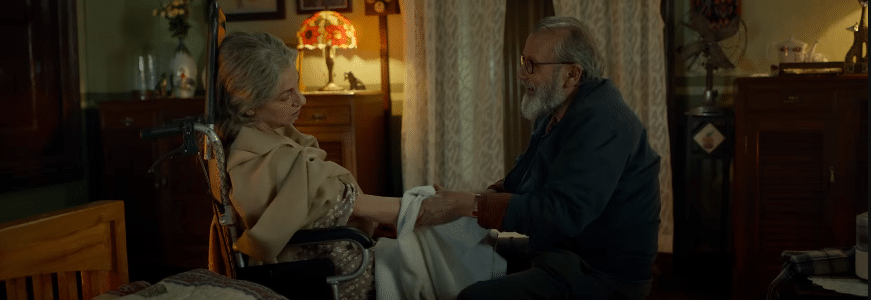
Pankaj Kapur as Gopal Chandra Nautiyal
Pankaj Kapur has, across a career spanning more than four decades, built a body of work that is virtually without peer in Indian cinema. As Gopal, he delivers what may well be among the most internally complex performances of his later career. He plays the character’s outrage with full-bodied conviction, but crucially, he also plays the confusion — the bewilderment of a man who has had the foundational narrative of his life rewritten, and who does not quite know what to do with his rage once it arrives.
Gopal is not a straightforwardly sympathetic figure. His decision to pursue divorce is impulsive, arguably petty given the circumstances, and shows a man who has not entirely outgrown his ego. Kapur plays this dimension without softening it or over-explaining it, giving us a man rather than a saint. The result is a portrayal of male pride and vulnerability that feels lived-in and true. As Koimoi noted, Kapur brings “his characteristic cynicism, wry humor, and intensity” alongside “emotional confusion and vulnerability in full force.”
Dimple Kapadia as Anusuya
If Kapur is the film’s engine, Dimple Kapadia is its conscience. Her Anusuya is a figure of extraordinary moral complexity: a woman who has spent fifty years loving her husband completely while carrying the weight of a secret that could have destroyed everything. The decision to confess — made from a hospital bed, still recovering from a coma, convinced that her time may be limited — is one that Kapadia plays not as a moment of dramatic crisis but as a quiet act of liberation.
What makes the performance exceptional is Kapadia’s refusal to make Anusuya a passive, guilt-ridden figure. She is sorry, yes — genuinely, visibly so. But she is also resolute, and occasionally fierce. There is a scene in which she faces down Gopal’s legal maneuvering with a calm, steely clarity that is among the finest pieces of acting in recent Hindi cinema. In her own words about the character: “What drew me to her is the simplicity of intention — she isn’t trying to break her marriage; she’s trying to be honest within it.”
Supporting Cast: Depth That Earns Its Place
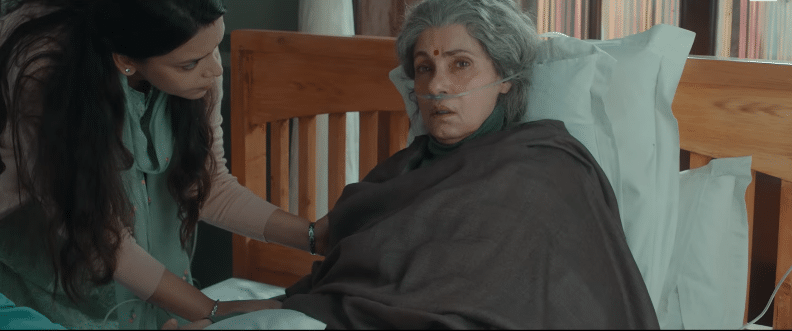
One of the film’s most admirable qualities is how seriously it takes its supporting characters. Unlike many ensemble films where secondary figures serve merely as functional foils, Saurabh Shukla populates his world with people who have interior lives of their own.
| Actor | Character | Role in the Story |
|---|---|---|
| Aparshakti Khurana | R.K. Negi (Lawyer) | Comic relief and unlikely moral mirror for Gopal; his hitchhiking habits and earnest bumbling are the film’s most delightful running thread. |
| Samir Soni | Param (Eldest Son) | An Uno reverse on the Baghban archetype — the good son facing an angry father. Soni navigates the character’s pragmatism and eventual emotion with credible restraint. |
| Nauheed Cyrusi | Farnaaz (Daughter-in-law) | A pleasant screen return; her Parsi heritage subtly informs the family’s complex cultural dynamics. |
| Manasi Parekh | Asha (District Magistrate) | A quietly devastating parallel subplot about a woman whose husband chronically underestimates her. |
| Abuli Mamaji | Dholu (Youngest Son) | A son with Down syndrome, handled with dignity and warmth; the scenes involving Dholu are some of the film’s most purely tender. |
| Sunil Palwal | Jignesh (Son-in-law) | Underwritten but played with admirable comic timing in what screentime he has. |
Aparshakti Khurana, in particular, deserves extended praise. His Negi is the film’s most purely enjoyable creation — a lawyer who hitchhikes his way to potential clients and dispenses divorce advice with the cheerful pragmatism of a man who has seen every marital catastrophe the courts have to offer. Khurana’s effortless comedic timing prevents the film from ever becoming oppressively heavy. His character also functions as an unlikely mirror, reflecting Gopal’s situation back to him in ways the older man is too proud to acknowledge directly.
Themes: What Jab Khuli Kitaab Is Really About
Truth-Telling and Its Costs
The film’s central philosophical question is deceptively simple: is it always better to tell the truth? Anusuya’s confession is morally motivated — she cannot die, she believes, while carrying a lie. But her honesty comes at enormous cost. It destabilises her husband, fractures the family’s sense of itself, and raises an agonising question about her eldest son’s identity and belonging. The film does not offer a clean answer to whether she was right, and that moral ambiguity is precisely what elevates it above the average family drama.
Ego, Pride, and the Indian Male
Gopal’s decision to pursue divorce — driven, one senses, as much by wounded pride as by genuine betrayal — is a pointed commentary on a particular strain of Indian masculinity. He is a man who has constructed his identity around his role as husband, father, and caretaker. The revelation that one of his roles was, in a sense, built on a false premise threatens to undo everything. The film watches him wrestle with this, sometimes with sympathy and sometimes with a gently satirical eye, and does not let him off easily.
Forgiveness Without Forgetting
Perhaps the film’s most mature insight is its understanding that forgiveness — true forgiveness — is not a single dramatic gesture but a slow, gradual process that may take years or may never fully arrive. As the Hollywood Reporter India observed, the film “is willing to acknowledge — even at the cost of narrative identity — that time is often the only healer.” This willingness to resist catharsis, to refuse the conventional resolution that audiences might expect, is both brave and, for some viewers, frustrating.
Inclusion and Representation
One quietly notable aspect of Shukla’s screenplay is how thoughtfully it handles the character of Dholu, Gopal and Anusuya’s youngest son who lives with Down syndrome. The film neither sentimentalises his condition nor marginalises it. Dholu is simply a member of the family — with desires, opinions, and a tender romance of his own with a woman named Gulcher. The sequence in which Gulcher explains that she likes Dholu but not his real name, Chandan, is the kind of small, perfectly observed detail that reveals a screenwriter at the height of his craft.
“Jab Khuli Kitaab is akin to a textbook on classy filmmaking. Saurabh Shukla zooms as a director with this film.”— South Asian Herald
Technical Craft: Cinematography, Music, and Setting
The decision to set the film in Ranikhet is more than an aesthetic choice. The mountains, with their stillness and their suggestion of geological time, serve as a physical correlative for the film’s thematic preoccupations: long spans of time, the weight of history, the way landscapes outlast individual human dramas. The cinematography employs a deliberately muted palette, favouring earthy tones that root the story in a specific and believable world rather than the artificially brightened domestic interiors that characterise so much Hindi cinema.
Ritajaya Banerjee’s music score is similarly restrained, supporting the emotional beats of the narrative without overwhelming them. The songs — understated and folk-inflected — feel native to the world the film inhabits rather than imported from a different, louder kind of Bollywood production. This sonic restraint is, in itself, a form of artistic courage in an industry that frequently weaponises its soundtracks.
Where the Film Stumbles
Honesty demands acknowledging Jab Khuli Kitaab‘s limitations alongside its strengths. Several critics and this reviewer concur that the film’s most significant weakness lies in its reluctance to excavate the deeper emotional archaeology of its central situation.
We understand that Gopal is shattered. We understand that Anusuya is sorry. But the film rarely gives us access to the interior landscape of either character’s psychology in sufficient depth. Why, exactly, did Anusuya have the affair? What was the state of her marriage in those early years? What did it cost her to keep the secret for five decades? These are questions the film raises and then retreats from, preferring the comfort of sentiment to the discomfort of genuine psychological excavation.
As Scroll.in‘s reviewer put it, the film “loses its resolve early on, refusing to dig deeper into the roots of Gopal’s animosity over Anusuya or even the reasons Anusuya did what she did.” India Today similarly noted that while “the premise is emotionally rich, the film often stays on the surface instead of diving deeper into the messy emotional fallout.”
Additionally, the film’s 115-minute runtime contains stretches that would benefit from tighter editing. The second act, in particular, circles the central conflict without meaningfully advancing it, and several scenes feel more like theatrical tableaux than genuinely cinematic moments.
Critical Reception: How the Film Was Received
Times of India : 3/5
Praised the stellar performances while noting the stagnancy of its stage-to-screen transition in parts.
Koimoi : 4/5
Warm endorsement; called it a “warm yet turbulent family drama” elevated by its lead performances.
Hollywood Reporter India : 3.5/5
An “imperfect but moving portrait of marriage” with a wise refusal to offer easy resolutions.
The Hindu : ★★★
A “heartfelt exploration of love’s endurance,” making both its audiences chuckle and reflect.
Scroll.in : 2.5/5
Critically assessed the film as an “open-and-shut case” that failed to capitalise on its premise.
Hindustan Times : 3/5
“Mildly pleasant,” elevated mostly by the veteran leads’ chemistry and ease together on screen.
The critical reception, taken as a whole, describes a film that inspires genuine admiration for its performances and ambition while dividing opinion on the question of whether it fully delivers on its rich premise. This reviewer’s assessment lands somewhere in the middle: Jab Khuli Kitaab is a better film than many of its critics suggest, even if it is not quite the masterpiece that its best moments promise.
Comparison with Other Mature Romance Films
It is instructive to place Jab Khuli Kitaab within the small but growing genre of Hindi cinema that takes elderly protagonists seriously as subjects of romantic drama. The film invites comparison with Rituparno Ghosh’s Utsab, Imtiaz Ali’s more recent explorations of long relationships, and internationally, with films like Michael Haneke’s Amour — which similarly explored the emotional terrain of an elderly couple facing a crisis of illness and identity.
What distinguishes Jab Khuli Kitaab from much of this company is its tonal blend: it is not only a tragedy of trust but also a comedy of manners, and it manages both registers without one undercutting the other. The scenes involving Aparshakti Khurana’s lawyer are genuinely, warmly funny, and they exist in productive tension with the more sombre material surrounding them.
The film also stands in interesting contrast to Pankaj Kapur and Dimple Kapadia’s previous collaboration, Homi Adajania’s Finding Fanny (2014), where both actors deployed their skills in a more broadly comedic register. Here, they strip away the eccentricity and work in a register of restrained naturalism that suits the material far better.
Frequently Asked Questions
- Where can I watch Jab Khuli Kitaab?
The film streams exclusively on ZEE5, where it premiered on March 6, 2026. A ZEE5 subscription is required to access the content.
2. Is Jab Khuli Kitaab based on a true story?
No. The film is a cinematic adaptation of Saurabh Shukla’s original stage play of the same name. It is an entirely fictional story, though its emotional situations are drawn from universal human experiences.
3. Is the film suitable for children?
The film carries a UA rating, meaning it is suitable for audiences above the age of 12 with parental guidance for younger viewers. The themes of marital infidelity and divorce are handled tastefully, without explicit content.
4. How does Jab Khuli Kitaab compare to Finding Fanny?
While both films feature Pankaj Kapur and Dimple Kapadia, the two are tonally quite different. Finding Fanny is an ensemble road comedy with an absurdist edge, while Jab Khuli Kitaab is a more intimate domestic drama that draws on both comedy and emotional realism in roughly equal measure. The latter showcases both actors in a significantly more restrained and arguably more demanding mode.
5. What is the significance of the title Jab Khuli Kitaab?
“Jab Khuli Kitaab” translates to “When the Book Opened.” The title functions on multiple levels: it refers literally to the moment of Anusuya’s confession — the opening of a long-closed chapter — and metaphorically to the idea that a life, like a book, contains pages that remain unread even by the person closest to us. It also evokes the concept of destiny or fate as a text written and waiting to be revealed.
6. Did the film receive any awards?
As of publication date, the film has not yet entered major awards season, but industry observers widely expect Pankaj Kapur and Dimple Kapadia’s performances to feature prominently in nominations for the Filmfare OTT Awards and other streaming-focused recognition.
Final Thoughts
In an OTT landscape increasingly dominated by thriller serials, dark psychological dramas, and spectacle-driven content, Jab Khuli Kitaab arrives as a reminder that restraint can be its own form of ambition. It is, as one critic evocatively described it, “like going to a small circus in the age of curated theme parks — clumsy at times, you can see the strings, but there’s an old-fashioned goodness seeping through its veins.”
Saurabh Shukla has made a film that respects its characters, respects its audience, and respects the complexity of human relationships in ways that Indian cinema — at any budget level — does not always manage. Pankaj Kapur and Dimple Kapadia, meanwhile, have given us something rarer still: performances that make the audience feel the full weight of fifty years of shared life in the space of two hours. That, ultimately, is more than enough.
Jab Khuli Kitaab is currently streaming on ZEE5. Rated UA. Runtime: 2 hours 1 minute.
Jab Khuli Kitaab Review Overview
Summary
Jab Khuli Kitaab is a flawed but genuinely affecting film — one that trusts its audience's emotional intelligence and delivers two of the finest performances in recent Hindi cinema. Its weaknesses are real: a reluctance to excavate its central conflict with sufficient depth, and occasional pacing that betrays its stage origins. But its strengths — the lead performances, the warmth of the ensemble, the refusal of easy resolution — outweigh the stumbles. If you are willing to meet the film on its own quiet terms, you will find it deeply rewarding.
- Performances9.6
- Screenplay7.2
- Direction7.6
- Emotional Depth8
- Supporting Cast8.4













Leave a comment