


Introduction: Sinking Into the Blood Ocean
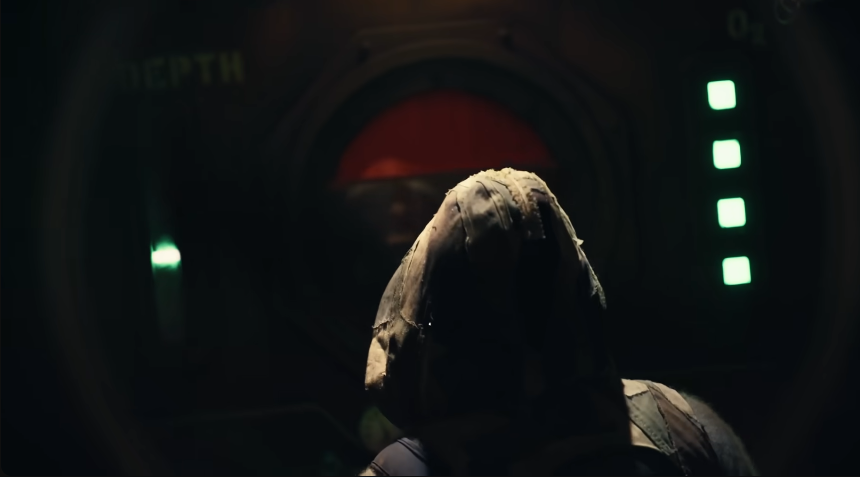
Imagine this: you’re trapped inside a rusted metal coffin, sinking deeper into an endless ocean of blood. No windows. No escape. Just the rhythmic ping of sonar and the creeping certainty that something monstrous is hunting you in the crimson dark.
That’s the nightmare Iron Lung drops you into—and honestly? It’s terrifying.
This Iron Lung Movie Review explores Markiplier’s bold leap from YouTube superstar to horror filmmaker. Based on David Szymanski’s indie game sensation, the film follows Simon (Mark Fischbach), a convict sent on a suicide mission to explore a blood ocean on a desolate moon after “The Quiet Rapture” wiped out the stars. It’s claustrophobic, atmospheric, and unapologetically weird.
Let’s be real: when influencers announce movies, skepticism is natural. But Mark Fischbach isn’t just cashing in on fame. He’s a genuine horror fan who understands tension, atmosphere, and what makes audiences squirm. With a $3 million budget and a $49.9 million worldwide return, Iron Lung has already proven commercially successful. But does it deliver artistically?
If you’re looking for an honest Iron Lung Movie Review that doesn’t sugarcoat the flaws or ignore the triumphs, you’re in the right place. Let’s dive deep—just like Simon did.
Quick Movie Info
Rating: 3.5/5
Genre: Horror, Sci-Fi, Psychological Thriller, Body Horror
Duration: 2h 5m
Release Date: January 30, 2026 (USA)
Cast: Mark Fischbach, Caroline Kaplan, Troy Baker
Director: Mark Fischbach (Markiplier)
Platform: Theaters / Digital VOD / Streaming (TBA)
Budget: $3 Million | 🌍 Box Office: $49.9 Million
Is Iron Lung worth watching? Yes, if you love atmospheric, claustrophobic horror. Iron Lung delivers stunning visuals, intense tension, and Markiplier’s impressive directorial debut. However, sound mixing issues and confusing dialogue may frustrate some viewers. A bold, flawed, but ultimately rewarding experience for horror fans.
Plot Breakdown: What Happens in Iron Lung?
The year is unspecified, but the world is broken. An event called “The Quiet Rapture” has caused every star, every habitable planet, every source of light beyond Earth to simply… vanish. Humanity clings to survival on the few remaining outposts.
Enter Simon, a convicted criminal given a choice: rot in prison or pilot the Iron Lung—a tiny, windowless submarine—through an ocean of blood on a remote moon. His mission: map the uncharted depths and discover what happened to a previous expedition that went silent.
The submarine has no external cameras. No portholes. Just basic navigation instruments, sonar, and Simon’s deteriorating sanity. As he descends, strange signals emerge. Documents hint at something ancient and malevolent lurking below. The blood ocean itself seems alive. And then… the sonar picks up something massive. Something moving.
What follows is a masterclass in slow-burn dread. The film doesn’t rely on jump scares. Instead, it builds tension through isolation, ambiguity, and the crushing weight of the unknown. Is Simon losing his mind? Is the ocean sentient? What happened to the last crew?
The third act escalates into surreal body horror and cosmic terror, drawing comparisons to The Thing and Event Horizon. Without spoiling specifics, the ending is ambiguous, haunting, and designed to linger long after the credits roll.
Honestly, the plot is simple but effective. It’s not about complex lore—it’s about making you feel trapped, vulnerable, and afraid of what you can’t see.
Iron Lung Movie Review: Performances & Cast
Mark Fischbach as Simon
Markiplier isn’t just directing—he’s starring. And honestly? He pulls it off.
As Simon, Fischbach delivers a raw, physically demanding performance. Much of the film takes place inside the cramped submarine set, with Simon reacting to unseen horrors through sonar blips and audio cues. Fischbach conveys fear, desperation, and gradual unraveling with subtle facial expressions and body language.
Is it Oscar-worthy? Maybe not. But it’s genuine, committed, and far beyond what critics expected from a YouTuber-turned-actor. He carries the film’s emotional weight, and you believe his descent into paranoia.
Caroline Kaplan & Troy Baker
Caroline Kaplan plays a key supporting role (details kept under wraps to avoid spoilers), bringing emotional depth and tension to Simon’s mission. Her chemistry with Fischbach feels authentic, grounding the sci-fi horror in human stakes.
Troy Baker, a legendary voice actor (The Last of Us, BioShock), lends his distinctive voice to a crucial off-screen character. His presence adds gravitas, and his vocal performance is chilling when the story demands it.
Supporting Cast
The ensemble is small—intentionally. With most of the film confined to the submarine, every character matters. Each performance serves the atmosphere, never distracting from the central tension.
Direction & Visual Style: Markiplier’s Vision
A Director with a Clear Eye
Mark Fischbach’s direction is the film’s biggest surprise. He doesn’t overcomplicate things. Instead, he embraces limitation: one primary location, minimal cast, focused storytelling.
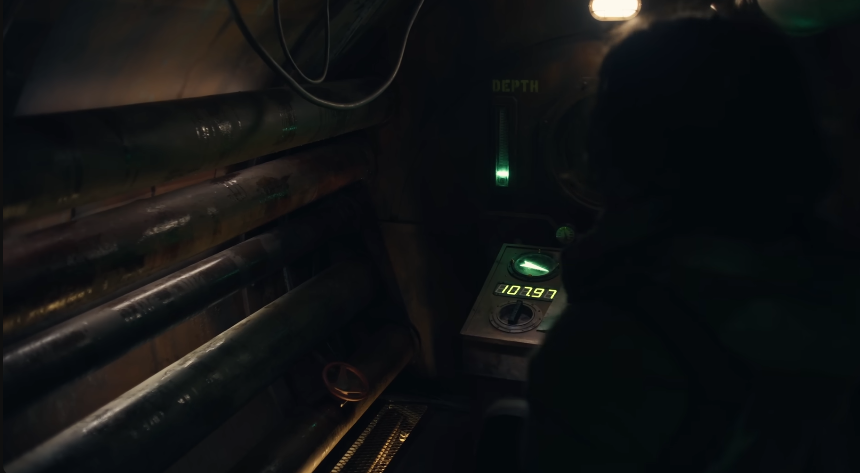
The cinematography is stunning. The submarine interior feels authentically decrepit—rusted metal, flickering lights, condensation on walls. The blood ocean sequences use a mix of practical effects and subtle CGI to create something genuinely unsettling. The color palette is muted: deep reds, sickly greens, oppressive blacks.
Fischbach clearly studied classics like Alien and The Thing. You can see those influences in the framing, the pacing, the way dread accumulates. But he also brings something fresh: a digital-native understanding of tension built for modern audiences raised on gaming and interactive horror.
Practical Effects Shine
One of the film’s triumphs is its commitment to practical effects. The submarine set was built physically. The blood ocean uses real fluids and lighting tricks. When body horror emerges, it’s tactile, gross, and believable.
This analog approach gives Iron Lung a texture that pure CGI often lacks. It feels real. And that makes the horror hit harder.
Sound Design: The Film’s Biggest Strength & Weakness

The Good: Atmospheric Mastery
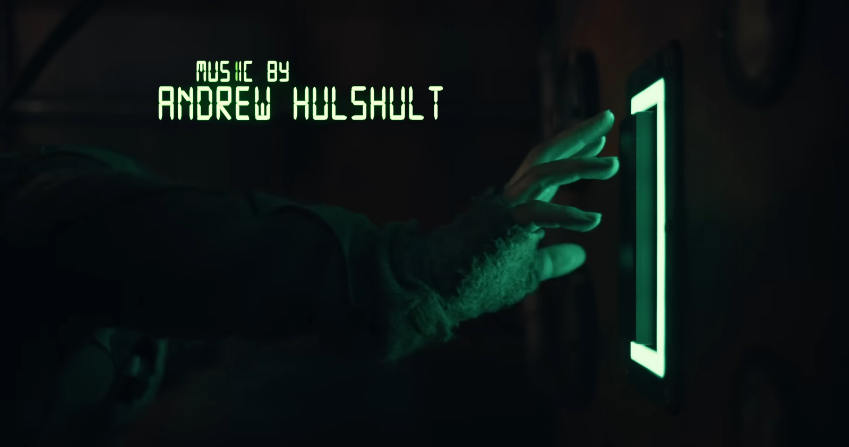
Andrew Hulshult’s score is phenomenal. It blends industrial drones, distorted sonar pings, and unsettling ambient noise to create constant unease. The sound design makes you feel the submarine’s creaks, the ocean’s pressure, the silence between heartbeats.
In many scenes, sound IS the horror. A distant splash. A distorted whisper. The sudden silence when the sonar stops. These moments are brilliantly executed.
The Bad: Mixing Issues
Here’s the uncomfortable truth: dialogue is often hard to hear.
Multiple viewers (and critics) have reported that key lines get drowned out by the score and sound effects. In a film where plot details matter, this is a significant flaw. You might miss crucial exposition or character motivations simply because the audio mix prioritizes atmosphere over clarity.
It’s not a dealbreaker, but it’s frustrating. If you watch Iron Lung, consider using subtitles—even in a theater.
What Works Brilliantly
Despite its flaws, Iron Lung has genuine strengths:
✅ Claustrophobic Atmosphere: The confined setting creates relentless tension. You feel Simon’s isolation.
✅ Visual Craft: Stunning cinematography, production design, and practical effects create a believable, haunting world.
✅ Markiplier’s Commitment: Fischbach’s dual role as director and star shows passion and professionalism.
✅ Sound Design (When Clear): The score and ambient audio are masterfully unsettling.
✅ Faithful Yet Expanded Adaptation: Fans of the game will recognize the core experience, while new viewers get a complete narrative.
✅ Body Horror Done Right: The third-act transformations are grotesque but purposeful, serving the story’s themes.
✅ Ambiguous Ending: The film trusts audiences to interpret, rather than spoon-feeding answers.
✅ Budget Efficiency: Every dollar of that $3 million budget is visible on screen.
What Holds It Back
Let’s be honest about the weaknesses:
❌ Sound Mixing Problems: Dialogue often gets lost. This isn’t artistic choice—it’s a technical flaw.
❌ Pacing in Act Two: The middle section drags slightly. Some sonar sequences feel repetitive.
❌ Narrative Ambiguity: While some love the mystery, others find the plot confusing or under-explained.
❌ Limited Appeal: This isn’t a crowd-pleaser. If you prefer clear plots or jump-scare horror, you might be frustrated.
❌ Marketing Misdirection: Trailers emphasized action; the film is slow-burn. Some viewers felt misled.
❌ Character Depth: Supporting characters could use more development. Simon carries the film, but others feel functional.
These aren’t fatal flaws, but they prevent Iron Lung from reaching masterpiece status.
Iron Lung Movie Review: Technical Excellence
Cinematography & Production Design
The submarine set is a character itself. Every rust stain, every flickering light, every cramped angle reinforces Simon’s entrapment. The blood ocean sequences use creative lighting and fluid dynamics to feel alien yet tangible.
Cinematographer deserves praise for making a single location visually dynamic. Camera movements are deliberate—slow pushes, tight close-ups, disorienting angles that mirror Simon’s mental state.
Editing & Pacing
Editor maintains tension through rhythmic cutting. Sonar pings become a metronome for suspense. However, the middle act could benefit from tighter trimming. A few minutes cut would elevate the pacing.
Visual Effects
The blend of practical and digital effects is seamless. When the horror escalates, the transformations feel visceral, not cartoonish. The blood ocean’s behavior—its currents, its reactions—adds to the sense of a living, malevolent force.
Box Office Success & Audience Reception
The Numbers Don’t Lie
- Budget: $3 million
- Worldwide Box Office: $49.9 million
- IMDb Rating: 6.5/10 (19K+ ratings)
- Audience Score: Generally positive on social media
For a micro-budget horror film, these numbers are phenomenal. Iron Lung has already turned a substantial profit, proving there’s an audience for original, atmospheric horror.
Critical Reception
Reviews have been mixed-to-positive:
Praised for:
- Bold originality and unique premise
- Atmospheric sound design and score
- Markiplier’s committed performance
- Excellent practical effects
- Claustrophobic tension
Criticized for:
- Unclear dialogue due to sound mixing
- Occasional narrative confusion
- Slow pacing that won’t appeal to all
Overall, critics acknowledge it as one of the better video game adaptations—a passionate project that respects its source while standing on its own.
Overall Rating: 3.5 out of 5 stars
Here’s the bottom line of this Iron Lung Movie Review: Iron Lung is a flawed but fascinating achievement.
Mark Fischbach proves he’s more than a YouTuber—he’s a filmmaker with vision, taste, and respect for the horror genre. The film’s atmosphere is suffocating in the best way. The practical effects are impressive. The commitment to tension over cheap scares is admirable.
But technical issues—especially the sound mixing—hold it back from greatness. When you can’t hear crucial dialogue, it undermines the storytelling. And while ambiguity can be powerful, some viewers will leave confused rather than contemplative.
Who should watch Iron Lung?
- Fans of atmospheric, slow-burn horror (Alien, The Thing)
- Supporters of indie filmmaking and passionate passion projects
- Players of the original game curious about the adaptation
- Viewers who appreciate practical effects and visual craftsmanship
- Audiences comfortable with ambiguous, thought-provoking endings
Who should skip it?
- Viewers who prefer clear plots and exposition-heavy storytelling
- Anyone sensitive to audio mixing issues (use subtitles if you watch!)
- Fans expecting action-packed, jump-scare-heavy horror
- People who dislike body horror or cosmic dread themes
If you do watch it, go in with managed expectations. This isn’t a polished studio blockbuster—it’s a gritty, ambitious indie horror that takes risks. Some pay off. Some don’t. But the fact that it exists, and succeeds commercially, is worth celebrating.
Final thought: Iron Lung isn’t perfect. But in an era of safe, formulaic horror sequels, its boldness is refreshing. Markiplier has earned the right to make his next film. And after this? We’ll be first in line to watch it.
Frequently Asked Questions About Iron Lung
1. Is Iron Lung movie based on a video game?
Yes! Iron Lung is adapted from David Szymanski’s 2022 indie horror game of the same name. The film stays faithful to the game’s core premise—a convict piloting a windowless submarine through a blood ocean—while expanding the narrative for a feature-length runtime. Director Mark Fischbach is a known fan of the original game.
2. What is the ending of Iron Lung supposed to mean?
Without major spoilers: the ending is intentionally ambiguous, inviting interpretation. It suggests themes of transformation, sacrifice, and the blurred line between human and monster. Some viewers see hope; others see despair. The film trusts audiences to draw their own conclusions—a bold choice that divides but also deepens the experience.
3. Is Iron Lung scary?
Yes, but not in a traditional jump-scare way. Iron Lung builds dread through claustrophobia, isolation, sound design, and psychological tension. The horror is atmospheric and existential. If you enjoyed the slow-burn terror of Alien or The Babadook, you’ll likely find Iron Lung genuinely unsettling.
4. Why is the dialogue hard to hear in Iron Lung?
This is a technical issue, not an artistic choice. The film’s sound mix prioritizes atmospheric effects and score over dialogue clarity in several scenes. Many viewers recommend using subtitles to catch all key lines. It’s a notable flaw in an otherwise strong technical package.
5. Will there be an Iron Lung sequel?
As of now, no official sequel has been announced. However, given the film’s commercial success ($49.9M on a $3M budget) and Mark Fischbach’s passion for the project, discussions about continuing the story are likely. Fans should follow Markiplier’s social channels for updates.
CONCLUSION
This Iron Lung Movie Review has explored the triumphs and troubles of Markiplier’s ambitious horror debut. On one hand: stunning visuals, committed performances, atmospheric dread, and a bold vision that respects its indie roots. On the other: sound mixing flaws, pacing hiccups, and narrative ambiguity that won’t resonate with everyone.
But here’s what matters: Iron Lung exists. A $3 million passion project, directed by a YouTuber, based on an indie game, earned nearly $50 million worldwide and sparked genuine conversation about horror, adaptation, and creative risk-taking.
That’s worth celebrating.
If you love atmospheric horror that trusts your intelligence, Iron Lung is absolutely worth your time. Use subtitles. Embrace the ambiguity. Let the dread wash over you.
And if you’re skeptical? Fair. But give it a chance. You might be surprised by what emerges from the blood ocean.
Final CTA: Watch Iron Lung. Form your own opinion. Then drop your thoughts below. Did the blood ocean haunt you? Or did the sound mixing sink the experience? Let’s discuss.
Iron Lung Movie Review Overview
Summary
Iron Lung Movie Review dives deep into Markiplier's ambitious directorial debut—a claustrophobic sci-fi horror based on David Szymanski's viral indie game. Set after "The Quiet Rapture" erased the stars, a convict named Simon pilots a rusty submarine through a blood ocean on a desolate moon. With stunning practical effects, atmospheric sound design, and Mark Fischbach's committed lead performance, the film delivers genuine dread. However, sound mixing issues and occasional narrative confusion hold it back from greatness. Our detailed Iron Lung Movie Review breaks down whether this $3 million passion project earns its $49.9 million box office success.
The Pros
Stunning visual atmosphere with practical effects and gritty cinematography Markiplier's impressive directorial debut showing genuine cinematic vision Relentless claustrophobic tension that keeps you on edge Excellent sound design and score by Andrew Hulshult (when dialogue is clear) Faithful yet expanded adaptation of the beloved indie game Ambiguous, haunting ending that sparks discussion Incredible ROI: $3M budget earning $49.9M worldwide Body horror executed with purpose, not just shock valueThe Cons
Sound mixing issues make dialogue hard to hear in key scenes Pacing drags in the second act with repetitive sonar sequences Narrative ambiguity may frustrate viewers seeking clear answers Limited character development for supporting cast Not for everyone: slow-burn horror won't appeal to jump-scare fans Marketing vs. reality mismatch led to some audience confusion- Rating7













Leave a comment