


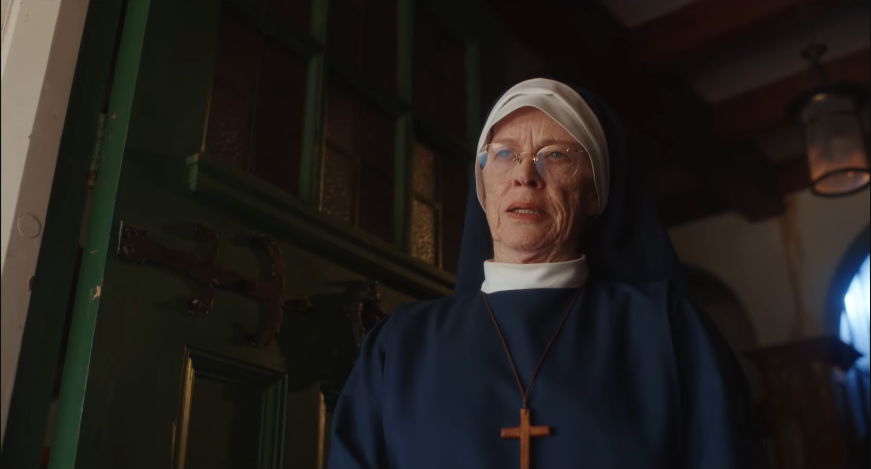
Let’s address the obvious question first: what happens when you put three acting legends in a stolen car and send them hurtling across New Zealand’s South Island with a grieving ten-year-old?
The answer, according to Holy Days, involves denture mishaps, bare buttocks, a winning betting ticket discovered in a glovebox, and a surprisingly large amount of heart .
Directed by Nat Boltt (a Riverdale alum making her feature debut), Holy Days adapts Joy Cowley’s 2000 novel of the same name . The film premiered at the Santa Barbara International Film Festival on February 5, 2026, before landing in North American theaters on March 27 .
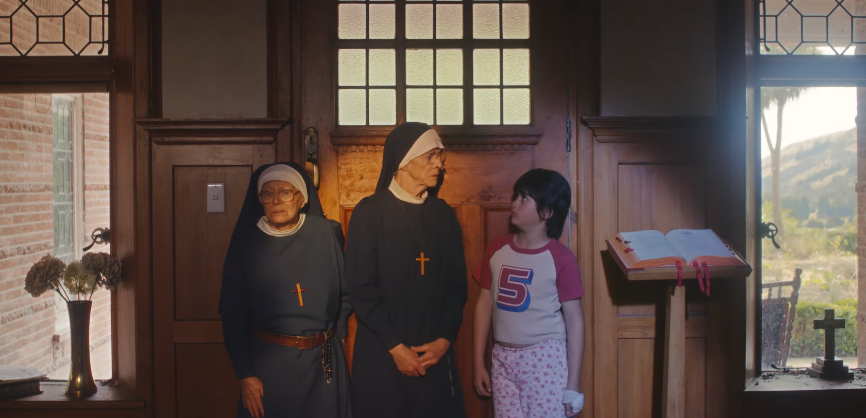
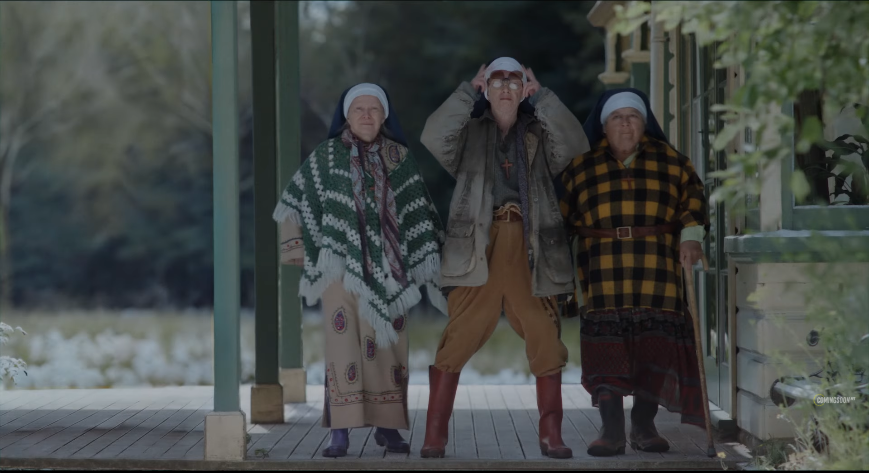
The cast reads like someone raided the “National Treasures of Acting” vault. Judy Davis (A Passage to India). Jacki Weaver (Silver Linings Playbook). Miriam Margolyes (Harry Potter franchise). All three don habits. All three squeeze into a car. And all three seem to enjoy themselves immensely, even when the script occasionally leaves them stranded by the side of the road.
This is a film that wants desperately to charm you. Sometimes it succeeds. Sometimes it tries so hard you can see the sweat on its brow.
What Is Holy Days Actually About?
The year is 1974. The place is New Zealand. Christmas approaches, and young Brian Collins (newcomer Elijah Tamati) wants nothing to do with it.
His mother Paula died of an unspecified illness the previous year . His father Joe (Craig Hall) plans to marry Liz Fletcher (played by Boltt herself), a woman Brian views as an interloper determined to erase his mother’s memory . Brian copes by hiding at a local convent, where three elderly nuns provide the comfort and attention missing at home.
These nuns—Sister Agnes (Davis), Sister Mary Claire (Weaver), and Sister Luke (Margolyes)—face their own crisis. The Catholic Church plans to sell their crumbling convent to a developer named Harry Greaves. They have roughly twenty-four hours to vacate .
But wait! A legal loophole exists. The original property deed sits with Patricia Ngata (Tanea Heke), a former nun-turned-barrister living on the South Island. If the sisters can reach her, they might save their home.
Brian sees an opportunity. His mother’s sacred mountain, Aoraki (Mount Cook), lies on the South Island. He believes that if he reaches the peak, he can say goodbye to her spirit before she departs forever .
Thus begins a road trip powered by desperation, faith, and a stolen car belonging to the hapless Father Findlay (Jonny Brugh).
The Cast: Legends Doing Heavy Lifting
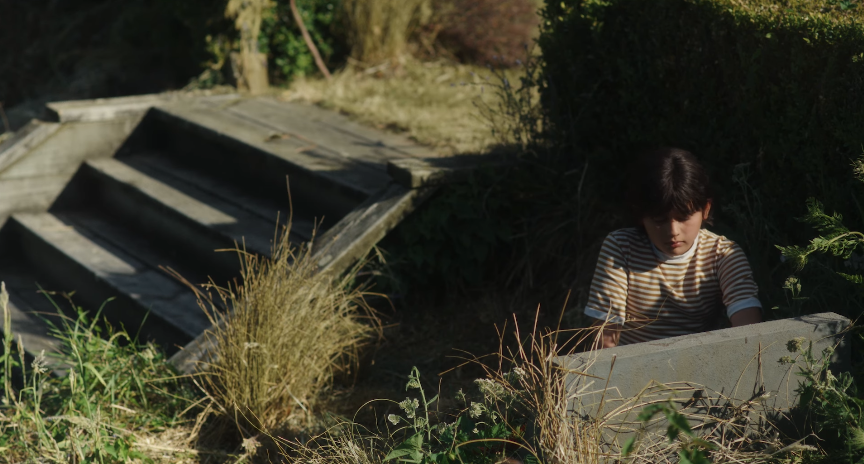
Let’s be honest about what keeps Holy Days watchable. It is not the plot, which follows every road-movie cliché with religious devotion. It is the cast.
Judy Davis plays Sister Agnes as the de facto leader—gruff, pragmatic, and perpetually irritated by Sister Luke’s antics. Davis does more than anyone else to inject three-dimensionality into material that often settles for broad strokes . She smokes. She drinks. She glares at incompetence. And beneath the crusty exterior, she genuinely cares about Brian’s grief.
Jacki Weaver brings warmth as Sister Mary Claire, the group’s emotional anchor. Her character mediates conflicts and offers gentle wisdom. The role asks less of her than Davis’s, but Weaver’s natural likability smooths over the rougher patches.
Miriam Margolyes operates in her own comedic universe. Sister Luke loses dentures. Sister Luke flashes bare buttocks on a beach . Sister Luke reportedly struggles with body odor that the film mentions multiple times without ever addressing properly . Margolyes commits fully to the physical comedy, and her scenes provide most of the genuine laughs.
Elijah Tamati carries the film’s emotional weight as Brian. The young actor, son of reggaetón star Zion from Zion & Lennox, had never acted professionally before . His inexperience occasionally shows, particularly in scenes requiring subtle emotional shifts. But his openness and vulnerability feel real. When he speaks to his dead mother in te reo Māori, the moments land with genuine poignancy .
The supporting cast includes Tanea Heke as Aunty Patricia, whose living room features land march flyers and photos of Dame Whina Cooper—subtle touches that ground the film in real Aotearoa history . Jonny Brugh brings shambling charm as Father Findlay. Colin Moy plays the property developer villain with appropriate smarm.
The Comedy: Hit and Miss, Mostly Miss
Here is where Holy Days stumbles.
The humor relies heavily on broad slapstick and sitcom-level misunderstandings. Sister Mary Claire drives onto a beach and announces, “Oh goodness, I think I’m on the beach” . The nuns steal Father Findlay’s car in a scene that “looks like something out of a cheesy old sitcom” . Every problem resolves almost immediately—a winning betting ticket appears in the glovebox, a police officer accepts a quiet bribe, and off they go .
Alex Casey, reviewing for The Spinoff, captured the issue perfectly: “Every inconvenience the characters face is solved almost immediately… At times the dialogue can be strange and obvious” .
The film aims for the madcap energy of classic road comedies. It lands closer to a gentle Sunday drive with occasional mild detours. If you expect Goodbye Pork Pie chaos, you will leave disappointed.
Carla Hay at Culture Mix went further, calling the film “dull and witless” with “stale jokes and cringeworthy acting” . She noted that the nuns map almost perfectly onto the Three Stooges template: Davis as the bossy Moe, Margolyes as the wacky Curly, and Weaver as the easygoing Larry .
That comparison is not entirely fair—the acting here far exceeds anything the Stooges attempted—but the dynamic is unmistakable.
The Emotional Core: Does It Land?
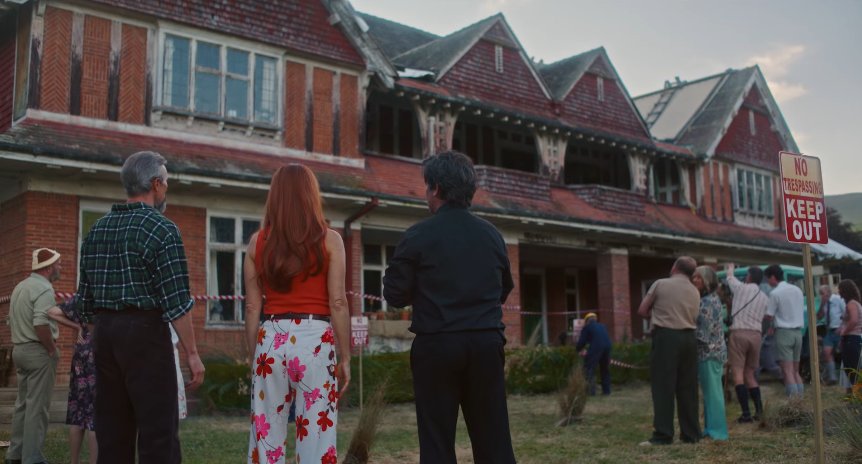
Holy Days wants to make you cry. It deploys grief, faith, and childhood innocence as weapons in this campaign.
The results vary.
Brian’s journey to Aoraki carries real weight. Tamati’s scenes with his mother’s grave, and his whispered conversations in Māori, provide the film’s most affecting moments. The bond that forms between this grieving boy and three elderly women who have also known loss—their beloved former leader Sister Suzanne has died—creates genuine pathos .
The film’s central message, as Boltt describes it, is that “even if we are divided by age, gender, culture or beliefs, we still share a common humanity. Friendship can be forged under any circumstances” .
That message lands. What lands less effectively is the Catholic Church context.
The film treats the convent’s potential closure as an unambiguous tragedy worth fighting for. It asks viewers to root for the preservation of a faith-based institution in 1970s New Zealand without acknowledging the broader historical context. As Casey notes, “the plight of the Catholic church’s land-banking efforts doesn’t move me particularly deeply in 2026” .
One commenter on The Spinoff put it more bluntly: “I also found it culturally insensitive that the film’s sole mission seems to be to redeem the Catholic Church whose scandalous history of abusing Aboriginal children in their boarding schools has been well documented” .
The film does not engage with this tension. It presents the nuns as harmless, lovable eccentrics and asks no harder questions. Whether you find this refreshing or frustrating depends entirely on what you bring into the theater.
The Visuals: Stop-Motion Charm and South Island Splendor
Holy Days looks better than its modest budget should allow.
Cinematographer Tom Burstyn captures the South Island’s staggering beauty—mountains, coastlines, and wide-open roads that remind you why New Zealand remains a filmmaker’s dream destination .
The film’s most distinctive visual flourish comes from stop-motion miniature sequences that render the road trip in dinky, handcrafted detail . These interludes provide whimsical transitions between locations and reinforce the childlike perspective through which Brian views the world.
Production design deserves praise for period authenticity. Rusty dashboard Jesus figurines, 1970s car interiors, and the general aesthetic of small-town New Zealand in the Me Decade all feel right .
The Director: Nat Boltt’s Twelve-Year Journey
Understanding Holy Days requires understanding how it came to exist.
Boltt spent twelve years developing this project . She previously adapted Cowley’s short story The Silk into a successful short film. Cowley became, in Boltt’s words, “like a surrogate mother to me” .
The casting process took years. Agents and managers ignored Boltt’s initial outreach. Only after bringing on an international casting director did the script reach Margolyes. Davis followed. Weaver committed last, with Boltt receiving the news on Christmas morning .
The production relied on a female-forward team. Boltt reports that “every department was either equally or predominantly female. Even our lighting team was almost entirely female—incredible mana wāhine carrying massive lights and gear” .
This labor of love shows on screen. Holy Days feels personal. It also feels, at times, like a film made by someone too close to the material to recognize its softer edges.
What Works (And What Tests Patience)
Let’s break this down honestly.
Reasons to watch:
- The cast. Davis, Weaver, and Margolyes could read a phone book and make it entertaining. They elevate thin material through sheer professional craft.
- Elijah Tamati. His inexperience occasionally shows, but his emotional sincerity carries the film’s heart.
- The New Zealand scenery. You will want to book a flight to Christchurch by the end credits.
- The stop-motion sequences. Charming, handmade, and refreshingly analog.
Reasons to hesitate:
- The humor. Broad slapstick and obvious dialogue dominate. If you dislike “nun loses dentures” comedy, this film offers little alternative.
- The pacing. The film “often saunters along its cross-country sojourn instead of going for the kind of pedal-to-the-metal chaos” of better road movies .
- The sanitized context. The film’s rosy view of 1970s Catholic institutions will strike some viewers as willfully naive.
- The easy resolutions. Characters face obstacles that dissolve almost immediately, robbing the journey of genuine tension.
The Verdict: Charming but Slight
Holy Days earns a rating around 6.8/10 on IMDb, and that feels about right .
This is a family-friendly, feel-good comedy that delivers exactly what its poster promises: three legends in habits, a cute kid, and pretty scenery. It will not challenge you. It will not surprise you. It will probably make your mother cry in a good way.
Audience reactions have split predictably. Some viewers find it “joyful and fun,” praising its “kindness, patience and humour” . Others find it “bland, predictable, saccharine and boring” .
Both perspectives hold truth.
Should you see Holy Days?
If you want a gentle, nostalgic comedy that showcases three acting legends enjoying themselves in a beautiful country, yes. Lower your expectations for narrative tension and you will have a pleasant time.
If you want a road movie with actual stakes, genuine danger, or sharp-edged humor, seek elsewhere. Holy Days is a Sunday drive, not a drag race.
The film runs 101 minutes and carries a PG rating . It releases in the United States and Canada on March 27, 2026, through Blue Fox Entertainment .
Boltt dedicated the film “To Joy”—both to Joy Cowley and, as she explains, “to everyone who made this film—and everyone who is going to watch it. It is for joy. We all need more of that—especially now” .
She is not wrong about needing joy. Whether Holy Days delivers enough of it depends on how much you already bring to the passenger seat.
Rating: ★★★☆☆ (3/5)
Runtime: 101 minutes
Rating: PG
Director: Nat Boltt
Cast: Judy Davis, Jacki Weaver, Miriam Margolyes, Elijah Tamati, Craig Hall, Tanea Heke
Based on: Holy Days by Joy Cowley
Release Date: March 27, 2026 (North America), February 26, 2026 (New Zealand)
Holy Days Judy Davis Jacki Weaver
- Rating6








Leave a comment