


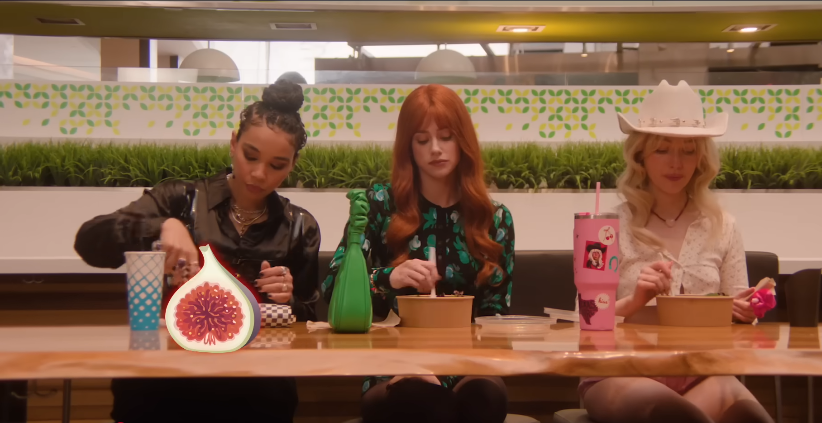
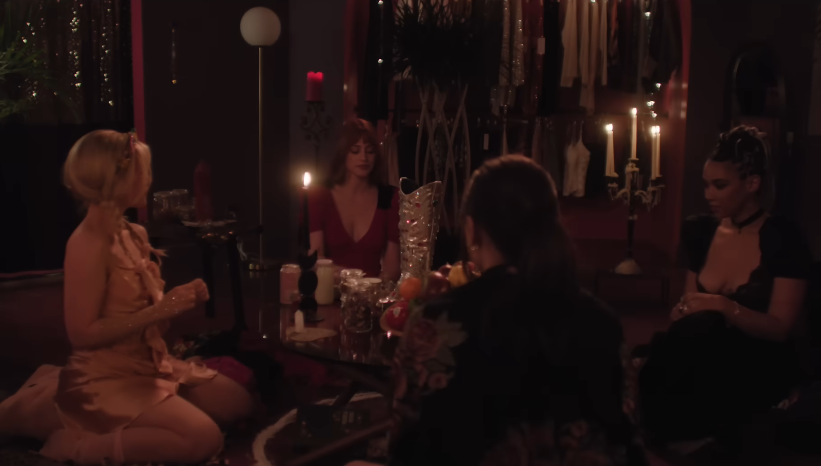
Let’s address the bedazzled cowboy boot in the room immediately.
At some point during Forbidden Fruits, you will watch Victoria Pedretti drink a potion containing menstrual blood from a rhinestone-encrusted boot while Lili Reinhart delivers a monologue about the spiritual power of Marilyn Monroe . If that sentence made you uncomfortable, good. That’s the point.
Directed by Meredith Alloway in her feature debut, Forbidden Fruits premiered at SXSW on March 16, 2026, and arrived in theaters nationwide on March 27 . The film currently holds an 86% critics score on Rotten Tomatoes and a 7.4/10 on IMDb . Those numbers tell you something important: this movie knows exactly what it wants to be, even if not everyone agrees on whether it succeeds.
Alloway herself described the film as “a razor blade in a Jolly Rancher” . That description is not marketing fluff. It is a warning label.
What Is Forbidden Fruits Actually About?
The setup sounds like someone fed Mean Girls, The Craft, and a Free People catalog into an AI and asked for trouble.
Apple (Lili Reinhart), Cherry (Victoria Pedretti), and Fig (Alexandra Shipp) work at Free Eden, a trendy boutique in a Dallas mall. They sell overpriced clothes to insecure customers. They communicate with men only through emojis. They drink potions made from bodily fluids. And after hours, they hold secret coven meetings in the store’s basement, worshipping Marilyn Monroe as a beacon of ultimate womanhood .
The trio calls themselves the Fruits. They belong to a coven called Paradise.
When Pumpkin (Lola Tung), a pretzel shop employee with a mysterious agenda, catches Fig’s attention, Apple reluctantly allows a fourth member into the circle. But Pumpkin wants more than friendship. She wants answers about what happened to the group’s previous fourth member—a girl named Pickle (Emma Chamberlain, in her acting debut) who disappeared under circumstances nobody wants to discuss .
What follows is part horror-comedy, part psychological dissection of toxic female friendship, and part slasher film. The mix does not always blend smoothly. But when it works, it works with a bedazzled vengeance.
The Cast: Riverdale Meets You in a Dark Alley
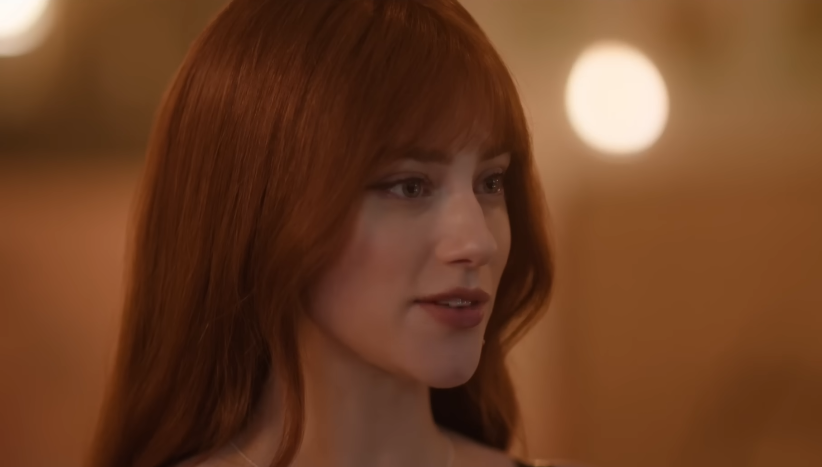
Let’s talk about why this movie works at all. The answer sits squarely on four sets of shoulders.
Lili Reinhart plays Apple as a woman slowly cracking behind a mask of perfect eyeliner and corporate-friendly smiles. Riverdale fans know Reinhart can do emotional damage. Here, she weaponizes that skill. Apple rules Free Eden like a retail Regina George—except George never had to hide a murder. Reinhart modulates her voice and physicality as the film progresses, letting the facade crumble frame by frame . By the third act, she has transformed into something feral. It is the best performance in the film.
Victoria Pedretti steals nearly every scene she inhabits . Her Cherry speaks in a breathy, Marilyn Monroe-esque voice, shuffles nervously, and pleases people with desperate intensity. But Pedretti—known for You and The Haunting of Hill House—layers vulnerability beneath the ditziness. Cherry lost her entire family. This coven is her replacement family. She will do anything to keep it . Pedretti makes you laugh and then immediately makes you feel terrible for laughing.
Alexandra Shipp brings warmth as Fig, the group’s emotional mediator. She wants to fit in badly enough to hide a secret relationship, violating Apple’s strict anti-boyfriend policy. Shipp’s performance anchors the film’s more grounded moments .
Lola Tung (The Summer I Turned Pretty) serves as the audience surrogate. Pumpkin navigates the Fruits’ personalities while hunting for truth. Tung’s inexperience occasionally shows, but her openness works for a character who is herself performing belonging .
Emma Chamberlain appears briefly as the vanished Pickle. Her casting—a YouTube influencer making her acting debut—raised eyebrows. The role requires little beyond looking haunted in flashbacks. She manages that adequately.
Gabrielle Union appears in a supporting role that the trailers have wisely kept vague .
The Diablo Cody Factor: Why This Feels Familiar
You cannot discuss Forbidden Fruits without acknowledging Diablo Cody.
The Oscar-winning screenwriter of Juno and Jennifer’s Body serves as a producer here alongside Mason Novick . Her fingerprints cover the dialogue like glitter on a craft project. Characters toss off lines like “I have a really bad case of main character syndrome,” “Coffee makes me vom,” and “Do you have sand in your ass crack? Because you are giving beach, babe” .
This is Cody’s wheelhouse: sharp-tongued women saying terrible things to each other in aesthetically pleasing settings.
What makes this moment significant involves Cody’s own history. In 2009, Jennifer’s Body premiered to confused audiences and middling box office. Marketing angled the film toward teenage boys who wanted to see Megan Fox. The actual movie—a satirical horror-comedy about female friendship and sexual predation—went misunderstood for years .
Cody describes watching Forbidden Fruits premiere at SXSW as “healing” . The audience got it. They laughed at the right moments. They gasped at the right moments. Nobody mistook this for a movie designed to titillate straight men.
“Hearing people in the audience at South understanding the movie was really healing for me,” Cody told Variety. “Even though I didn’t make this film” .
The infrastructure finally exists for these stories. Online communities—Tumblr subcultures, queer spaces, women-dominated forums—have created audiences that Hollywood can no longer ignore . Forbidden Fruits arrives at precisely the right cultural moment.
The Setting: Free Eden as Character
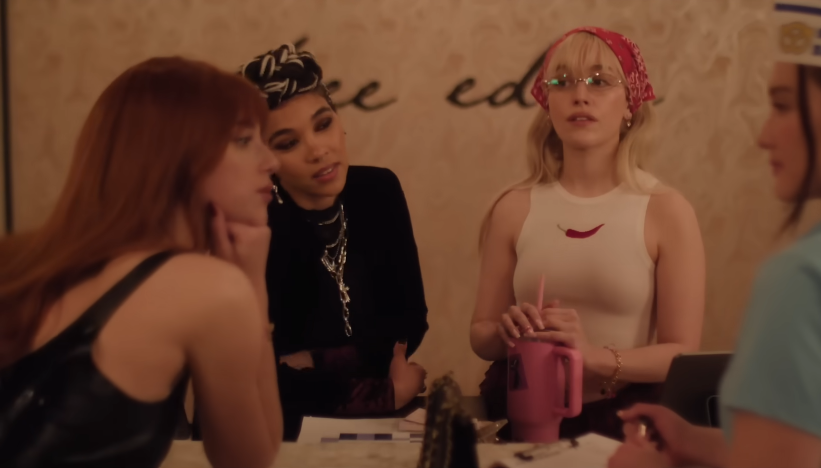
Alloway and cinematographer Cedric Cheung-Lau (who also shot Esta Isla) transform Free Eden into a character with dialogue.
The store glows with Mario Bava-inspired color palettes—deep pinks, electric blues, soft twinkle lights hanging from the ceiling . Mannequin heads sit frozen mid-laugh (or mid-scream). The fitting room mirrors reveal that inspirational neon signage reads something far more sinister backward .
The production design establishes a hyper-feminine, distorted universe where the Fruits can exist in their “own little bubble” . Nothing outside the mall matters. The real world barely registers. This is intentional. Alloway wanted the mall to function as both refuge and death trap .
The film adaptation moves the setting from Houghton’s original New York stage play to a Dallas mall (though production actually filmed in Toronto) . Alloway, a Texas native, wanted regional specificity. “Not every place puts such weight on group dynamics and tradition like Texas,” she explained .
The Humor: Hit and Miss, But Mostly Hit
Forbidden Fruits earns its comedy through commitment.
The jokes land because the cast plays everything completely straight. Reinhart described her approach plainly: “This is the most serious thing in the world to my character, Apple, and that’s where the comedy comes in” .
The film’s humor operates on multiple levels:
Surface level: Broad slapstick, denture-level physical comedy, and the absurdity of watching beautiful women do disgusting things with straight faces.
Satirical level: The film skewers performative feminism, retail culture, and the specific horror of working in a mall food court.
Horror-adjacent level: Some laughs catch in your throat when you realize you are watching something genuinely disturbing unfold beneath the glitter.
The dialogue crackles with quotable moments. The Fruits speak in a specific patois—”babe” punctuates nearly every sentence, functioning as both endearment and warning .
What Does Not Work (Let’s Be Honest)
Every review needs balance. Here is the honest critique.
The messaging gets muddy. Forbidden Fruits wants to examine toxic female friendship. It also wants to critique how patriarchy poisons relationships between women. These two goals occasionally work at cross purposes .
The film makes Apple’s hatred of men the central problem, but when the backstory explaining that hatred emerges, her motives feel understandable. As Dread Central noted, “What was that one tweet? If your dad traumatizes you, traumatize him back” . The film seems unsure whether Apple represents a cautionary tale or a righteous avenger.
The New York Times offered the harshest assessment, calling the film “a vibes-only pastiche that has little to add to the satirical queen-bee subgenre” with an ending that feels “abrupt” and “unearned” .
The pacing sags in the middle. Alloway’s feature debut occasionally loses momentum when Pumpkin searches for answers about Apple’s past . The static dialogue scenes—characters talking in rooms—test patience for viewers accustomed to faster rhythms.
The supernatural elements remain ambiguous. The film never confirms whether the coven’s magic actually works. This ambiguity is intentional. Alloway wants viewers questioning whether the horror comes from witchcraft or simply from what women do to each other . Whether this lands as sophisticated or frustrating depends entirely on the viewer.
The LGBTQ+ subtext stays subtext. Nerdist noted the “powerful sapphic vibes” between nearly every character but expressed disappointment that the film never explores same-sex attraction beyond brief, squashed moments . For a movie about women de-centering men, the continued focus on heterosexual dynamics feels like a missed opportunity.
The Third Act: Campy Carnage and Mid-Credits Promises
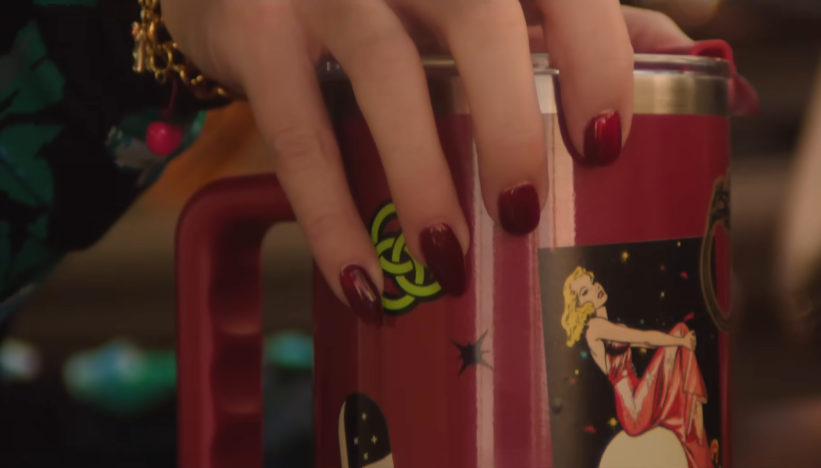
The final twenty minutes of Forbidden Fruits pivot hard into B-movie horror territory .
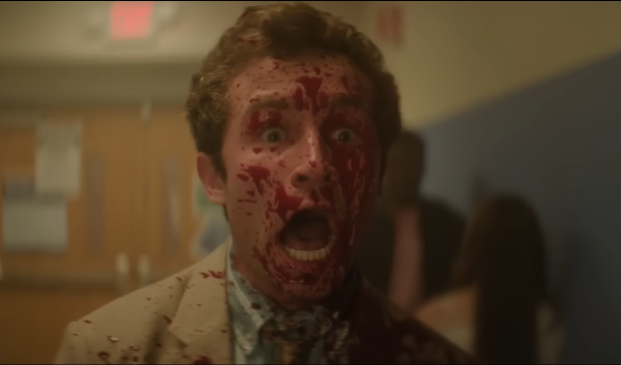
Blood spills. Practical effects take center stage. X-ACTO knives, acrylic nails, and meat cleavers find creative uses . The film earns its R rating for “campy carnage, dressing room sex, nudity, drug use and language” .
Some critics find this shift jarring. Others find it exhilarating. I land in the middle. The ending arrives abruptly, but the journey justifies the destination.
A mid-credits scene explicitly sets up a sequel . Given the 86% Rotten Tomatoes score and the built-in audience for Cody-produced horror-comedies, expect Forbidden Fruits 2 to receive a greenlight before summer ends.
What Alloway Actually Accomplished
Alloway spent years developing this project with playwright Lily Houghton. The original play bore the unwieldy title Of the Woman Came the Beginning of Sin, and Through Her We All Die . That Biblical reference—Eve, original sin, women as the source of all evil—informs every frame of the finished film.
“I do love the idea that women are told we’re quite literally the origin of evil and sin,” Alloway told Den of Geek. “In it, all these women are reclaiming that. I think witchcraft, and being in a coven are ways that we make that sin narrative ours” .
This thematic ambition elevates Forbidden Fruits above standard slasher fare. The film asks legitimate questions: Why do women spend so much money on makeup and Botox? Who is that for? What happens when sisterhood becomes performance rather than genuine connection?
Alloway does not provide easy answers. She provides a bedazzled mirror and invites viewers to look at themselves.
Should You See Forbidden Fruits?
Yes. With calibrated expectations.
Reasons to go:
- The cast. Reinhart and Pedretti deliver performances worth the ticket price alone.
- The dialogue. Cody’s influence produces genuinely quotable lines.
- The production design. Free Eden is a wonderland you will want to visit, even knowing the danger.
- The cultural moment. This is Jennifer’s Body finally getting its flowers.
Reasons to hesitate:
- The pacing. Middle sections drag.
- The messaging. The film cannot decide whether Apple is villain or victim.
- The third-act pivot. If sudden tonal shifts bother you, prepare for whiplash.
- The New York Times review. They are not wrong about everything.
Verdict: Forbidden Fruits is a fun, candy-colored, mallcore fever dream that speaks to Gen Z’s fascination with 2000s aesthetics, conversations about girlhood, and all things metaphysical . It is not perfect. It does not need to be. It needs to be exactly what it is: a razor blade wrapped in a Jolly Rancher, waiting for the right person to take a bite.
The film runs 103 minutes and carries an R rating. IFC Films distributes theatrically, with a subsequent streaming window on Shudder .
Grab your coven. Wear something sparkly. And remember: never take the escalator in skinny heels .
Rating: ★★★½☆ (3.5/5)
Runtime: 103 minutes
Rating: R
Director: Meredith Alloway
Writers: Meredith Alloway, Lily Houghton (based on her play)
Cast: Lili Reinhart, Victoria Pedretti, Alexandra Shipp, Lola Tung, Emma Chamberlain, Gabrielle Union
Producers: Diablo Cody, Mason Novick, and others
Release Date: March 27, 2026 (US theaters)





Leave a comment