



Let’s address the most surprising thing about Fantasy Life immediately.
Amanda Peet has not starred in a movie for a decade. Not a single leading role since 2015. She raised kids. She wrote a play. She occasionally popped up on television. But the woman who once commanded screens in The Whole Nine Yards and Saving Silverman simply… vanished from cinema.
Fantasy Life ends that drought. And within the first ten minutes of screen time, you will wonder why anyone let her stay away this long.
Matthew Shear’s directorial debut premiered at SXSW 2025, where it won the Narrative Feature Audience Award . It arrives in theaters nationwide on March 27, 2026, distributed by Greenwich Entertainment . The Los Angeles Times awarded it a 90, and it currently holds a 75 on Metacritic from The Playlist .
Those numbers tell you something important: this is a small film with big ambitions and even bigger performances.
What Is Fantasy Life Actually About?
The setup sounds like someone fed a mid-2000s indie comedy into an algorithm and asked for “privileged New Yorkers having feelings.”
Sam Stein (played by Shear himself) loses his paralegal job. He promptly suffers a panic attack in a bookstore. His psychiatrist, Dr. Fred (Judd Hirsch), suggests a temporary solution: babysit Fred’s three granddaughters while their parents sort out their lives .
The parents in question? Dianne (Amanda Peet), a once-promising actress whose career stalled after motherhood, and David (Alessandro Nivola), a rock bassist who spends more time on tour than at home. Their marriage drifts somewhere between “complicated” and “functionally over.”
Sam accepts the job. He bonds with the kids. And then—because this is a movie, and movies require complications—he falls for Dianne.
The family decamps to Martha’s Vineyard for the summer. Sam tags along. Four generations squeeze under one roof: the kids, the parents, the grandparents (including Sam’s psychiatrist), and a manny nursing an ill-advised crush. What could possibly go wrong?
The Biosphere Metaphor: Why This Film Feels Different

Here is where Shear earns his screenwriting credentials.
The film opens with a curious metaphor. In the 1990s, scientists built a biosphere in the Arizona desert. They learned something unexpected: trees growing inside a protective dome, shielded from natural wind, never develop “stress wood.” Without external pressure, they collapse under their own weight .
Shear applies this observation to his characters. Sam, Dianne, and David possess every advantage—wealth, education, social connections, beautiful homes. They also possess zero resilience. When actual pressure arrives, they buckle.
This framing device elevates Fantasy Life above standard rom-com fare. The film does not mock its characters for their privilege. It observes them with clinical precision and surprising tenderness. Money cannot buy emotional stability. Generational wealth cannot prevent panic attacks in bookstores.
The Playlist’s Warren Cantrell captured this perfectly: “Shear makes a convincing argument that bottling up or denying this pain is a recipe for disaster” .
Amanda Peet: A Performance Worth Waiting For
Let’s be clear about what makes Fantasy Life essential viewing.
Amanda Peet delivers what multiple critics call “the performance of a lifetime.”
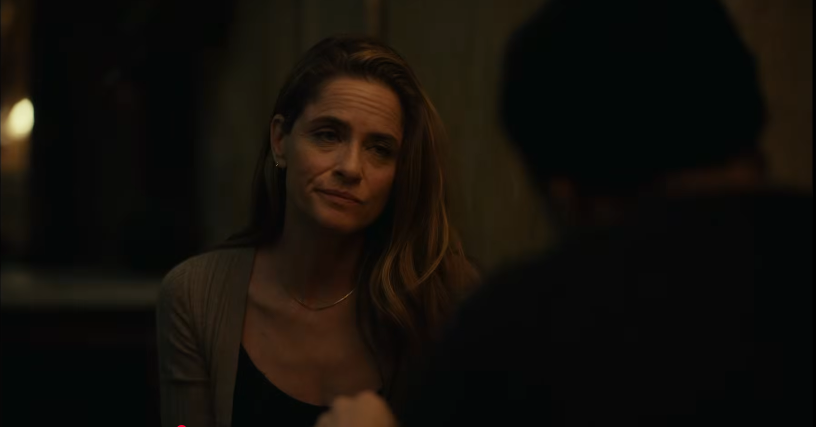
This is not hyperbole. Peet plays Dianne as a walking contradiction—exhausted but still sparking with intelligence, privileged but genuinely suffering, aware of her advantages but unable to convert them into happiness. She wants to jump-start her acting career. She can barely get out of bed .
The New York Times noted that Peet brings “both an untucked weariness and a spark” to Dianne . The Playlist went further, declaring her “the MVP of the main trio” who seems “the most in tune with her character’s struggles” .
Peet’s personal investment in the project runs deeper than performance. She produced the film alongside Shear and others . Shear wrote the role specifically for her after realizing no actress had properly utilized her talents in years. The gamble paid off. Dianne feels lived-in, messy, and achingly real.
Matthew Shear: Triple Threat or Triple Trouble?
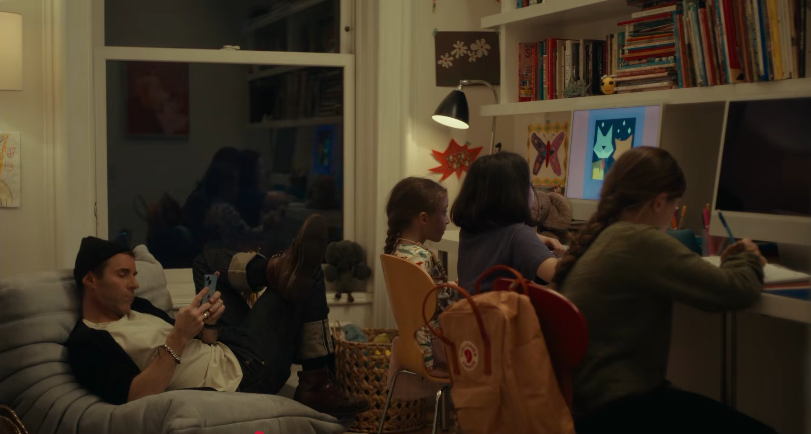
Shear writes, directs, and stars in Fantasy Life. This is the kind of ambition that usually ends with someone needing to be told “pick two.”
Surprisingly, Shear pulls it off.
His performance as Sam requires a specific kind of bravery. Sam is not charming. He is not dynamic. He is “both physically and emotionally uninspiring,” a rumpled sad-sack whose primary appeal lies in his kindness . Shear commits fully to this unflattering self-portrait. He allows Sam to be awkward, needy, and occasionally pathetic without asking the audience to love him.
The screenplay draws from Shear’s own life. He worked as a Manhattan family manny (a male nanny) during a dry spell in his acting career . The experience gave him access to a world he wanted to capture: “Who is actually living in these brownstones? So I thought, ‘Oh, I had that experience.'”
His wife encouraged him to write after “calling him out on wanting to write something or talking about it a lot” . The resulting script weaves autobiography into fiction, creating characters who feel specific rather than archetypal.
The Supporting Cast: A New York Rolodex
Fantasy Life assembles a supporting cast that reads like someone raided the “Character Actors Hall of Fame.”
Judd Hirsch plays Dr. Fred, Sam’s psychiatrist and the family patriarch. His presence anchors the film’s older generation, offering wisdom without sentimentality. Bob Balaban and Andrea Martin appear as additional grandparents. Holland Taylor and Zosia Mamet round out the ensemble .
Alessandro Nivola deserves special mention. His David could easily become the villain—the absent rock-star husband who neglects his wife and children. Nivola refuses this simplification. He plays David as “amusingly broed-up but doing subtle scene work,” a man equally lost in his own life .
The film also features a brief appearance from comedian Sheng Wang, whose stand-up special Sweet and Juicy made him a Netflix breakout .
This casual star power creates texture. Even minor characters feel fully inhabited. The family dinner scenes crackle with the specific tension of people who know each other too well.
The Mental Health Angle: Anxiety Without Caricature
Fantasy Life takes mental health seriously without becoming a PSA.
Both Sam and Dianne deal with chronic mood disorders. Sam’s panic attacks manifest physically—the bookstore collapse that opens the film is genuinely frightening in its suddenness. Dianne’s depression keeps her horizontal, unable to pursue the acting career she desperately wants .
Shear treats these conditions with respect. He does not cure them. He does not offer easy solutions. He simply observes, allowing characters to struggle without judgment.
The film’s central insight may be this: privilege does not inoculate against suffering. Dianne and David possess everything society claims should make people happy. They remain miserable. Sam possesses almost nothing. He remains miserable too.
As Shear told Variety: “It’s human to be uncomfortable in all kinds of circumstances, whether it’s this sort of fulfilled version of life, or a more humble one” .
What Works (And What Tests Patience)
Let’s break this down honestly.
Reasons to watch:
- Amanda Peet’s performance. This is a career-best turn from an actress who deserved better from Hollywood.
- The ensemble cast. Hirsch, Balaban, Martin, Taylor—everyone delivers.
- The mental health representation. Anxiety and depression receive thoughtful, non-exploitative treatment.
- The biosphere metaphor. It actually works.
- The brisk pacing. At 91 minutes, the film never overstays its welcome .
Reasons to hesitate:
- The ending. Multiple critics note that the film “refuses to offer a satisfying, narratively cohesive ending” .
- The Woody Allen comparisons. Some viewers may find the “neurotic New York shlub” territory too familiar .
- Sam’s character. Not everyone will enjoy spending 91 minutes with a protagonist this passive.
- The privilege problem. Some viewers may struggle to sympathize with wealthy people feeling sad in Martha’s Vineyard.
The Ending Problem: Bug or Feature?
The most consistent criticism of Fantasy Life involves its conclusion.
The Playlist notes that “the brisk pacing… is a credit to this editorial restraint, yet it also leads to one of the production’s few stumbles: its refusal to offer a satisfying, narratively cohesive ending” .
But here is the counterargument: maybe that’s the point.
Shear has created characters whose central problem is inescapable dread and self-loathing despite every advantage. A tidy, satisfying ending would contradict everything the film observes about life. As Cantrell writes, “Were this to feel complete and satisfying, that would be like… well… it would be unnatural, kind of like a tree standing tall on the moon or Mars” .
The New York Times offers a gentler reading. The film’s season-spanning chapters bear a message: “Time moves on, and so can we.”
Your tolerance for ambiguity will determine whether the ending lands as frustrating or profound.
The Woody Allen Comparison: Fair or Lazy?
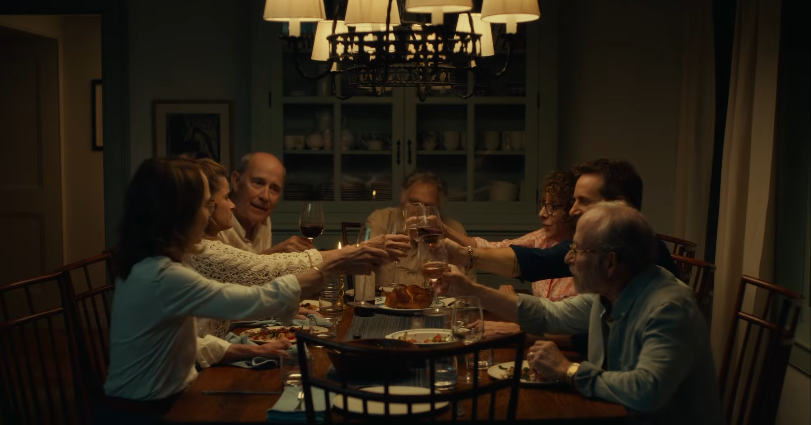
Several critics note similarities between Fantasy Life and Woody Allen’s New York comedies. A neurotic, lonely middle-aged man navigates romance among the Upper West Side intelligentsia. The comparison feels almost unavoidable.
The Playlist argues that “the comparison is only skin-deep.” Shear may traffic in similar settings and character types, but “he isn’t the center of this universe, and he’s surrounded on all sides by similarly unhappy and unmoored people” .
This distinction matters. Allen’s films often revolve around a single neurotic consciousness. Fantasy Life distributes its attention more democratically. Dianne’s struggles receive equal weight to Sam’s. David’s quiet desperation registers alongside everyone else’s.
The film also lacks Allen’s mean streak. Shear treats his characters with genuine tenderness, even when exposing their flaws.
The SXSW Win: What It Actually Means
Fantasy Life won the Narrative Feature Audience Award at SXSW 2025 .
This prize matters differently than critics’ awards. Audience awards measure connection, not perfection. The SXSW crowd—a mix of industry professionals, Austin locals, and film enthusiasts—responded to something in Shear’s film. Maybe they recognized the anxiety. Maybe they appreciated Peet’s return. Maybe they just enjoyed watching Judd Hirsch be Judd Hirsch.
The win suggests Fantasy Life will find its audience. It may not become a crossover hit. It may not dominate awards season. But for viewers who appreciate sharp dialogue, honest performances, and films about adults navigating adult problems, this movie delivers.
Should You See Fantasy Life?
Yes. With calibrated expectations.
Go see it if:
- You miss Amanda Peet and want to watch her remind everyone why she is a star.
- You appreciate New York ensemble dramedies with literary aspirations.
- You have ever felt anxious or depressed despite having “nothing to complain about.”
- You enjoy films that prioritize character over plot.
Skip it if:
- You need tidy endings with clear resolution.
- Neurotic protagonists exhaust you.
- The phrase “Martha’s Vineyard family drama” makes your eyes roll involuntarily.
- You prefer your comedy broad and your drama unambiguous.
Verdict: Fantasy Life is a smart, sharply observed dramedy that announces Matthew Shear as a filmmaker worth watching. It earns its 75 Metacritic score and its Los Angeles Times rave . Amanda Peet delivers work that should (but probably won’t) enter awards conversations. The ending will frustrate some viewers. The rest will recognize that some stories resist neat conclusions.
The film runs 91 minutes and carries an R rating for “language, some sexual references and brief drug use” .
Go for Peet. Stay for the biosphere metaphor. Leave contemplating your own stress wood—or lack thereof.
Rating: ★★★½☆ (3.5/5)
Runtime: 91 minutes
Rating: R
Director: Matthew Shear
Writer: Matthew Shear
Cast: Amanda Peet, Matthew Shear, Alessandro Nivola, Judd Hirsch, Bob Balaban, Andrea Martin, Holland Taylor, Zosia Mamet
Release Date: March 27, 2026 (US theaters)
Distributor: Greenwich Entertainment
Festivals: SXSW 2025 (Narrative Feature Audience Award)
Metacritic: 75
Review Overview
- Rating7














Leave a comment