


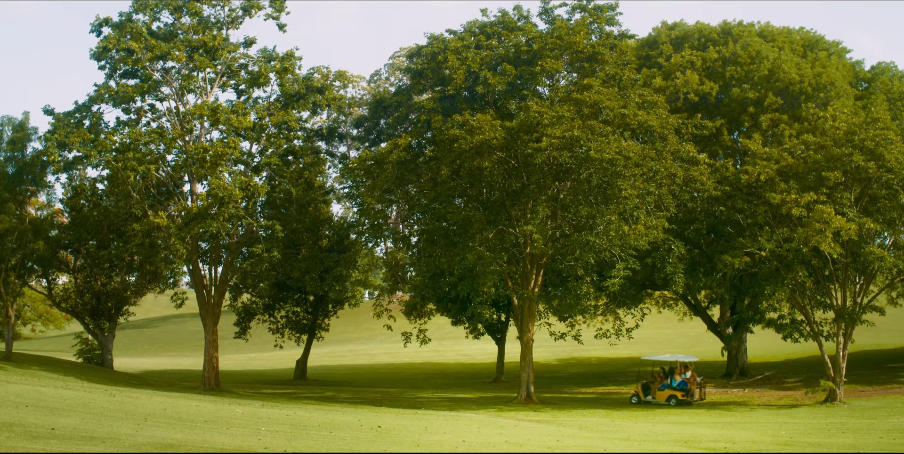
Some movies arrive with a marketing budget bigger than the GDP of a small nation. Others arrive with something far more dangerous: the truth.
Esta Isla (This Island) belongs firmly in the second category. It premiered at Tribeca. It won the John Cassavetes Award at the 2026 Film Independent Spirit Awards. And it did all this with a production budget under one million dollars .
Directed by Lorraine Jones Molina and Cristian Carretero, this Puerto Rican drama runs 114 minutes and leaves a mark that lasts considerably longer. Robert Daniels, reviewing for Metacritic, gave it an 88 and called it “visually evocative and uniquely conceived” .
He was not wrong. But he may have undersold just how much this film accomplishes with so little.
What Is Esta Isla Actually About?
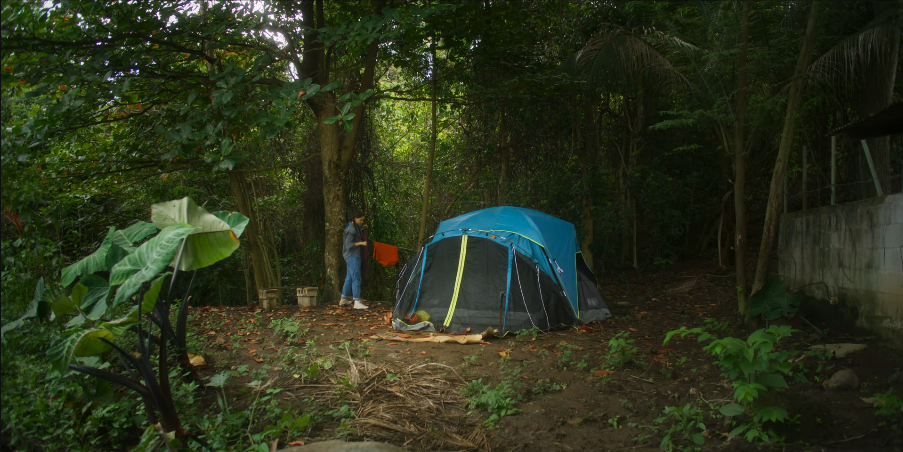
The plot sounds simple on paper. Bebo (played by newcomer Zion Ortiz) lives with his older brother Charlie and their grandmother in Columbus Landing, a public housing complex in Mayagüez . They fish. They survive. They barely scrape by.
Then Charlie makes a choice that thousands of young Puerto Rican men make every year: he turns to the drug trade because legitimate work pays poverty wages.
When a deal goes sideways, Bebo grabs his girlfriend Lola (Fabiola Brown) and runs. They flee the coast. They head into the mountains. And the film transforms from a crime thriller into something far stranger—a meditation on identity, colonialism, and what it means to belong to an island that does not fully belong to itself.
The directors call their approach “tropical realism” . That is not marketing fluff. That is an accurate description of what you will watch for nearly two hours.
The Cast: New Faces, Old Souls
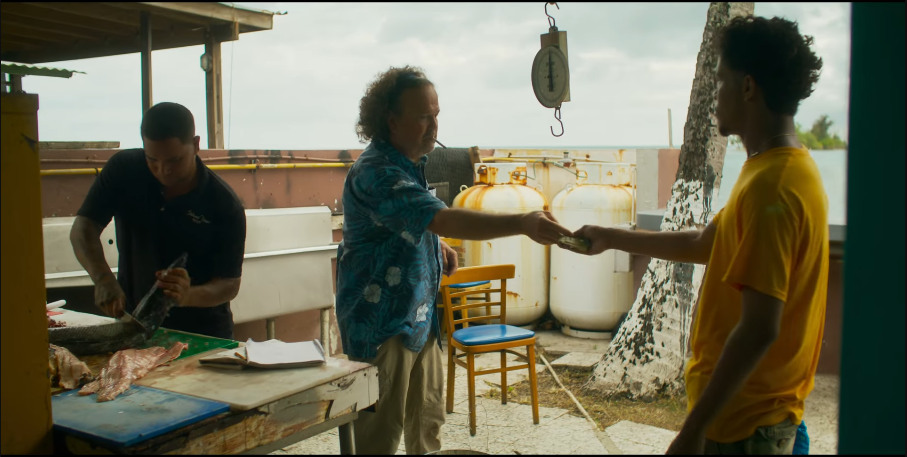
Here is something you do not see every day: a film that casts over 300 actors in open auditions, rejects professional polish, and somehow extracts performances that feel more real than anything with a SAG card .
Zion Ortiz carries the film on shoulders that should not be this steady. He is the son of Zion from reggaetón duo Zion & Lennox. He had never acted before . And yet, when directors Carretero and Jones Molina watched his audition, they saw something rare.
“We saw his total surrender and his vulnerability in front of us and the camera,” Carretero told EFE. “He wasn’t acting. He wasn’t thinking about what to say next. He was there, inside the moment” .
Fabiola Brown matches him scene for scene. She is a professional dancer. She is also the daughter of Roy Brown, a legendary Puerto Rican folk singer often described as “the Silvio Rodríguez of Puerto Rico” . Between the two of them, they represent something the directors clearly wanted: performers who understood performance without being consumed by it.
The veterans anchor everything. Teófilo Torres plays Cora, a mysterious figure in the mountain community who offers refuge. Georgina Borri plays the grandmother. Their presence gives the younger actors room to breathe.
The Real Star Is the Island Itself
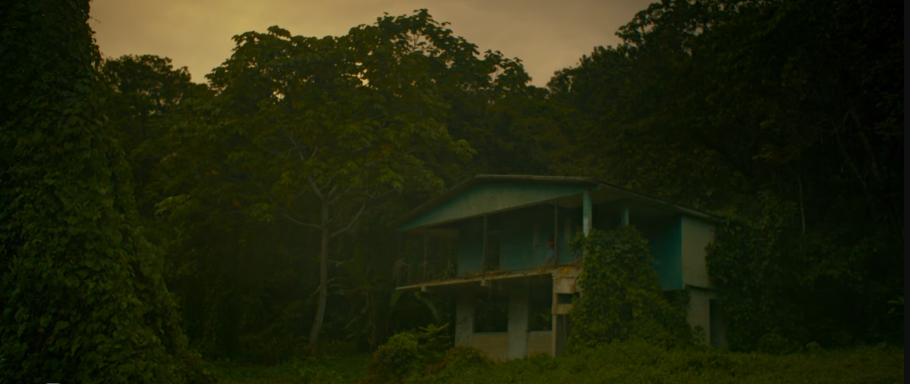
You cannot review Esta Isla without discussing the cinematography. Cedric Cheung-Lau, a New York-born director of photography with roots in Hong Kong, shot the film using natural light and minimal equipment .
He lived with the directors for two months before filming began. He wanted to understand Puerto Rico—not the postcard version tourists see, but the version 90% of Puerto Ricans actually live .
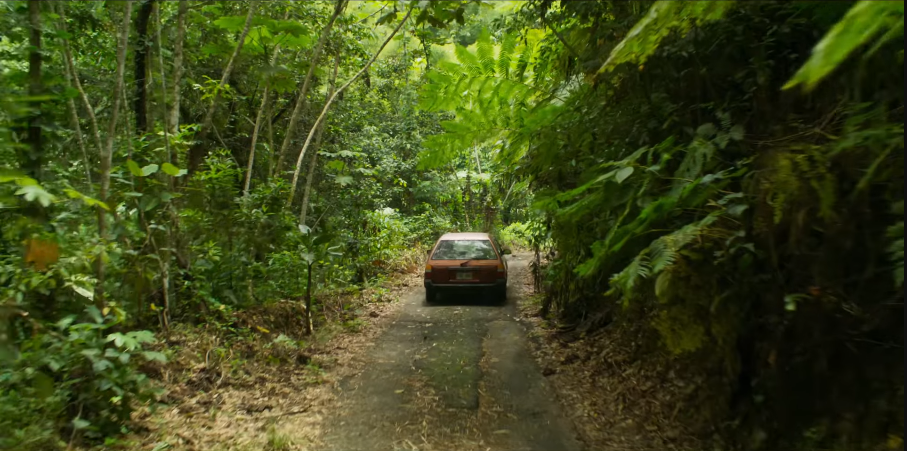
The film moves through seven municipalities: Mayagüez, Añasco, Las Marías, Cabo Rojo, Sabana Grande, Guayanilla, and Cupey . Each location gets treated not as a backdrop but as a character with dialogue.
Carretero explained the philosophy plainly: “We filmed with a small crew and minimal equipment, few lights, without interfering in the spaces. The beauty isn’t staged. What you see is simply the incredible nature and charm of the island” .
The result won Best Cinematography at Tribeca . Watch the way the camera holds on a wide shot of the mountains after a tense scene. Watch how the coastal light hits the public housing complex at golden hour. This is not pretty for the sake of pretty. This is a visual argument that Puerto Rico matters, that its people deserve to be seen clearly, without filters.
Three Acts, Three Puerto Ricos
The film divides cleanly into three thematic movements, each examining a different facet of island life .
Act One: The Coast. We meet fishermen, young men racing horses on concrete, the semi-urban sprawl of Mayagüez. The economy here runs on necessity, not opportunity. Charlie says what everyone knows: “I don’t know anyone on this island who can live on minimum wage” .
Act Two: The Mountains. Bebo and Lola flee inland. The landscape shifts. The people shift. Here they encounter Cora and a community that lives deliberately outside the American economic system. Old stories surface—about the Taíno indigenous heritage that never fully disappeared, about the independence movement, about wounds that refuse to scar over .
Act Three: The Reckoning. The sicarios close in. The past catches up. And Bebo must decide whether redemption exists for someone like him—or whether the sea, once his livelihood, now offers the only escape.
What Esta Isla Refuses to Do
Let us be clear about what this film is not.
It is not a didactic political lecture. The directors specifically reject what Puerto Ricans call “panfleteo”—preachy pamphleteering . The politics emerge through character and place, not through speeches.
It is not a sanitized tourism ad. Some viewers reportedly complained that the film does not show the “postcard” Puerto Rico . That is precisely the point. Carretero responded that the film shows “what 90% of Puerto Ricans actually live” .
It is not a Hollywood imitation. Jones Molina and Carretero explicitly reject the American studio model. “We cannot imitate Hollywood,” Carretero said. “That language does not reflect who we are. We have to create our own cinematic language, one rooted in our reality” .
The Context You Need: Why This Film Matters in 2026
Puerto Rico recorded over 460 homicides in 2025, most tied to drug trafficking . The island remains a US territory without full representation—a colonial status that shapes every aspect of life, from economics to psychology.
The directors describe Puerto Rico as a society experiencing its own “coming of age” parallel to the adolescent protagonists . The question Bebo asks—Who am I? Where am I going?—mirrors the question Puerto Rico has asked itself for over a century.
There is a scene that takes place in the actual home of Filiberto Ojeda, the Machetero leader killed by the FBI in 2008 . The camera lingers on bullet holes in the walls. This is not fiction. This is location scouting that crosses into historical documentation.
The film does not editorialize. It simply shows. And the showing is devastating.
The Spirit Award: What the Win Actually Means
The John Cassavetes Award recognizes the best film made for under $1 million . Esta Isla became the first Puerto Rican film ever nominated in this category .
And it won.
Lorraine Jones Molina described the moment as “surreal” . She also offered the most honest assessment of independent filmmaking you will read this year: “Making this movie taught us that hardship and struggle can be what saves you. The lack of funding gave us more time to write, rewrite, and adjust the details” .
The film also collected:
- Best New Narrative Director (Tribeca)
- Best Cinematography (Tribeca)
- Special Jury Mention (Tribeca)
- Best Film (Puerto Rico Film Festival)
- Best Art Direction and Original Score (Cine Ceará, Brazil)
Not bad for a film shot over six weeks with a crew that “felt like family” .
What Does Not Work (Let’s Be Honest)
Every review needs balance. Here is the honest critique.
The pacing tests patience in the middle section. The mountain sequences breathe deeply—sometimes too deeply. Viewers conditioned to Marvel editing rhythms may find themselves checking watches.
The “lovers on the run” structure occasionally strains against the heavier thematic material. The film wants to be both a tense thriller and a meditation on colonial identity. It mostly succeeds. But there are moments where you feel the gears shifting.
Some supporting characters remain sketches rather than full portraits. The grandmother, played beautifully by Georgina Borri, deserved more screen time. The sicarios pursuing Bebo function more as plot devices than fully realized antagonists.
These are quibbles. They are also honest observations. The film earns its 88 Metacritic score not through perfection but through emotional precision .
Should You Watch Esta Isla?
Yes. With one condition.
You need to know what you are signing up for. This is not escapist entertainment. This is a film that asks you to sit with discomfort, to look at places American cinema usually ignores, to hear Spanish dialogue with English subtitles, and to recognize that Puerto Rico exists as more than a vacation destination.
If you enjoyed the neorealist textures of early Cuarón (Y Tu Mamá También) or the lovers-on-the-run poetry of Malick (Badlands), you will find familiar pleasures here .
If you want to understand why a film made for less than the craft services budget of a Marvel movie just won the most prestigious independent film award in America, you will find your answer in nearly every frame.
Esta Isla releases in select US theaters (New York, Miami, Chicago, Los Angeles) alongside its Puerto Rico premiere. The Angelika Film Center in New York will host Q&A sessions with the directors on March 20-21 .
Go see it. Then spend some time thinking about what you saw. The film deserves that much.
And Puerto Rico deserves far more.
Rating: ★★★★☆ (4/5)
Runtime: 114 minutes
Language: Spanish (English subtitles available)
Directors: Lorraine Jones Molina & Cristian Carretero
Cast: Zion Ortiz, Fabiola Brown, Teófilo Torres, Audicio Robles, Xavier Morales, Georgina Borri
Esta Isla Rating
- Rating4












Leave a comment