


Dhruvandhar Film Analysis: Examining the Controversy Between Cinema and Political Propaganda
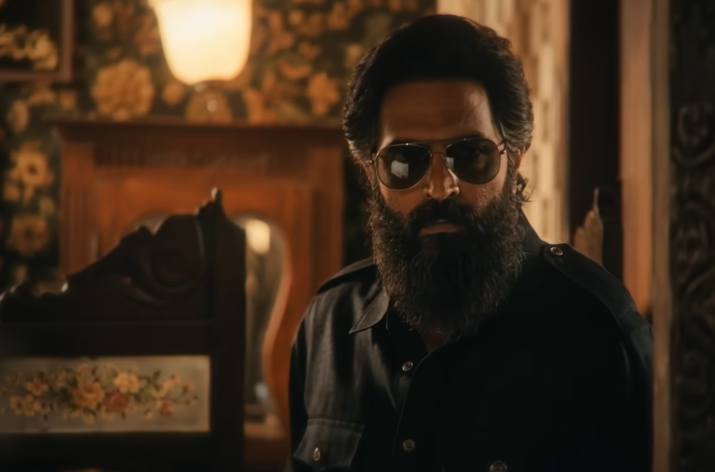
The release of “Dhruvandhar” (also known as “Dhurandhar”), directed by Aditya Dhar, has sparked intense debate across India about the evolving relationship between Bollywood cinema and political messaging. As audiences flock to theaters, a critical question emerges: where does entertainment end and propaganda begin? This comprehensive analysis examines the controversial aspects of the film, its portrayal of historical events, and the broader implications for Indian cinema.
The Director’s Vision: Aditya Dhar’s Controversial Approach
Aditya Dhar has established himself as a filmmaker unafraid to tackle politically sensitive subjects. Following his previous work, “Dhruvandhar” represents an ambitious attempt to weave contemporary Indian political history into a thriller narrative. However, critics argue that the film crosses the line from historical dramatization into political advocacy.
The film’s official disclaimer states it is “a fictional work inspired by real events” with “any resemblance to actual persons purely coincidental.” Yet the movie prominently features real footage of Prime Minister Narendra Modi, uses actual names of figures like Dawood Ibrahim, and depicts specific historical events with precise dates. This contradiction forms the crux of the controversy surrounding the film.
The Marketing Strategy: When Cinema Meets Campaign
One of the most discussed aspects of “Dhruvandhar” is its intersection with electoral politics. The film’s release timing and promotional strategies have raised eyebrows among political analysts and cinema critics alike.
Assam Chief Minister Hemanta Biswa Sharma publicly stated that those who watch “Dhruvandhar” would vote for the BJP, blurring the lines between film promotion and political campaigning. The official BJP social media handles have utilized songs from the film as promotional material, further cementing the connection between the movie and political messaging.
This phenomenon represents a new chapter in Indian political communication, where entertainment becomes a vehicle for ideological transmission. The film’s reported budget and production values suggest a scale typically reserved for major commercial entertainments, yet its messaging serves a distinctly political purpose.
Historical Accuracy vs. Narrative Convenience
The film’s portrayal of historical events has come under intense scrutiny. Critics point to several instances where the narrative appears to contradict documented facts:
The Demonetization Narrative
One of the film’s central plot points revolves around demonetization, depicting it as a response to Pakistan flooding India with counterfeit currency worth ₹60,000 crores to influence Uttar Pradesh elections. The film portrays this decision as a national security masterstroke.
However, official data tells a different story. According to the Reserve Bank of India’s 2017-18 annual report, out of ₹15.41 lakh crore demonetized, ₹15.31 lakh crore returned to the banking system—representing 99.3% of the notes. The RBI detected only ₹43 crore in counterfeit currency that year, dramatically different from the film’s depiction.
The National Bureau of Economic Research reported that demonetization reduced India’s economic activity by at least 3% in November-December 2016, with lasting impacts on GDP. The human cost was significant: at least 80 people died standing in ATM and bank queues, and countless businesses, particularly in the informal sector, suffered devastating losses.
The ISI Funding Narrative
The film suggests that Pakistan’s ISI was funding Indian NGOs, media outlets, universities, and socialist organizations to influence elections. This narrative has been used to justify various government actions since 2014.
However, critics point to contradictory evidence. A 2002 report titled “Foreign Exchange of Hate” revealed that the India Development and Relief Fund (IDRF), an American organization, systematically channeled money to RSS-affiliated organizations. Between 2001 and 2012, five US-based charities reportedly provided over $55 million to organizations associated with the Sangh Parivar.
According to an Al Jazeera report, during COVID-19, $833,000 from US federal relief funds went to right-wing groups. Additionally, in 2018, Pakistan’s former ISI chief Lieutenant General Asad Durrani stated that the ISI actually preferred Modi as Prime Minister, contradicting the film’s narrative.
Since 2014, over 20,000 NGOs have had their foreign funding licenses cancelled, including prominent organizations like Amnesty International India (closed in 2020) and Greenpeace India. These are organizations that have advocated for environmental protection, civil liberties, and government accountability.
The Psychology of Cinematic Persuasion
The film employs several psychological techniques that critics identify as propaganda tools:
Emotional Priming
Early in the film, a scene depicts a Sikh man in Pakistan being burned alive over blasphemy charges, with mobs chanting violent slogans. Critics argue this scene serves no essential plot function—it doesn’t advance character development or the main storyline. Instead, it functions as emotional priming, creating a specific emotional state in viewers that makes them more receptive to subsequent political messaging.
In advertising psychology, this technique involves creating an emotional state before delivering the main message. Just as a confectioner might offer spicy food before sweets to make the sweetness more pronounced, the film allegedly creates fear and anger before presenting its political narrative.
Villain Endorsement Technique
One of the film’s most discussed techniques involves having villain characters praise Prime Minister Modi. The character representing Dawood Ibrahim reportedly states that “since the tea vendor has come, our people have become scared.”
Critics argue this is a sophisticated propaganda technique. If heroes praise a political leader, audiences might dismiss it as bias. But when villains express fear or respect for that leader, it creates a powerful psychological impact. It’s analogous to having Thanos in “Avengers” express fear of Spider-Man—the audience automatically assumes Spider-Man must be extraordinarily powerful.
Gaslighting Through Cinema
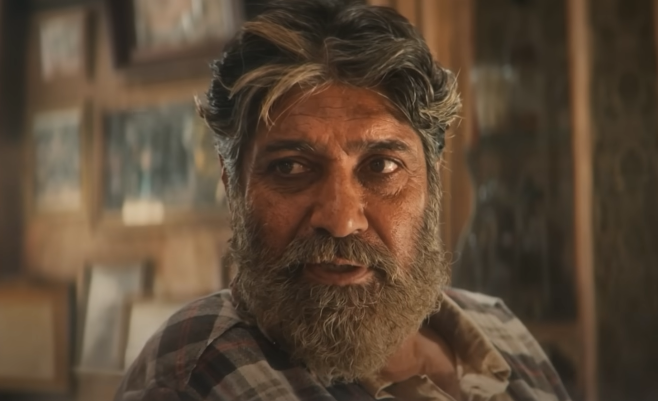
Perhaps the most serious criticism involves what psychologists call “gaslighting”—making people doubt their own memories and experiences. The film depicts events from 2016 (demonetization), 2019 (Pulwama attack), and 2023 (Atiq Ahmed encounter)—all recent events that millions of Indians experienced firsthand.
When a film presents an alternative version of events that people personally witnessed—long ATM lines, economic disruption, the Pulwama attack’s aftermath—it can create cognitive dissonance. Critics argue this is particularly problematic because it attempts to rewrite living memory, not distant history.
Omitted Narratives: What the Film Doesn’t Show
Critics point to significant events that contradict the film’s narrative but are conspicuously absent:
The Pathankot Attack
On December 25, 2015, Prime Minister Modi made a surprise visit to Pakistan, the first by an Indian Prime Minister in over a decade. He met with Nawaz Sharif for 90 minutes. Just eight days later, on January 2, 2016, terrorists attacked the Pathankot Air Force Station, killing seven Indian security personnel. This sequence of events doesn’t fit the film’s narrative and is therefore omitted.
The Pulwama Attack
In February 2019, more than 40 CRPF personnel were martyred in the Pulwama attack. The film’s protagonist, NSA Ajit Doval, held the same position in 2019. Reports indicated that at least 11 intelligence inputs warned of potential attacks, yet no preventive action was taken. This information doesn’t align with the film’s portrayal and is excluded.
The Galwan Valley Incident
In 2020, 20 Indian soldiers were killed in a clash with Chinese forces in Galwan Valley. Critics suggest that if the film’s techniques were applied to portray this event differently, it could create an entirely different narrative about government response and military preparedness.
The Atiq Ahmed Encounter: Reality vs. Recreation
One of the film’s most controversial scenes recreates the killing of Atiq Ahmed, presenting it as a clean intelligence operation. In reality, on April 15, 2023, Atiq Ahmed and his brother Ashraf were shot by three attackers while in police custody, captured on live television.
Days before his death, Atiq Ahmed had filed a petition in the Supreme Court expressing fear of a fake encounter. His killing in police custody raised serious questions about law and order in Uttar Pradesh. Notably, Prime Minister Narendra Modi, Home Minister Amit Shah, and Lok Sabha Speaker Om Birla paid tribute to him in Parliament.
The film contains a significant chronological error: the character watching this 2023 event on television is based on a real person who died in 2011. Critics argue this isn’t a mistake but a deliberate choice to keep the “villain” alive for narrative purposes.
Constitutional Values Under Scrutiny
Image Generation Prompt: “Indian Constitution document with dramatic lighting, preamble text visible, symbols of democracy and justice, artistic representation of constitutional values, warm golden tones with serious atmosphere”
The film reportedly describes “socialist” as an ISI-funded concept. Critics point out that “socialist” appears in the Preamble of the Indian Constitution, added during the Emergency in 1976 but remaining part of India’s constitutional framework. Labeling constitutional terminology as anti-national raises serious concerns about the film’s relationship with India’s foundational document.
The Legal and Ethical Questions
The controversy raises important legal and ethical questions:
- Should films be permitted to present demonstrably false information about recent historical events?
- Where is the line between creative dramatization and political propaganda?
- Should political parties be allowed to use films as campaign tools during election periods?
- What responsibility do filmmakers have when depicting real events and living persons?
- Should regulatory bodies like the Election Commission and Supreme Court establish clearer guidelines for politically charged content?
Critics argue that if such techniques are normalized, future films could similarly portray any political party as anti-national, using the same “inspired by real events” disclaimer while presenting fictional narratives.
The Broader Impact on Indian Democracy
The implications extend beyond cinema. When entertainment becomes indistinguishable from political advertising, several democratic concerns emerge:
Information Integrity
Citizens need accurate information to make informed voting decisions. When films present fictional narratives as historical fact, they potentially distort the information ecosystem.
Historical Memory
Unlike events from 1947 or earlier, the film depicts events from 2016, 2019, and 2023—within living memory of millions of Indians. Attempting to rewrite recent history affects collective memory in real-time.
Polarization
By presenting one-sided narratives and omitting contradictory evidence, such films may deepen social divisions rather than promote understanding.
The Counter-Argument: Artistic Freedom
Supporters of the film argue that:
- Filmmakers have the right to present their perspective on historical events
- All historical films take creative liberties
- Audiences are capable of distinguishing between fact and fiction
- Cinema has always been a medium for political expression
- Banning or criticizing such films amounts to censorship
These arguments raise valid points about artistic freedom and the role of cinema in democratic discourse.
Media Literacy in the Age of Cinematic Propaganda
The “Dhruvandhar” controversy highlights the urgent need for media literacy in India. Citizens must develop skills to:
- Cross-reference film claims with official data and multiple sources
- Recognize emotional manipulation techniques
- Identify omitted information and alternative narratives
- Distinguish between dramatization and documentation
- Understand the difference between opinion and fact
Conclusion: Cinema’s Responsibility
“Dhruvandhar” represents a watershed moment in Indian cinema. Whether viewed as bold political commentary or sophisticated propaganda, it demonstrates cinema’s power to shape public perception of recent history.
The film’s critics argue that when cinema denies events millions witnessed firsthand, when it presents fictional narratives as historical fact, and when it serves explicit political purposes during election periods, it crosses from entertainment into manipulation.
Supporters counter that cinema has always been political, that artistic freedom must be protected, and that audiences can think for themselves.
The truth likely lies in nuance. Cinema can and should engage with politics. But when it deliberately contradicts documented facts, omits crucial context, and serves as campaign material, it risks undermining the informed citizenry that democracy requires.
As viewers, the responsibility falls on us to watch critically, question aggressively, and remember that the most powerful propaganda doesn’t announce itself as such. It comes disguised as entertainment, asking only that we suspend our disbelief—and perhaps, our memory.
The next time someone calls “Dhruvandhar” peak cinema, perhaps the appropriate response is: “No, this is peak advertising. An advertisement you paid ₹500 to watch, where the product being sold isn’t entertainment, but a political narrative.”
In a healthy democracy, both the film and its critics have the right to exist. What matters is that citizens have access to facts, context, and multiple perspectives—so they can decide for themselves what is cinema, what is propaganda, and what is truth.











Leave a comment