



Let’s address the acid-dipped elephant in the room immediately.
At some point during John Lilly and the Earth Coincidence Control Office, you will learn that a respected neuroscientist injected dolphins with LSD to see if they would talk to him. You will also learn that one of those dolphins developed a romantic fixation on a research assistant. And you will watch archival footage of a man floating in complete darkness, high on ketamine, trying to make contact with extraterrestrial entities he called “solid state beings” .
If any of this sounds like fiction, congratulations. You have just encountered John C. Lilly, a man who treated his own body as a laboratory and his mind as a frontier. The new documentary from co-directors Michael Almereyda (Tesla, Experimenter) and Courtney Stephens (Invention) attempts to answer an impossible question: was Lilly a visionary genius or a quack with exceptional self-promotion skills?
The answer, predictably, is both. And the film earns its 75 Metacritic score by refusing to settle for easy answers .
Who Was John C. Lilly? (For Those Who Missed the Counterculture)
Before we dive into the film, let’s establish the subject. John Cunningham Lilly (1915-2001) studied physics and biology at Caltech. He graduated from the University of Pennsylvania’s medical school. He researched physiology during World War II. By any conventional metric, he was a legitimate scientist.
Then things got weird.
Lilly developed the isolation tank (or sensory deprivation tank) in 1954. He wanted to understand what happens to the human brain when external stimuli disappear. The answer, he discovered, was that the brain starts manufacturing its own reality. Visions. Voices. Encounters with beings that may or may not exist .
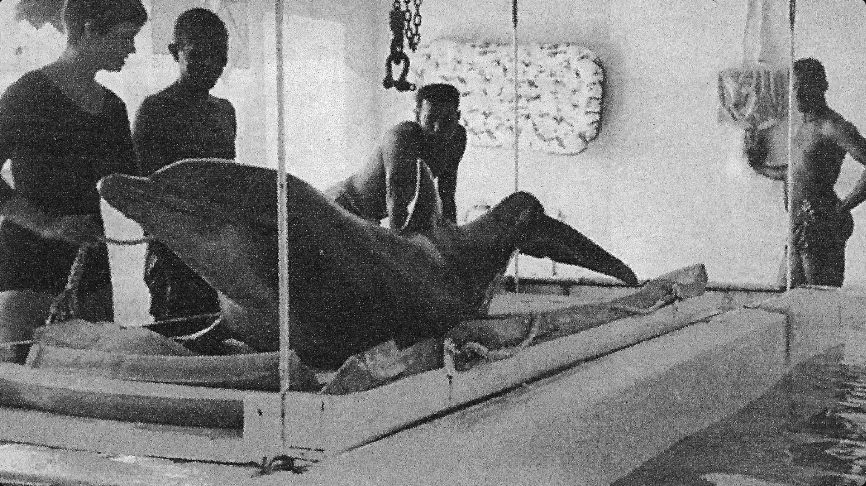
This discovery led Lilly down a rabbit hole that consumed the rest of his life. He became convinced that dolphins possessed intelligence rivaling humans. He flooded his beachfront mansion to create shared living spaces with cetaceans. He administered LSD to himself, his research partners, and eventually the dolphins themselves. He claimed contact with a cosmic bureaucracy called the Earth Coincidence Control Office (E.C.C.O.) that guided human destiny .
His motto, which the documentary returns to repeatedly, was simple: “My body is my laboratory.”
The Documentary: Archival Archaeology at Its Finest
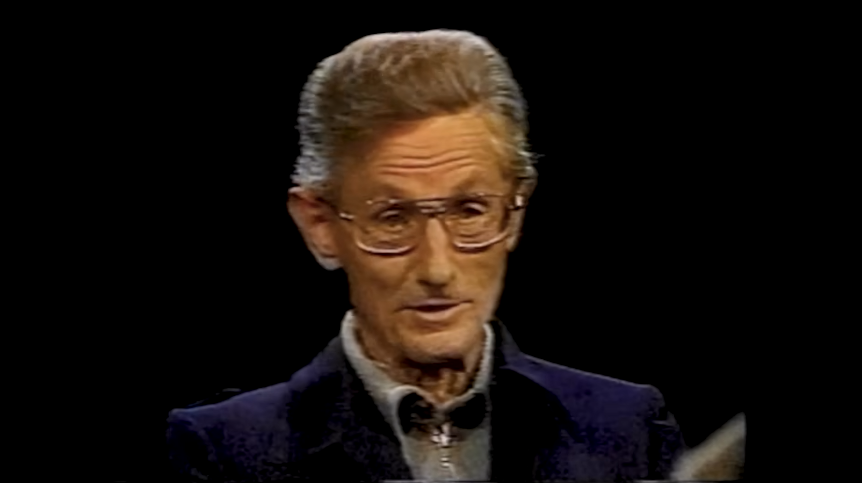
John Lilly and the Earth Coincidence Control Office premiered at the International Film Festival Rotterdam and arrived in limited US theaters on March 27, 2026, through Oscilloscope Pictures . The runtime clocks in at a tight 89 minutes. Do not expect a comprehensive biography. Expect something more interesting: a cultural excavation.
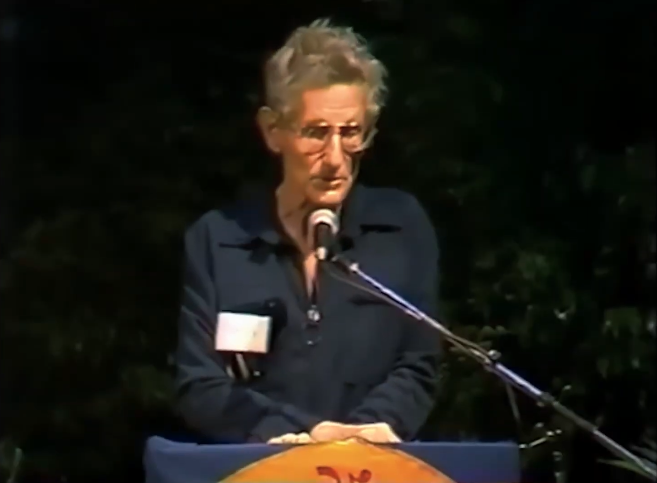
Almereyda and Stephens structure the film as an essayistic collage. Archival footage of Lilly lecturing in his measured, scientific tone cuts against images of dolphins swimming in flooded living rooms. Interviews with surviving collaborators (including Gigi Coyle and Scott McVay) provide context . Brief appearances from Alejandro Jodorowsky and archival footage of Allen Ginsberg and Timothy Leary situate Lilly within the broader countercultural movement .
Chloë Sevigny provides narration. Her voice—cool, slightly detached, faintly amused—serves as the perfect guide through material that might otherwise feel unmoored. She never mocks Lilly. She never worships him. She simply observes, allowing the absurdity and brilliance to coexist without editorializing .
The Film Stage called the documentary “an illuminating work of cultural archaeology” . That description nails what Almereyda and Stephens achieve. They dig through the strata of mid-century American science and counterculture, unearthing artifacts that feel simultaneously dated and urgently relevant.
The Dolphin Problem: Science or Madness?
You cannot discuss this documentary without confronting the dolphins.
Lilly believed—genuinely, fervently believed—that dolphins represented an alien intelligence living alongside humanity. He argued that their large brains and complex vocalizations indicated language capacity. He spent years attempting to teach dolphins English. He flooded his St. Thomas laboratory so humans and dolphins could occupy the same space, hoping proximity would spark communication .
Then came the LSD.
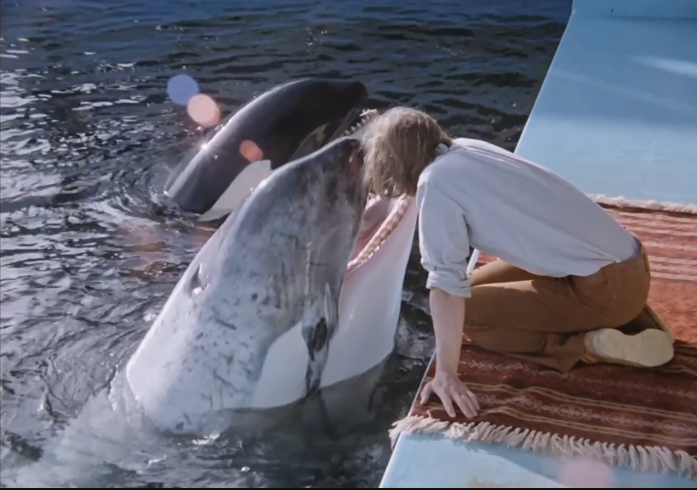
Lilly administered the drug to dolphins, reasoning that consciousness expansion might accelerate language acquisition. The results were… mixed. One dolphin, named Peter, became sexually attracted to researcher Margaret Howe Lovatt. The documentary handles this material with remarkable restraint. It presents the facts. It allows viewers to sit with the discomfort. It does not flinch .
The Film Stage review noted that the documentary “is as keen to praise Lilly for his contributions to things like the Save the Whales movement as it is to expose some of his most barbaric theories” . This balance matters. Lilly’s cetacean research genuinely advanced marine biology. It also involved dosing captive animals with powerful psychedelics. Both statements are true. The documentary trusts viewers to hold that tension.
The E.C.C.O. Hypothesis: Cosmic Bureaucracy or Ketamine Fantasy?
Later in life, Lilly’s interests shifted from dolphins to what he called the Earth Coincidence Control Office. He described E.C.C.O. as a hierarchical cosmic organization that orchestrated meaningful coincidences in human lives. If you missed a flight that later crashed, E.C.C.O. saved you. If you met your spouse through an improbable chain of events, E.C.C.O. arranged it .
Lilly claimed to communicate with E.C.C.O. during ketamine sessions in his isolation tank. He believed these beings existed in a “solid state” reality beyond human perception. He recommended that others “get terror-stricken” as a pathway to enlightenment .
The documentary treats this material with surprising seriousness. Almereyda and Stephens do not dismiss E.C.C.O. as drug-induced fantasy. They do not endorse it as literal truth. Instead, they examine E.C.C.O. as a framework for meaning-making—a way Lilly and his followers processed the chaos of existence.
The Viennale program notes capture this ambiguity perfectly: “Was Lilly a visionary or a crank? Employing a vast cornucopia of archival materials… it’s clear Michael Almereyda and Courtney Stephens lean towards the former” .
The Cultural Footprint: From SEGA to Altered States
One of the documentary’s most fascinating threads traces Lilly’s influence on popular culture.
Lilly’s isolation tank research directly inspired Ken Russell’s Altered States (1980) . His dolphin communication work formed the basis for Mike Nichols’s The Day of the Dolphin (1973) , a film Lilly sued over . His ideas about cetacean intelligence even influenced the beloved SEGA video game Ecco the Dolphin .
RogerEbert.com‘s review captured why this matters: “As much as Lilly’s work feels like, and probably is, quack science, the appeal of his ideas becomes clear in his cultural footprint. That’s the hypothesis ‘Earth Coincidence’ spends its time proving” .
The documentary argues that Lilly’s ideas outran his data. His scientific conclusions often crumbled under scrutiny. But the questions he asked—Can humans communicate with other species? Does consciousness extend beyond the brain? What happens when we strip away sensory input?—those questions lodged themselves in the culture and refused to leave.
The Almereyda-Stephens Approach: Hagiography Avoided
Here is what John Lilly and the Earth Coincidence Control Office refuses to do.
It refuses to mock its subject. Lilly provides ample material for easy laughs—the dolphin girlfriend, the ketamine-fueled cosmic bureaucracy, the recommendation to “get terror-stricken.” Lesser filmmakers would have made a comedy. Almereyda and Stephens make something more complex.
It also refuses to canonize Lilly. This is not hagiography. The documentary acknowledges Lilly’s failures. It notes the ethical problems with dosing dolphins. It questions whether Lilly’s later work crossed from science into self-delusion .
The Film Stage observed that the film “paints Lilly as a 20th-century polymath, a one-of-a-kind maverick hellbent on ‘getting his hands on the steering wheel of consciousness.’ Yet a hagiography this is not” .
This balance—admiration without worship, skepticism without cruelty—represents the documentary’s central achievement.
What Works (And What Tests Patience)
Let’s be honest about the film’s limitations.
The pacing will test some viewers. The essayistic structure prioritizes thematic exploration over narrative momentum. If you prefer documentaries with clear beginnings, middles, and ends, this one may frustrate you. It meanders. It digresses. It trusts you to follow.
The archival footage varies in quality. Some clips look pristine. Others look like they survived a flood. (Given the subject matter, some probably did.) The aesthetic remains deliberately rough, which suits the material but may annoy viewers accustomed to polished streaming docs.
The scope remains narrow. At 89 minutes, the film cannot cover everything. Lilly’s early medical career receives minimal attention. His personal relationships—beyond professional collaborations—remain largely unexplored. This is a portrait of a thinker, not a biography of a person.
The dolphin material may disturb animal lovers. Watching footage of captive cetaceans receiving injections does not make for comfortable viewing. The documentary does not shy away from this discomfort. Some viewers will appreciate the honesty. Others may find it disqualifying.
The Metacritic Context: 75 and Counting
John Lilly and the Earth Coincidence Control Office currently holds a 75 on Metacritic based on reviews from RogerEbert.com and other outlets . That score places it in “generally favorable” territory—respectable, if not stratospheric.
The RogerEbert.com review offers the clearest articulation of the film’s project: “As much as Lilly’s work feels like, and probably is, quack science, the appeal of his ideas becomes clear in his cultural footprint. That’s the hypothesis ‘Earth Coincidence’ spends its time proving” .
This is a film about influence, not accuracy. Lilly’s specific claims about dolphin language and cosmic bureaucracies may not hold up to scientific scrutiny. But his broader questions—about consciousness, communication, and the limits of human perception—continue to resonate. The documentary makes a compelling case that Lilly deserves credit for asking those questions, even if his answers were often wrong.
The Chloë Sevigny Factor
Special attention belongs to Chloë Sevigny.
The actress (Boys Don’t Cry, The Brown Bunny) provides narration that holds the entire project together. Her delivery walks a tightrope between engagement and detachment. She sounds interested but not invested. Curious but not credulous. The tone she establishes allows viewers to approach Lilly’s wilder claims without feeling pressured to accept or reject them .
The Film Stage noted that Sevigny “persuasively argues that some of Lilly’s more out-there theories—such as the supernatural intelligence of dolphins—weren’t so far-fetched” . This is accurate. Sevigny does not merely read lines. She performs a stance toward the material that invites viewers to take Lilly seriously without requiring them to believe him.
Should You See John Lilly and the Earth Coincidence Control Office?
Yes. With calibrated expectations.
Reasons to watch:
- The subject. John C. Lilly lived one of the strangest lives of the twentieth century. You will not regret learning about him.
- The archival footage. Watching a flooded mansion full of dolphins never gets old.
- Chloë Sevigny’s narration. She elevates everything she touches.
- The cultural context. Understanding Lilly helps explain everything from Altered States to Ecco the Dolphin.
Reasons to hesitate:
- The pacing. Essayistic documentaries require patience.
- The dolphin material. Animal lovers may struggle with certain sequences.
- The ambiguity. If you want clear answers about whether Lilly was a genius or a madman, this film will not provide them.
- The narrow focus. This is not a comprehensive biography.
Verdict: John Lilly and the Earth Coincidence Control Office is a fascinating, frustrating, and ultimately rewarding documentary about a man who asked questions nobody else thought to ask. It earns its 75 Metacritic score and its place in the growing canon of films about eccentric American originals.
The film runs 89 minutes. Oscilloscope Pictures distributes theatrically in limited release, with a wider expansion and eventual streaming release to follow .
Float in an isolation tank beforehand. Or don’t. The film works either way.
Rating: ★★★½☆ (3.5/5)
Runtime: 89 minutes
Rating: Not Rated
Directors: Michael Almereyda, Courtney Stephens
Narrator: Chloë Sevigny
Featuring: Alejandro Jodorowsky, Gigi Coyle, Scott McVay, Hella McVay, Diana Reiss (archival appearances by Allen Ginsberg, Timothy Leary)
Release Date: March 27, 2026 (Limited US Theaters)
Distributor: Oscilloscope Pictures
Metacritic: 75
John Lilly and the Earth Coincidence Control Office Rating
- Rating7











Leave a comment