



Let’s address the hand-drawn elephant in the room immediately.
Sylvain Chomet makes movies for people who miss when animation smelled like pencil shavings and Gauloises cigarettes. The French animator behind The Triplets of Belleville and The Illusionist does not do Pixar polish. He does not do DreamWorks sass. He does lumpy, lived-in, gloriously imperfect human faces that look like they wandered out of a Toulouse-Lautrec painting and asked for directions to the nearest café .
A Magnificent Life (titled Marcel et Monsieur Pagnol internationally) arrives in select US theaters on March 27, 2026, via Sony Pictures Classics . The film premiered at the 2025 Cannes Film Festival in the Special Screenings section. It earned an Annie Award nomination for Best Feature (Independent) .
The critical response? Lukewarm. Metacritic aggregates scores around 59, with RogerEbert.com offering a 63 and The New York Times a 60 . IndieWire went lower with a 58 .
The consensus is clear: Chomet’s hand-drawn artistry remains undeniable. The storytelling? That part gets complicated.
Who Was Marcel Pagnol? (For Those Who Skipped French Film History)
Before we dive into the movie, let’s establish why anyone made a 90-minute animated biopic about a dead French playwright.
Marcel Pagnol (1895-1974) occupies a strange space in cultural memory. In France, he is a national treasure—the author of Jean de Florette and Manon des Sources, the filmmaker behind the beloved Marius trilogy. Orson Welles called his frequent star Raimu “the greatest actor in the world” .
Outside France? Crickets.
Chomet himself acknowledges this problem. “Even in France… the new generation, they don’t know anything about Marcel Pagnol,” he told Cartoon Brew. “But that’s fine. I don’t think you need to know him. The story of his life is that of an extraordinary man” .
This is either admirable confidence or willful denial. The film’s reception suggests the latter.
The Premise: Old Man Argues With His Childhood Self
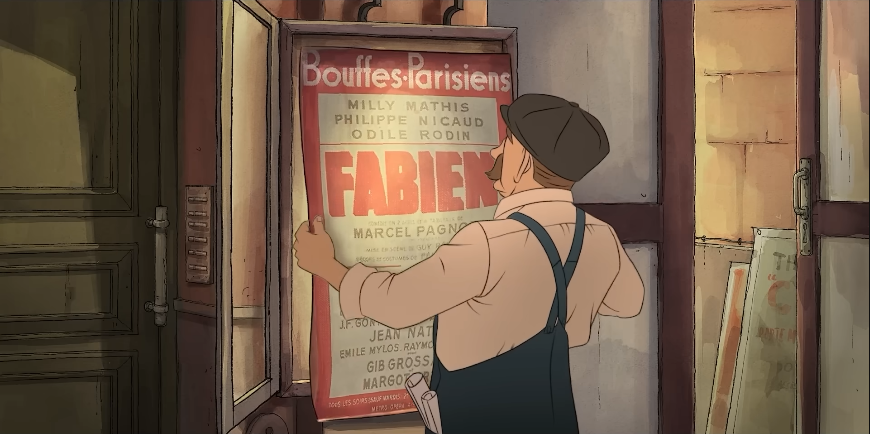
The film opens in 1955. Pagnol (voiced by Laurent Lafitte in the English version) is sixty years old. He has achieved fame as a playwright and filmmaker. He has also just watched his last two plays flop. His memory slips. His confidence crumbles .
Then a magazine editor commissions a weekly column about his childhood. Pagnol sees a chance to return to his roots as a writer. But he cannot remember enough.
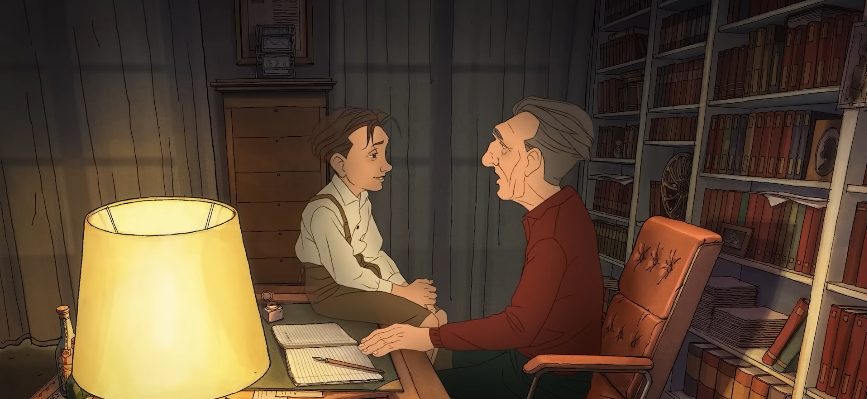
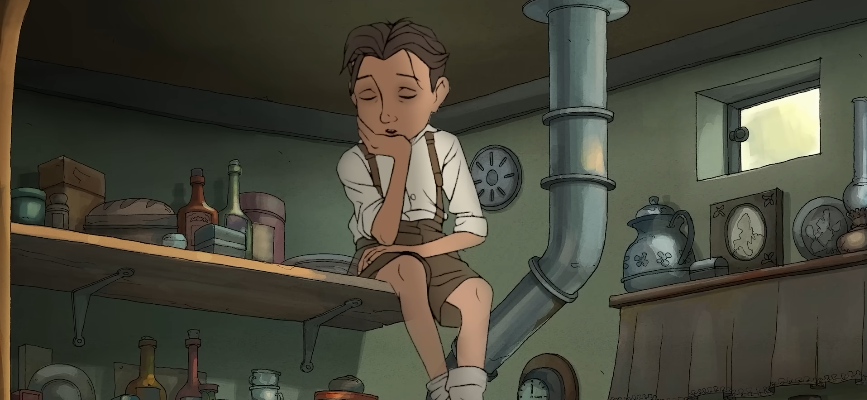
Enter Little Marcel—a phantom version of his younger self who appears “as if by magic” . The boy is not a ghost. Chomet clarifies: “He’s the keeper of the memories” .
Together, old Marcel and young Marcel sift through a lifetime: a working-class childhood in Provence, the death of his mother, his rise in Paris theater, his transition to cinema during the arrival of sound, his construction of a personal film studio, his uneasy navigation of the Nazi occupation .
This framing device—an aging artist conversing with his younger self—carries genuine emotional potential. Chomet describes his own creative process similarly: “When I write… the people in my scripts are all around me. I’m surrounded by them. I’m talking with them” .
The problem is not the concept. The problem is the execution.
The Visuals: Hand-Drawn Heaven
Let’s start with what works gloriously.
Chomet’s animation remains peerless. The man draws faces that look like they remember every meal they ever ate. His Provence glows with “ocher and olive hues” that make you smell lavender through the screen .
RogerEbert.com captured the paradox perfectly: “Chomet’s gift for deftly caricatured faces, expressive movement, and clever compositions hasn’t deserted him, and there are many flat-out beautiful bits scattered throughout” .
The period detail astonishes. Chomet worked closely with Pagnol’s grandson, who provided access to “absolutely all the archives possible… even pictures that nobody knows” . The production tracked changes in clothing, behavior, and environment across decades. Chomet notes with pride that “people were really dressed very elegantly” in early 20th-century France .
The aging of Pagnol himself required extraordinary craft. The character transforms from adolescence to his seventies, with subtle changes every few years. “That was amazingly complicated,” Chomet admits. The team built sculptural references of Pagnol’s head at different ages. The hardest part? “Making a noticeable but not intrusive difference between someone who is 25 and someone who is 30” .
Small details reward careful viewing. Pagnol’s nose shows damage from a youthful stint in boxing. Live-action clips from actual Pagnol films occasionally appear within the animation, creating a dialogue between the real man’s work and Chomet’s interpretation .
The score by Stefano Bollani (replacing Chomet’s usual self-composed music) brings warmth and melodic sensibility. Chomet describes it as echoing Nino Rota and Ennio Morricone .
If A Magnificent Life played silently in a museum installation, it would earn universal praise.
The Story: An Overloaded Sprint Through History
Unfortunately, movies have sound. And plots. And pacing.
The New York Times identified the central problem: “There’s more to love in the details than in this overloaded sprint through history” .
Chomet attempts to cover everything: Pagnol’s childhood, his mother’s death, his theatrical rise, his move to Paris, his embrace of sound cinema, his studio construction, his Nazi-era compromises. And then some.
The film runs only 90 minutes . That is barely enough time to cover one of these chapters properly. Cramming an entire lifetime into that runtime produces whiplash.
IndieWire was less charitable: “The film runs on an engine at the altar of memory, itself a facile idea since prolific writers who produce feted work don’t wholly rely on retroactive synthesis. The film is then only memorable in some sequences. Magical, it is not” .
Variety’s Peter Debruge noted that Chomet “honors the man’s achievements—the way a dry textbook or pedagogic graphic novel might—but fails to convey why those who don’t already possess some level of fascination with Pagnol should care” .
This is the central tension. A Magnificent Life wants to celebrate Pagnol. It also wants to explain Pagnol. The celebration works. The explanation drags.
The Language Problem: Why British Accents in Provence?
Here is the most baffling creative choice in the entire film.
A Magnificent Life is an English-language production, not a French film dubbed for international release . The characters speak in British regional accents. Upper-class and cockney voices represent Parisian characters. Welsh accents stand in for Marseille natives .
The New York Times called this “a strange, simplified translation of Pagnol and his eccentric milieu” .
The logic is understandable. Sony Pictures Classics distributes the film. Family-friendly animation often uses British voice casts for period European settings—see Arco, another recent Annie nominee .
But A Magnificent Life is not a family-friendly adventure. It is a biopic of a French literary figure aimed squarely at Francophiles and arthouse animation fans. The anglicization creates cognitive dissonance. You watch olive groves and hear cockney. You watch Marseille streets and hear Welsh inflections.
The New York Times put it bluntly: “Who, if not a Francophile, would enjoy such a meticulous recreation of Pagnol’s life and times?” .
What Chomet Actually Accomplished

Despite the flaws, A Magnificent Life represents something rare: an animated biopic for adults that takes its subject seriously.
Chomet chose animation for specific reasons. “The problem with live-action biopics is the resemblance of the person who is portrayed,” he explains. “A lot of the time it’s really bad. It’s very rare that they actually find someone who can nail it” .
Animation sidesteps this issue. “It’s not an actor playing someone else. It’s actually a drawing of someone. And maybe that is more true to reality” .
This philosophy extends beyond physical likeness. Chomet wants his characters to feel human, not mythological. “My characters… they go to the toilets, they poo, they get old, they die,” he says. “They’re not superheroes” .
The film also traces the evolution of cinema itself. Pagnol was born in 1895—the same year as the medium. He witnessed the arrival of sound and immediately recognized its potential. “He said, ‘That’s it. That’s what I want to do. I’m going to do films,'” Chomet recounts .
This meta-narrative—a film about a filmmaker, made by a filmmaker who loves the history of filmmaking—gives A Magnificent Life a resonance that transcends its pacing problems.
The Critical Consensus: Beautiful But Flawed
The numbers tell a clear story:
- Metacritic: 59 (mixed/average)
- RogerEbert.com: 63
- The New York Times: 60
- IndieWire: 58
RogerEbert.com‘s review contains the most quotable assessment: “This is altogether a work that’s best appreciated with the sound off, while blasting a playlist of Django Reinhardt’s greatest hits” .
That is harsh. But it captures something true. The visuals soar. The storytelling trudges.
Variety’s Debruge called the marriage of artist and subject “beautiful… in theory” but concluded that the film “fails to convey why those who don’t already possess some level of fascination with Pagnol should care” .
The New York Times found “more to love in the details than in this overloaded sprint through history” .
IndieWire dismissed the film as “only memorable in some sequences” and declared “Magical, it is not” .
What Works (And What Tests Patience)
Let’s break this down honestly.
Reasons to watch:
- The animation. Chomet’s hand-drawn artistry remains unmatched. Every frame rewards close attention.
- The period detail. You will learn what early 20th-century Provence looked, sounded, and felt like.
- The score. Stefano Bollani’s piano work evokes Rota and Morricone without imitation.
- The concept. An aging artist conversing with his childhood self offers genuine emotional potential.
Reasons to hesitate:
- The pacing. Ninety minutes cannot contain a full lifetime. The film sprints when it should stroll.
- The language choice. British accents in Provence create persistent cognitive dissonance.
- The prerequisite knowledge. The film assumes familiarity with Pagnol that most viewers lack.
- The tone. The film oscillates between textbook biography and personal reverie without committing to either.
Should You See A Magnificent Life?
Maybe. With carefully calibrated expectations.
Go see it if:
- You already love Sylvain Chomet’s previous films (The Triplets of Belleville, The Illusionist).
- You possess working knowledge of Marcel Pagnol or French cinema history.
- You value hand-drawn animation enough to forgive narrative shortcomings.
- You want to support adult-oriented animated filmmaking.
Skip it if:
- You need a coherent, well-paced story above all else.
- British accents in French settings will drive you crazy.
- You have never heard of Marcel Pagnol and do not care to learn.
- You prefer animation with jokes, songs, or talking animals.
Verdict: A Magnificent Life is a beautiful mess. It showcases one of animation’s greatest living artists at the height of his visual powers. It also demonstrates that gorgeous images cannot fully compensate for overstuffed storytelling.
The film runs 90 minutes and carries a PG-13 rating for “deaths and the suggestion of sex” . Sony Pictures Classics distributes in select theaters nationwide .
Watch it with the sound off and Django Reinhardt playing. Or watch it as a Francophile eager for any glimpse of Provence. Just do not expect a masterpiece. Expect a hand-drawn postcard from a filmmaker who loves his subject too much to edit him down.
Rating: ★★★☆☆ (3/5)
Runtime: 90 minutes
Rating: PG-13
Director: Sylvain Chomet
Writer: Sylvain Chomet
Cast (English version): Laurent Lafitte, Géraldine Pailhas, Thierry Garcia, Elsa Pérusin, Olivia Gotanegre
Release Date: March 27, 2026 (US theaters)
Distributor: Sony Pictures Classics
Metacritic: 59
A Magnificent Life Review
- Rating6













Leave a comment