


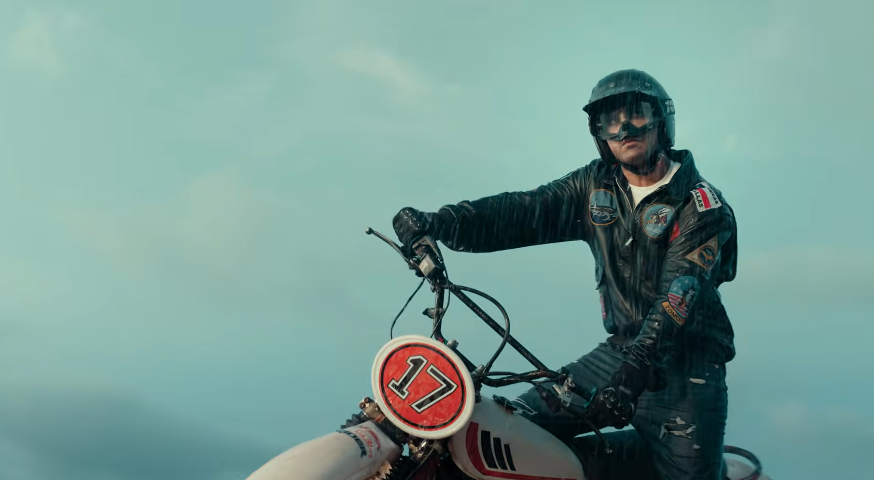
Telugu Cinema Revs Up a New Genre
Sports dramas have long served as one of Indian cinema’s most reliable emotional vehicles. From Dangal (2016) to Sarpatta Parambarai (2021), the genre has demonstrated a consistent ability to blend athletic spectacle with deeply felt human stories. Yet for all its creative ambitions, Telugu cinema has never ventured into the dirt-spraying, adrenaline-soaked world of motocross racing — until now.
Biker, directed by Abhilash Reddy Kankara and produced by UV Creations, arrives with the distinction of being India’s first full-scale motocross racing film. Starring Sharwanand as a conflicted champion racer and the legendary Dr. Rajasekhar as his iron-willed father, the film reaches theatres on April 3, 2026, backed by considerable buzz around its unique premise, Sharwanand’s remarkable physical transformation, and the return of Rajasekhar to a commanding lead role. The question that every prospective viewer is asking is a simple one: does Biker deliver on that promise?
The short answer is: largely yes — but with qualifications. Biker succeeds most powerfully as a father-son drama set against a genuinely thrilling sporting backdrop. Where it stumbles is in the very emotional texture that could have elevated it from a competent sports film into an unforgettable one. Nevertheless, for audiences who appreciate the sports drama genre and have never seen the spectacular discipline of motocross rendered on an Indian screen at this scale, Biker absolutely warrants the price of a theatre ticket.
Release Date: April 3, 2026
Director: Abhilash Reddy Kankara
Cast: Sharwanand, Dr. Rajasekhar, Malavika Nair, Atul Kulkarni, Brahmaji
Screenplay: Abhilash Reddy Kankara, MVS Bharadwaj, Shravan Madala
Music: Ghibran Vaibodha
Cinematography: J. Yuvaraj
Editing: Haresh Chaudhary, Anil Pasala
Producer: V. Vamsi Krishna Reddy, Pramod Uppalapati (UV Creations)
Runtime: 2 hours 40 minutes
Languages: Telugu, Tamil, Malayalam
Formats: Standard, 4DX, PCX, 3D, Dolby Cinema, EPIQ
Streaming: Netflix (post-theatrical)
Our Rating: ★★★¼ / 5
Plot Overview: Ambition, Legacy, and the Weight of a Father’s Dream
Biker is set primarily in Coimbatore, Tamil Nadu — which the film correctly identifies as one of India’s most significant motocross hubs. The story begins with Sunil Narayan (Dr. Rajasekhar), a pioneering motocross champion who helped introduce the sport to India. Sunil’s life as a racer ends abruptly following the tragic loss of his wife, after which he channels every ounce of his passion and ambition into raising his son, Vikas “Vikky” Narayan (Sharwanand), to become a world-class motocross champion.
Vikky grows into everything his father envisioned — technically brilliant, physically fearless, and entirely devoted to the sport. However, the narrative’s central disruption arrives when Vikky makes a sudden, unexplained decision to abandon racing altogether. The film’s non-linear structure — moving fluidly between the 1990s and early 2000s — gradually assembles the reasons behind this decision, revealing connections to Ananya (Malavika Nair), a young woman who enters Vikky’s life at a pivotal moment, and to the dangerous accident that recalibrates his relationship with risk.
At its heart, Biker is therefore not purely a racing film. It is a story about fatherhood — specifically about the complicated, sometimes suffocating, ultimately loving relationship between a father who cannot separate his son from his own unfinished ambitions, and a son who loves racing but learns that love alone is not sufficient reason to sacrifice everything around it. The screenplay, written by Abhilash Reddy Kankara alongside MVS Bharadwaj and Shravan Madala, weaves these threads together with reasonable craft, even if it occasionally relies on familiar sporting genre conventions in the process.
Performances: Rajasekhar Steals the Show, Sharwanand Holds His Ground

Sharwanand as Vikas “Vikky” Narayan
Sharwanand’s commitment to Biker is both visible and admirable. Having reportedly lost 23 kilograms for the role, his physical transformation communicates something essential about Vikky’s character before a single line of dialogue arrives — this is a man who has shaped his entire body around a sport, who has made his flesh a testament to his devotion. On the racetrack, Sharwanand moves with the body language of someone who has genuinely studied and internalised the mechanics of motocross racing. The racing sequences benefit enormously from his physicality.
Beyond the sport sequences, Sharwanand lends Vikky a quality that the screenplay does not always give him room to develop: a quiet, restrained sorrow. Vikky is a man who carries his father’s expectations alongside his own dreams, and Sharwanand communicates that burden through posture and expression rather than dialogue. He is, as 123telugu.com observed in their review, “in his best shape” and “brings sincerity to his performance as a professional racer.”
The film’s primary weakness as it concerns Sharwanand is not his performance but rather the writing around him. The vulnerability of the protagonist — the complex realities of a washed-up sportsperson navigating identity, loss, and reinvention — deserved more screen space than the script allocates. Too often, the film conveys Vikky’s emotional world through expository dialogue rather than through the kind of staged, visual storytelling that would have made those moments truly land.
Dr. Rajasekhar as Sunil Narayan (Bullet Sunil)
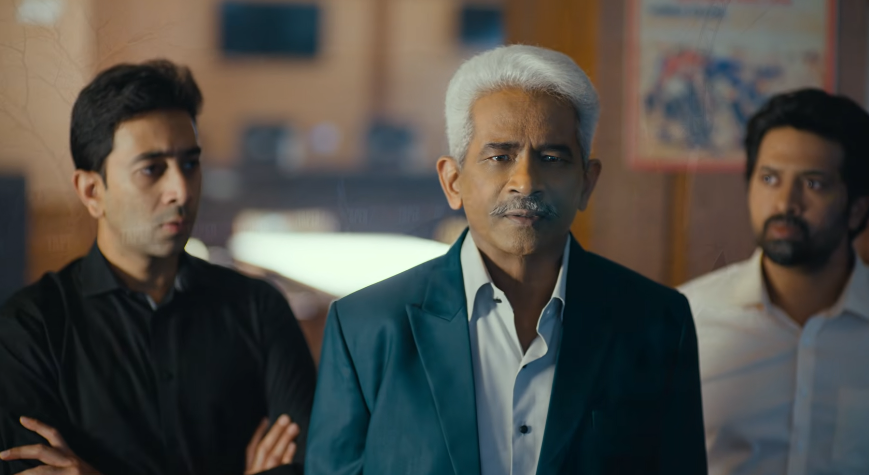
If Biker belongs to one performance above all others, it belongs to Rajasekhar. Playing Bullet Sunil, the film’s former motocross champion turned unyielding father-coach, Rajasekhar delivers work that is simultaneously commanding and deeply moving. He plays a man who loves his son completely but expresses that love almost exclusively through the language of sport — through demands, corrections, and the occasional propping up of Vikky’s reputation when the right investor is listening.
Crucially, Rajasekhar avoids the obvious trap of playing Sunil as a one-dimensional taskmaster. He finds the grief and the tenderness within the toughness, and the second-half emotional sequences between Rajasekhar and Sharwanand represent the film’s highest dramatic watermark. As 123telugu.com noted, “With Biker, Rajasekhar reaches a new level, playing his part with utmost dignity and elegance.” This is, by any measure, a career-best stretch of work from a veteran actor whose talent had rarely been used this wisely.
Malavika Nair as Ananya
Malavika Nair brings warmth and natural grace to Ananya, and her chemistry with Sharwanand generates genuine ease during their shared scenes. However, as with many female roles in the sports drama genre, Ananya functions primarily as an emotional anchor rather than a fully realised character. The screenplay underserves her — her arc is defined almost entirely by how it affects Vikky rather than by her own interiority. Their scenes together, while pleasant, feel truncated within the larger canvas of the film.
Supporting Cast
Atul Kulkarni plays the film’s antagonist with stylish presence and authority, though the script does not sufficiently develop the roots of his cruelty — a weakness that dilutes the conflict at several key junctures. Brahmaji provides dependable comic and emotional relief in a supporting role that he handles with characteristic professionalism.
Direction: Abhilash Reddy Kankara Makes a Confident Debut
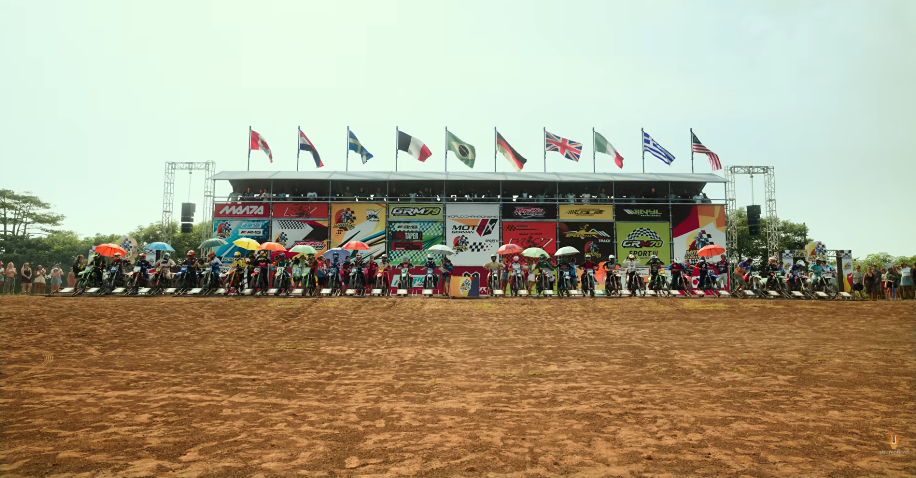
Biker marks the theatrical directorial debut of Abhilash Reddy Kankara, and the film reveals a filmmaker who clearly understands and respects the genre he is working within. Kankara’s research into motocross is evident throughout — the sport is presented with technical authenticity and genuine enthusiasm, never reduced to a superficial backdrop. Set in Coimbatore, the film uses the region’s motocross culture as a living, breathing environment rather than a decorative location.
The non-linear structure that the film employs — shifting between the 1990s origins of Sunil’s racing career and Vikky’s present-day journey — generally works to maintain narrative momentum. Kankara understands that the mystery driving the film (why did Vikky leave racing?) gives the audience a reason to remain engaged across both time periods. However, some editorial choices within this structure confuse rather than intrigue, and the first half’s pacing suffers as a result of certain jumps that the audience does not yet have the context to fully process.
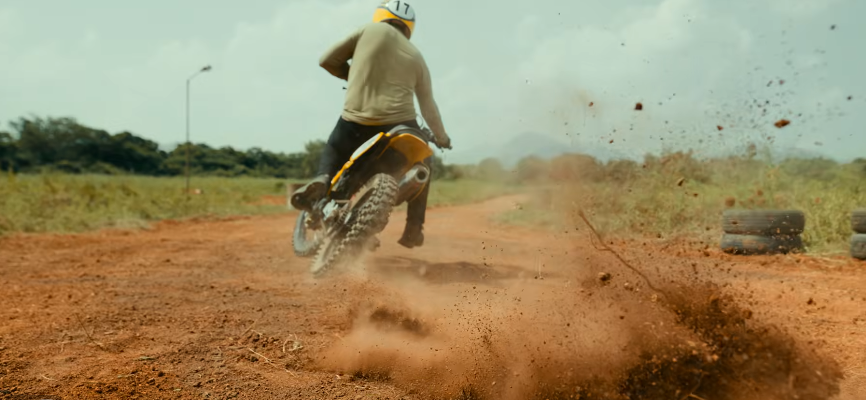
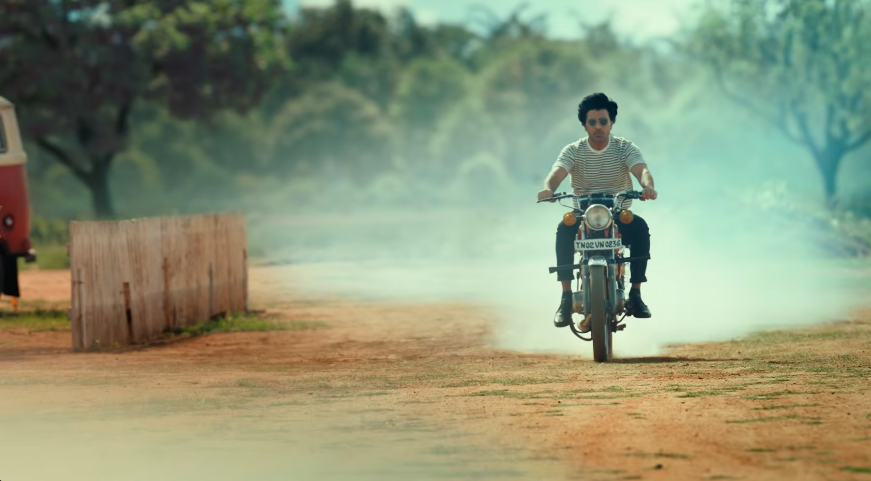
Where Kankara excels most convincingly is in the set-piece sequences. The mountain biking scene — in which Vikky rides through a dangerous mountain range in an act of pure, almost reckless courage — is the film’s single most powerful moment. Kankara returns to this sequence multiple times, using it not merely as a spectacle but as a visual expression of Vikky’s identity: his relationship to risk, to his father, and to the sport he loves. These moments of genuine cinematic poetry confirm that Kankara’s instincts are sound, even when the screenplay constrains them.
The film’s biggest directorial challenge — moving audiences from the adrenaline of the racing sequences to the quieter registers of family drama — is handled with reasonable skill but not always with the finesse the material demands. The emotional and sporting halves of the film occasionally feel like separate films sharing a screen, rather than a single integrated story.
Technical Excellence: Where Biker Truly Soars
Cinematography: J. Yuvaraj
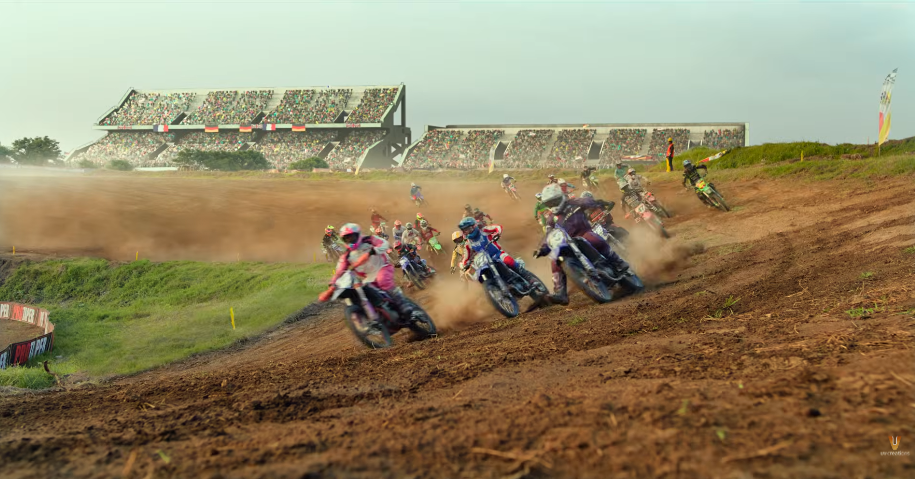
The cinematography by J. Yuvaraj stands as one of Biker‘s most unambiguous achievements. The racing sequences are shot with dynamic, immersive energy — cameras placed low and close to the action, capturing both the technical intricacy of motocross and the visceral thrill of speed. Yuvaraj’s framing during the race sequences earns the film’s premium format release in 4DX, PCX, 3D, Dolby Cinema, and EPIQ, each of which genuinely enhances the sensory experience of watching professional motocross at full throttle. The Indian Express aptly noted that “when the sport is front and centre, it is a genuinely thrilling watch, one that justifies every rupee spent on the racing sequences.”
Music and Background Score: Ghibran Vaibodha
Ghibran’s contribution to Biker is primarily felt through the background score rather than the film’s songs. His BGM enhances the racing sequences and the emotional father-son scenes with precisely calibrated tension and warmth. The sound design throughout the film is exceptional — the roar of motocross engines, the crunch of dirt under tyres, and the ambient noise of the racetrack all contribute to an immersive experience that sells the sport convincingly.
The film’s songs, however, represent a relative weak point. As multiple critics have noted, they function as interruptions to the film’s momentum rather than extensions of its emotional world — a contrast to the best sports dramas, where music and narrative are inseparable. This is a notable missed opportunity given Ghibran’s established capability as a composer of genuine emotional depth.
Production Design and Action Choreography
UV Creations’ production investment is clearly visible on screen. The motocross locations are real, the equipment is authentic, and the action choreography — handled by Dhilip Subbarayan — ensures that the racing sequences carry genuine physical danger and excitement. On an estimated budget of ₹40–50 crore, Biker looks and feels significantly larger than its spend, a testament to smart production design and efficient filmmaking.
Thematic Depth: Fatherhood, Legacy, and the Price of Ambition
The most resonant dimension of Biker is its exploration of how ambition moves between generations — specifically how a father’s unrealised dream can become a burden, a gift, or both simultaneously when it is passed to a son. Sunil Narayan is not a villain. He is a man whose passion for motocross is genuine, whose love for Vikky is total, and whose primary emotional failure is an inability to distinguish between the two. He cannot love his son independently of the sport through which he hopes to fulfil him.
Vikky, in turn, grows up treating his father’s vision as his own — until life (represented through Ananya’s influence and a dangerous accident) forces him to question whether a dream inherited is the same as a dream chosen. This is the film’s most sophisticated question, and the second half handles it with genuine emotional intelligence. The best scenes in Biker are the ones where Rajasekhar and Sharwanand are simply in the same frame, navigating the accumulated weight of decades of shared ambition and unstated love.
The film’s treatment of love and family as a source of sporting strength — rather than a distraction from it — also inverts the typical sports drama formula in interesting ways. Vikky comes to understand that the people his father dismissed as distractions are, in fact, the fuel of his performance. That thematic reversal is quietly progressive and gives the film a moral texture that distinguishes it from more conventional entries in the genre.
Critical Consensus: What Other Critics Are Saying
The critical response to Biker has coalesced around a broadly positive but clearly qualified verdict — a film with genuine strengths undercut by familiar genre weaknesses.
Sashidhar Adivi of Filmfare (3.5/5) praised Sharwanand’s committed performance, noting that it ensures “the emotional drama holds its own against the spectacle of the sport,” while acknowledging that the film “doesn’t completely escape the clichés of the sports drama genre.” Sandeep Athreya of Sakshi Post (3.25/5) described it as “a decent one-time watch” powered by the performances of Sharwanand and Rajasekhar. Jalapathy Gudelli of Telugucinema.com (3/5) credited Abhilash Reddy for “introducing motocross to Telugu cinema and blending it effectively with sentiment,” while noting pacing concerns. 123telugu.com awarded 3.25/5, calling the racing scenes “brilliant” and Rajasekhar’s performance a potential career milestone.
The Indian Express offered perhaps the most precise encapsulation of the critical consensus: the film is “a genuinely thrilling watch” when the sport takes centre stage, and it “justifies every rupee spent on the racing sequences.” The qualification implicit in that praise is that the film’s non-sporting dimensions do not consistently match the bar set by its action sequences.
For a detailed breakdown of audience responses and ratings, IMDB’s Biker page and Wikipedia’s Biker film entry provide comprehensive aggregated critical coverage.
Box Office Performance: A Solid Opening for an Unprecedented Premise
Biker opened in theatres on April 3, 2026, with what trade analysts are describing as a solid if not spectacular commercial debut. According to reports from Asianet Newsable, the Telugu version generated a net collection of approximately ₹2.05 crore on Day 1, running across more than 1,800 shows with an average occupancy of 23%. Afternoon and evening shows performed notably better than morning ones, suggesting the audience was building through the day on the strength of early-viewer word-of-mouth.
The Tamil-language release underperformed considerably by comparison, generating roughly ₹5 lakh on its opening day at around 10.6% occupancy. This regional disparity reflects both the film’s cultural roots in the Telugu-speaking audience and the challenges of expanding a Telugu sports drama into the broader South Indian market without established crossover stars.
The film’s debut numbers are reasonable given its ₹40–50 crore reported budget and its status as India’s first motocross film — a sub-genre with no established audience baseline. Positive early audience responses on social media, particularly around the father-son dynamic and the racing sequences, suggest that word-of-mouth has the potential to sustain collections through the weekend and beyond. As Tenvow’s box office analysis notes, the film’s opening footfalls were “primarily in Andhra Pradesh and Telangana, driven by curiosity around its unique motocross theme and Sharwanand’s dedicated fan base.”
What Makes Biker Historically Significant for Indian Cinema
Beyond its commercial performance, Biker carries genuine significance as a pioneering work in Indian cinema. Motocross — the discipline of racing modified motorcycles over rough, off-road terrain including dirt tracks, hills, and obstacles — has a dedicated but relatively niche following in India, with Coimbatore serving as one of the country’s most active centres for the sport. By choosing motocross as its central discipline, Biker brings mainstream cinematic attention to a sport that rarely receives coverage outside specialised sporting media.
Director Abhilash Reddy Kankara’s commitment to portraying the sport authentically — through real locations, professional stunt choreography, and the kind of technical detail that rewards knowledgeable viewers — ensures that Biker functions as both entertainment and a genuine introduction to motocross for Indian audiences who have never encountered it. In this sense, the film performs a cultural service that extends well beyond its immediate commercial context.
The decision to release in premium formats including 4DX and Dolby Cinema additionally signals a broader industry recognition that action-sports films, when executed with technical ambition, can justify and benefit from immersive exhibition formats. This strategy, successfully deployed by international sports films like Rush (2013) and Ford v Ferrari (2019), marks a maturation in how Telugu cinema presents kinetic action content to audiences.
What Works and What Doesn’t: An Honest Assessment
Strengths: The racing sequences are genuinely spectacular — among the most technically impressive action set-pieces in recent Telugu cinema. Rajasekhar’s performance is the film’s emotional cornerstone and represents a career highlight for a veteran actor who deserves every word of the acclaim he is receiving. Sharwanand’s physical dedication and sincere portrayal ensure that the film’s protagonist remains sympathetic even when the screenplay underserves him. Ghibran’s background score consistently elevates the film’s emotional and kinetic peaks. The cinematography is dynamic and immersive, especially in premium formats. The father-son dynamic gives the film a thematic heart that makes it more than a spectacle vehicle.
Weaknesses: The first half pacing is notably uneven, and certain non-linear structural choices create confusion rather than intrigue in early sequences. The romantic track involving Malavika Nair is underdeveloped and underwritten, preventing her character from achieving the emotional weight the screenplay intends for her. Atul Kulkarni’s antagonist lacks sufficient backstory to make his cruelty feel motivated rather than functional. The songs interrupt the film’s momentum at several points where sustained emotional or action momentum would have been more effective. The screenplay, in its reliance on familiar genre tropes, occasionally squanders the freshness that its unprecedented motocross backdrop could have provided throughout.
Frequently Asked Questions About Biker (2026)
Is Biker really India’s first motocross film?
Yes. Biker is widely described and marketed as India’s first full-scale motocross racing film. While individual racing sequences have appeared in other Indian films, no prior production has built an entire narrative around the sport at this level of authenticity and scale.
Where is Biker set?
The film is primarily set in Coimbatore, Tamil Nadu, which functions as one of India’s most established motocross hubs and provides an authentic regional setting for the sport.
Where can I stream Biker online?
Netflix has acquired the post-theatrical digital streaming rights to Biker. The film is expected to begin streaming approximately 8–10 weeks after its theatrical release.
How much did Sharwanand transform physically for the role?
Sharwanand reportedly lost 23 kilograms to portray Vikky as a professional motocross racer, a physical commitment that is evident in every racing sequence of the film.
Is Biker available in languages other than Telugu?
Yes. Biker released simultaneously in Tamil and Malayalam alongside its primary Telugu version.
What formats is Biker available in theatres?
The film is available in standard, 4DX, PCX, 3D, Dolby Cinema, and EPIQ formats — a comprehensive premium release that reflects the production’s confidence in the impact of its racing sequences.
Verdict: An Ambitious Milestone That Earns Its Spurs
Biker is not a flawless film. Its screenplay leans on familiar sports drama conventions more often than its trailblazing premise should allow, its first half tests patience, and the romantic subplot deserves considerably more development than it receives. However, to focus exclusively on these shortcomings is to miss the larger achievement that Abhilash Reddy Kankara and his team have delivered.
Biker introduces an entirely new sporting discipline to Indian cinema with technical authenticity, genuine research, and a visual flair that makes the racing sequences genuinely thrilling. It anchors its spectacle in a father-son relationship that resonates emotionally, brought to life by two outstanding performances from Sharwanand and, above all, Dr. Rajasekhar. It marks the return of a veteran Telugu star to the kind of commanding, emotionally complex role that reminds audiences why he has endured.
For sports drama enthusiasts, for audiences willing to experience something genuinely new on an Indian screen, and for anyone who appreciates committed filmmaking that prioritises authenticity over formula, Biker is absolutely worth the ride. Take it in on the biggest, loudest screen available — preferably in 4DX or Dolby Cinema, where the film’s technical ambitions fully pay off. It may not be a perfect film, but it is a sincere and significant one.
Review Overview
- Rating7









Leave a comment