


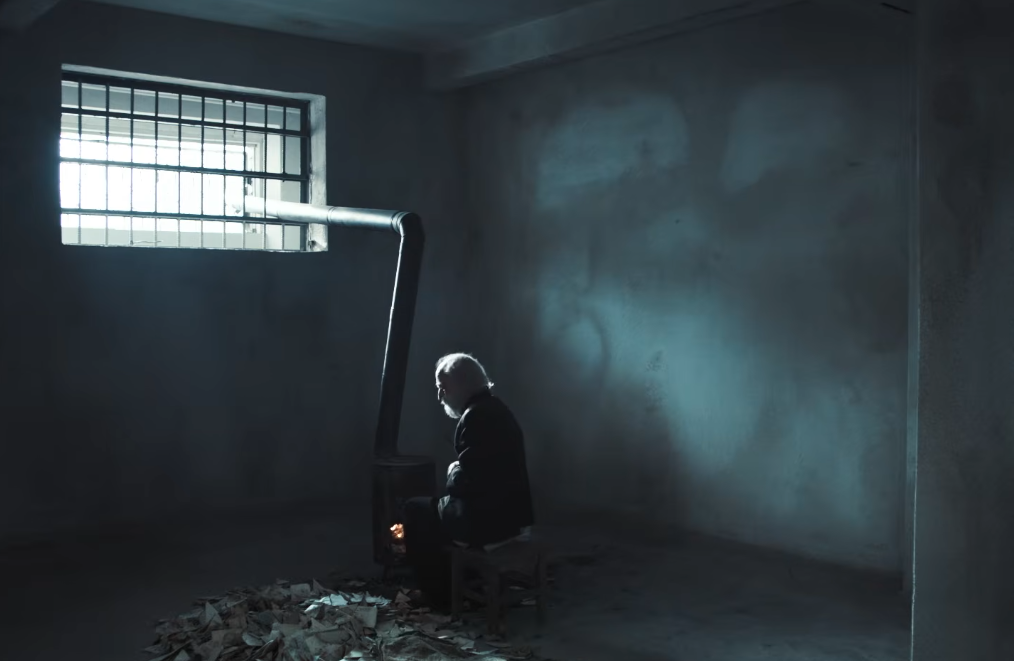
The Soviet reign of terror under Lenin and Stalin – a dark legacy that still casts a long, haunting shadow over the world today. Director Serge Loznitsa takes on this dreaded past in his latest work, “Two Prosecutors”. A chilling documentary-style examination of the Stalin era , “Two Prosecutors” was shot in Latvia with European financing, and this review will explore how Loznitsa creates a close-up and terrifying portrait of bureaucratic evil that feels eerily relevant, even beyond its historical context.
A Premise Rooted in Historical Horror
“Two Prosecutors” tells the story of Kornyev (Aleksandr Kuznetsov), a young idealist who arrives fresh from law school, eager to shake things up. He uncovers a sinister tip-off – a smuggled letter from a prisoner detailing the atrocities of the NKVD. And so he journeys to a remote prison a long way from Moscow – 250 miles to be exact – to get to the bottom of things.
The film’s scenario is a rip from an unpublished story by Gyorgy Demidov, a Soviet physicist and dissident who somehow managed to survive 14 years in the notorious Kolyma gulag. This rootedness, in fact, lends the narrative a raw, visceral authenticity that’s hard to find in fictionalised accounts.
The Naive Dream That Drives the Story
At first, Kornyev thinks he’s just dealing with some kind of local aberration – that this is all just a minor glitch in Stalin’s grand plan. And that’s exactly the Two Prosecutors review wants to highlight – how closely the film watches Kornyev’s gradual, gut-wrenching realisation of the horrors he’s confronting.
Performances That Bring the Terror to Life
Aleksandr Kuznetsov as Kornyev
Kuznetsov brings real conviction to his portrayal of the young prosecutor – you can see the idealism shining through in his face, and it makes you feel like you’re right there with him, sharing his initial optimism, and then, later on, his despair.
Anatoly Beliy as the Older Prosecutor
Beliy has a real knack for playing the character of the older prosecutor – his calm exterior, topped off with those wire-rimmed spectacles, makes for a really unnerving performance. And the dynamic between these two men is what really drives the story on, pushing it relentlessly towards its inevitable outcome with an almost surgical precision.
Loznitsa’s Direction: All About the Wait
Director Serge Loznitsa is known for epic documentaries, but here he’s gone all intimate – still managing to get across the terror, without relying on shock tactics. Here are some of the key choices that help him achieve that:
- Taking his time: Loznitsa lets the editing build up the tension – not by making big, showy gestures, but by using the rhythm to create this creeping sense of dread
- A very plain setting: The film’s alternate title could be ‘Office After Office’ – it really captures that claustrophobic, suffocating feeling
- Keeping things simple: The camerawork is spartan – it’s all about the dialogue and the performances
This Two Prosecutors review thinks it’s a masterclass in restraint – how Loznitsa lets the horror come from the implication, rather than some big, graphic scene.
Kafkaesque Themes That Strike a Nerve
The film can’t help but bring to mind Kafka’s tale “Before The Law” from The Trial. Just as the doorkeeper in that parable tries to tell some poor bloke that the entrance was meant just for him, only to shut it in his face for good, “Two Prosecutors” delves into how the powerful have a knack for manipulating hope and access.
Why This Film Still Resonates Today
While rooted firmly in the Stalin-era Soviet Union, the film’s echoes run deep into modern times:
• Bureaucratic apathy towards human suffering isn’t anything new
• Idealism can very easily get corrupted by the influence of institutional power
• And let’s be real, seeking justice in a system that’s fundamentally unjust is a near-impossible task
This Two Prosecutors review makes the point that the film is unapologetically a film with a message. Its themes should be sounding alarm bells in any society that claims to value freedom and justice.
So, Why Did Loznitsa make it in Latvia instead of Ukraine or Russia?
It was just plain impossible to make the film in Ukraine or Russia, given the current state of politics in those places. The fact that the film was made possible through international financing (Dutch, Latvian, German, Lithuanian, Romanian) just underscores the story’s relevance to the whole world, and also just how sensitive a subject this is: confronting Soviet-era trauma, when people are still fighting against authoritarianism today.
That adds a whole other layer to the viewing experience: a film about historical censorship being made possible by a bunch of countries standing together against contemporary authoritarianism.
So What’s the Verdict on Two Prosecutors?
Look, “Two Prosecutors” is not an easy watch – it’s gonna test your patience a bit – but it’s Essential Cinema. Loznitsa has crafted an intellectually rigorous thriller that does the source material justice, while also speaking to all sorts of issues that are right on our doorstep today.
Watch If You’re Into:
- Films that take a hard, grounded look at politics
- Kafkaesque stories about how the system can drive you round the bend
- Subtly powerful performances that’ll leave you thinking long after the credits roll
- Films that challenge you to think, and to feel, on a deep level
While some people may find the slow pace a bit much, those who are willing to stick with it will be rewarded with a truly thought-provoking experience – the film’s final moments will linger in your head for a good long while.










Leave a comment